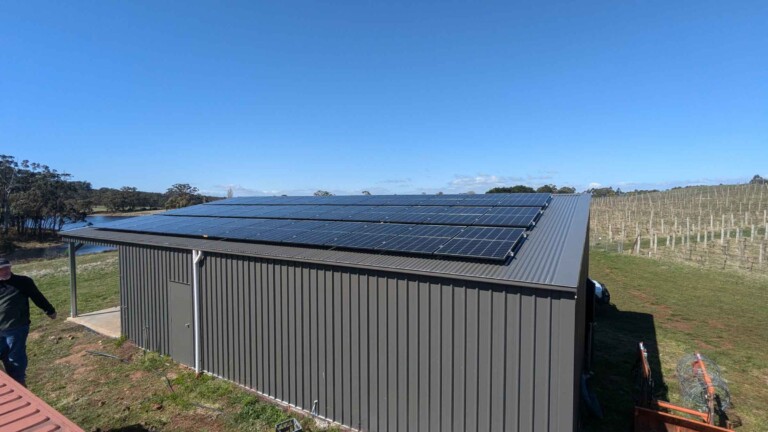
In Australia, the cost of 10kW off-grid solar systems is influenced by several factors, including location, system components, and battery storage. Here’s an updated summary without the payback and savings details:
Australia’s 10kW Off-Grid Solar: Pricing Insights
- Price Range: The price for 10kW off-grid solar systems typically falls between $25,000 and $35,000. This range reflects variations due to the quality of components, battery storage options, and specific household needs.
- Battery Storage Costs: One of the significant factors in the cost of off-grid systems is the need for substantial battery storage. This is especially critical for powering homes during periods of lower sunlight, such as winter months. The cost and lifespan of batteries are important considerations, with replacements often needed every ten years.
- Energy Generation Capacity: A 10kW solar system can generally generate about 40kWh per day, though this depends on the location, solar panel orientation, and amount of daily sunlight. This capacity is typically sufficient for average-sized Australian households.
- Variation by Location: Installation costs vary across different cities in Australia. Factors like local market conditions, installation complexities, and equipment quality can cause price differences in cities like Sydney, Melbourne, and Brisbane.
These points provide a comprehensive overview of the costs associated with installing a 10kW off-grid solar system in Australia, highlighting the importance of considering location, system specifications, and battery storage in the overall cost.
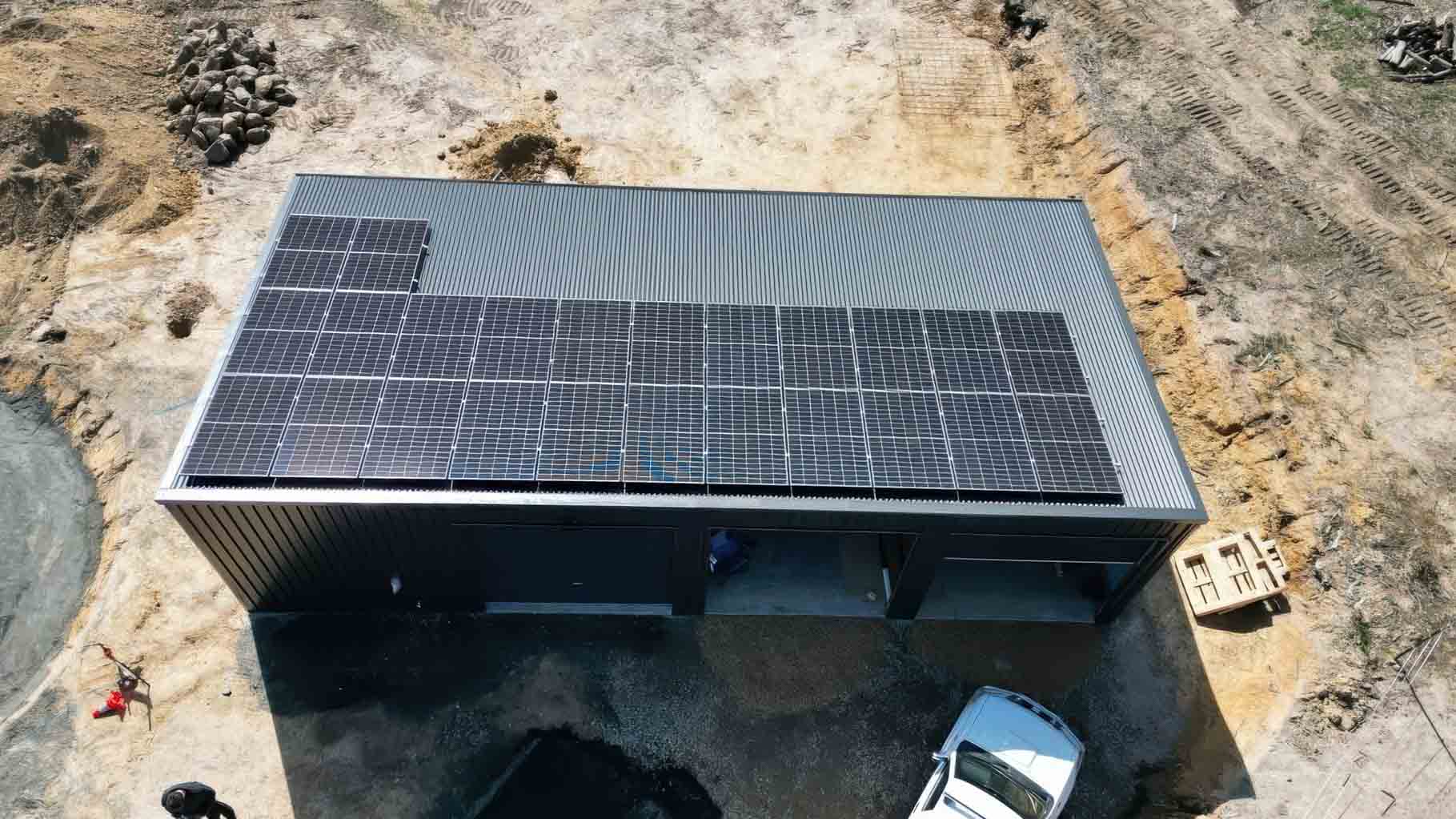
The Optimal 10kW Off-Grid Solar System for Australians Households
The 10kW off-grid solar system is considered a magic number for a simple reason: in Australia, the average household requires 16-20kWh of power per day. Taking the winter average solar panel production in a region like Ballarat, Victoria, as an example, one kW of solar panels produces around 2kWh of electricity per day. In off-grid living, the target is not the average solar production throughout the year, but rather the winter period, which is the time of lowest solar energy generation. As a result, 20 / 2 = 10kW. It’s important to note that rebate systems actually encourage the installation of more solar panels, as any extra panels generate additional rebates. Interestingly, a 10kW power inverter is also a good number for most households. When connecting a house to the grid, for example in Ballarat, the power company will allow a maximum demand of 40A, which is roughly equivalent to 10kW. Additionally, a battery bank of around 10kWh would be suitable as well, as it covers half a day of demand, but 10kWh would be the absolute minimum for a battery bank.
10kW off grid solar system cost
10kW off-grid solar system or stand-alone solar system can cost from $25,000 to $35,000 depending on the type of off-grid solar equipment and the complexity of the installation site. Most domestic installations always fit into this price range.
In some cases, the cost of a 10kW solar power system can go up to $50,000 or more, mainly because of the inclusion of a large battery bank. Batteries are a significant part of the overall cost of a solar power system, especially if you’re aiming for a high level of energy independence or need to store a large amount of energy for backup power. The price can also vary depending on the quality of the components, installation complexities, and any additional features or services included in the package.

For further sizing and cost estimates read Off-Grid Solar: What It Is, Costs, And Sizing Guide
Off-Grid Solar System Sizes and Prices in Australia: A Guide for Homeowners
When considering an off-grid solar system in Australia, the size of the system and the cost are two crucial factors. The right system size depends on your household’s energy needs, while the cost varies based on the system size and the quality of the equipment. Let’s break it down:
System Sizes and Costs for Different Household Sizes:
- Single or Couple (1-2 Residents): A 5-8kW off-grid solar system is typically sufficient. The average cost ranges from $18,000 to $22,000.
- Small Family (3 Residents): A 10kW system is recommended. The cost is around $28,000 to $30,000.
- Medium Family (4 Residents): A 15kW system is suitable, with a cost ranging from $34,000 to $38,000.
- Large Family (5+ Residents): A 20kW system is needed, with the cost between $46,000 to $50,000.
These prices are for fully installed off-grid solar systems in Australia after rebates.
Equipment Considerations:
When selecting equipment for your off-grid solar system, it’s essential to choose high-quality solar panels, batteries, and inverters. The best equipment ensures reliability, efficiency, and longevity of your system.

Comparing Costs to Grid Connection:
It’s worth noting that the cost of an off-grid solar system can be quite modest compared to connecting your property to the grid. Grid connection costs start from $25,000 if you’re lucky, but figures like $60,000 to $100,000 are very common. In this context, an off-grid solar system can be a cost-effective alternative, providing energy independence and long-term savings.
In summary, when considering an off-grid solar system in Australia, assess your household’s energy needs and compare the costs with grid connection fees. With the right system size and quality equipment, you can achieve energy independence and enjoy the benefits of sustainable living.
Off-grid solar supplies your home with electricity without a connection to the main power grid. No poles. No lines. No electricity bills.
It’s not a new idea . Though recently the systems have changed a lot. Older setups needed separate battery chargers, regulators, and a tangle of components to make it work. Modern systems are much simpler. Most run on three or four core components, and they’re more reliable than anything available a decade ago.
What’s Actually in an Off-Grid System
Four main components do the work:
- Solar panels — capture sunlight and generate DC electricity
- Batteries — store that electricity for use at night or on cloudy days
- Inverter — converts stored DC power to the AC power your appliances run on
- Generator — optional backup for extended low-production periods
The complexity isn’t in the component count. It’s in getting the sizing right for your property and your location.
Off-Grid Solar System Sizes and Prices in Australia: A Guide for Homeowners
More than grid-tied solar. That’s the honest answer.
You’re not just buying panels. You’re buying energy independence. Batteries, inverters, and installation all add to the cost. And the system needs to be sized properly, or it won’t perform when you need it most.
Here’s a rough guide to installed system costs in Australia:
| Household Size | Typical System | Installed Cost (approx.) |
|---|---|---|
| 1–2 people | 5–8 kW | $18,000 – $22,000 |
| 3 people | 10 kW | $28,000 – $30,000 |
| 4 people | 15 kW | $34,000 – $38,000 |
| 5+ people | 20 kW | $46,000 – $50,000 |
Prices are approximate and after rebates. System cost varies by location, equipment quality, and battery storage required.
Typical Off-Grid Solar System Across Australia
Worth keeping in mind: connecting a rural property to the grid typically starts at $25,000. Figures of $60,000 to $100,000 are common. Against that, an off-grid system starts to look like the rational choice.
After years of installing off-grid solar systems, we’ve come to understand what a typical setup looks like across Australia. While it’s tempting to simplify the answer to a 12kW system, the truth is, there’s a bit more to it. When designing a system, there are three key components to consider, and the most important of these is the solar panels. These panels generate the power and are actually the most affordable part of the setup.
These days, the size of the solar panel array isn’t strictly determined by solar data or how much energy you use—it’s more about how much roof space you’ve got available on your sheds or other structures. While we generally recommend at least 2-3kW of panels per person in the household, the general rule is simple: the bigger, the better. In practice, we usually end up installing solar panel arrays ranging from 12kW to 15kW on most sheds across Australia.

An interesting point is that the cost difference between a 12kW and a 15kW system is pretty minimal, often just about $500. This is because larger arrays attract more STCs (Small-scale Technology Certificates), making the bigger system more bang for your buck.
Next up is the inverter, which dictates how much power your home can draw from the system at any given time. Here, it’s pretty straightforward: we almost always go with a 12kW inverter, as it fits the needs of most homes. Just for comparison, a typical grid connection gives you around 40A, or roughly 9kW. So, with a 12kW inverter, you’re not only matching but exceeding what you’d get from the grid, making sure your home can comfortably handle its energy demands.
Finally, we come to the battery, which is where a large chunk of your investment will go. We typically install a 20kWh battery, mainly because you need that capacity to provide 12kW of power to match the 12kW inverter. This size also aligns nicely with the average 24-hour energy consumption of a typical Aussie household, making it a solid choice for going off-grid.
So, when you look at the whole package, this is what a typical off-grid system looks like across Australia: a 12-15kW solar panel array, a 12kW inverter, and a 20kWh battery bank. And as for the cost? You’re looking at around $35k for the complete setup. Check out the system pricing and specs here.
How Do You Know What Solar Power System Size You Need?
A general guideline: start with 10 kWh per day for one person, then add 5 kWh per day for each additional person. A household of three typically needs around 20 kWh per day, which points to a 10 kW system.
That gives you a starting point. But a starting point isn’t a design.
Where the general guide falls short: it’s based on average consumption and average solar production. Most off-grid systems that fail or end up generator-dependent, were sized against averages. They work great in summer. Then July arrives.
The 100UP approach to designing Off Grid solar adds one more layer. We use a baseline of 5 kWh for the property itself, plus 5 kWh per occupant. We size that against worst-case winter production. In Ballarat, a clear June day gives you around 2.5 to 3 peak solar hours. Overcast stretches can cut that further. A system sized for that is one that runs without generator dependency when it matters most.
→ Use the off-grid sizing calculator to model your property
Bigger Solar Systems, & Real Ballarat Installs
What 20 kW Actually Looks Like
For larger properties, higher occupancy, or agricultural use, 20 kW systems are common. They handle more load, more battery storage, and more complex energy needs , but the sizing and design principles are the same.
→ See the 20 kW system guide or keep reading for to learn about our recent projects specs, installs and pricing
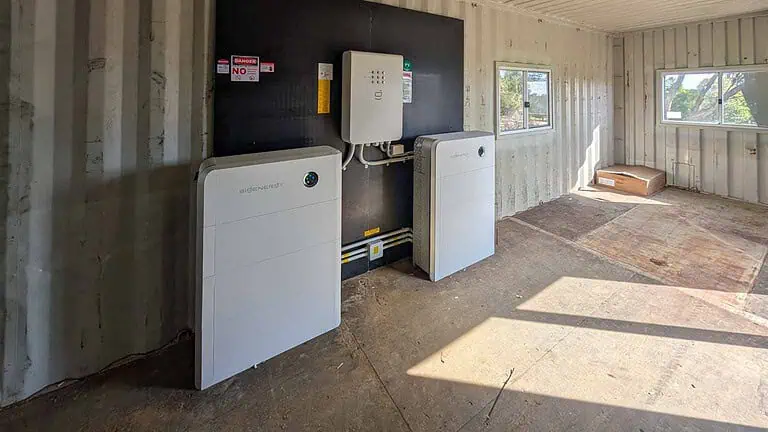
Allendale Vic
80kW Ground-Mounted System with Room to Double Battery Capacity
Full-Time Living · High Demand Use · Future Growth
- Solar
- 81.6 kW
- Inverter
- 60 kW
- Battery
- 50 kWh
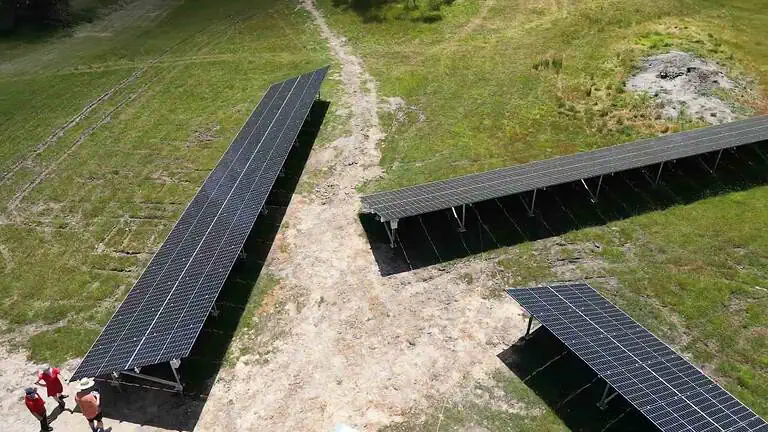
Haddon, Vic
50kW Off-Grid Solar. No Grid Connection. No Power Bills.
High Demand Use · Commercial
- Solar
- 50 kW
- Inverter
- 30 kW
- Battery
- 67 kWh
Is Off-Grid Power Right for Your Property?
Off-grid makes sense when grid connection is expensive, unavailable, or simply not worth it. The numbers usually favour off-grid:
- If you’ve received a grid connection quote above $25,000, or
- If your property is genuinely remote
The upfront cost is real, but so is the alternative. It’s not right for everyone. If grid power is available and affordable, a hybrid solar-plus-battery system is often the better fit. We’ll tell you that upfront.
If you’re not sure, the off-grid system sizing pricing guide covers the full cost picture, what’s included, what varies, and how to compare quotes properly. Or get in touch a quick conversation usually makes it clear