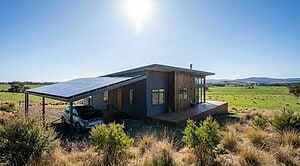
2-Bedroom Off-Grid Solar Power System
This is the system built to go off-grid full time, reliably through every season. A stand-alone solar system setup for up to 3 people.
See the 2 Bedroom System


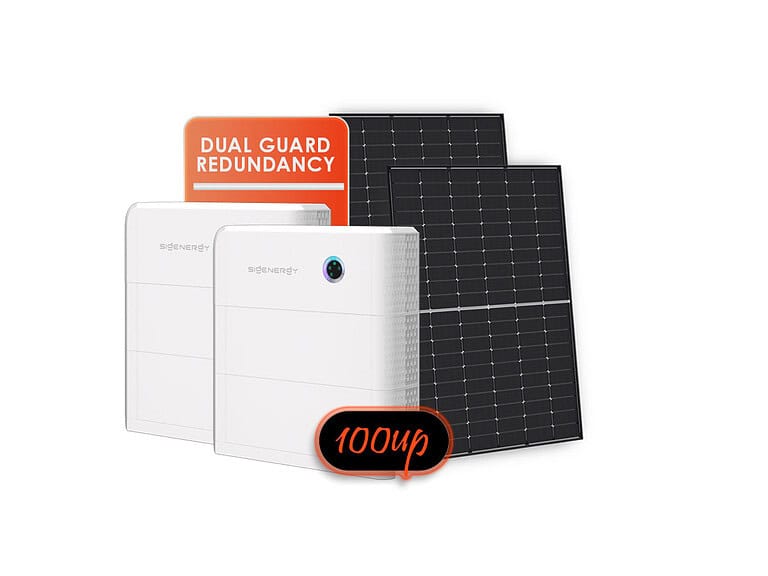
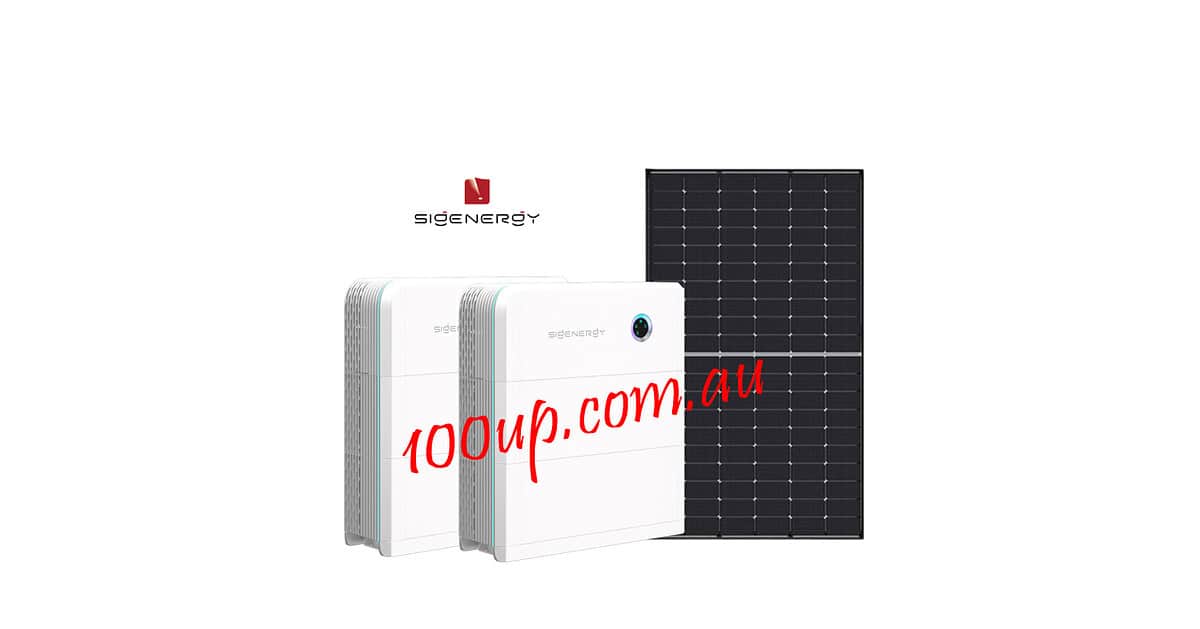
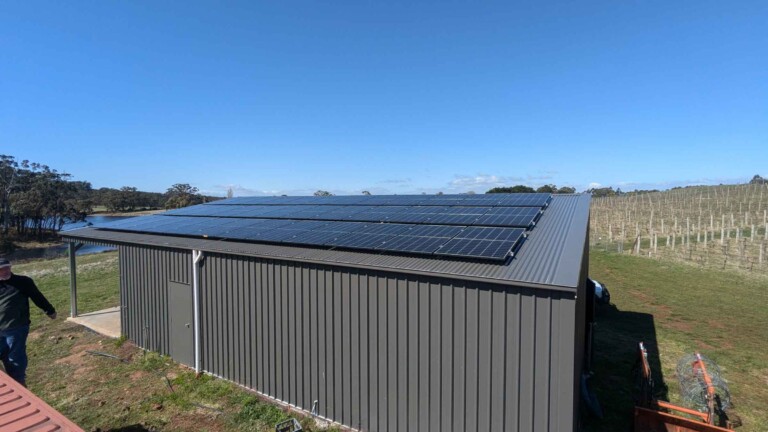
This off-grid solar system is engineered for a 2-bedroom home with up to 3 occupants and a 20kWh daily energy target. It features a 27.1kW solar array designed to handle winter production challenges, dual 8kW Sigenergy inverters for redundancy, and integrated battery storage. The oversized solar capacity ensures battery recovery during poor winter conditions without relying on a generator.
12kW Sigenergy dual-inverter off-grid system for 3-4 person households. 10kW continuous capacity (similar to grid-typical 40A supply), 20kWh battery, generates 20kWh+ daily in winter. Built for modern energy use with redundancy. Installed 2-36k.
This system is designed for a 2-bedroom home with up to 3 occupants. Using the 100UP sizing method, we allow 5kWh per day for the house itself, plus 5kWh per person.
For three people, that gives us a design load of 5kWh + 3 × 5kWh = 20kWh per day.
But matching 20kWh of daily usage with 20kWh of solar production isn’t enough when you’re off-grid. There is no grid to fall back on when you get several grey winter days in a row. That’s why this system carries a much larger 27.1kW solar array. The extra solar isn’t there for a sunny January afternoon. It’s there to give the batteries every opportunity to recover during the shorter, poorer solar windows we get in winter.
We modelled this configuration using an accurate hourly July model, including the system’s own standby consumption of approximately 150W, or 3.6kWh per day.
The system passes the July model at a 20kWh/day household load without requiring a generator.
Annual solar averages can make almost any system look good. An off-grid system needs to work when solar production is at its worst.
This system uses two 8kW Sigenergy inverters operating in parallel. That gives the home up to 16kW of combined inverter capacity, but capacity isn’t the only reason for using two.
It’s also about redundancy. With a conventional single-inverter off-grid system, an inverter fault can mean the entire house loses power until that inverter is repaired.With two inverters, if one requires service, the other can continue supplying the home within its available capacity.
When your solar system is your power station, removing single points of failure matters.
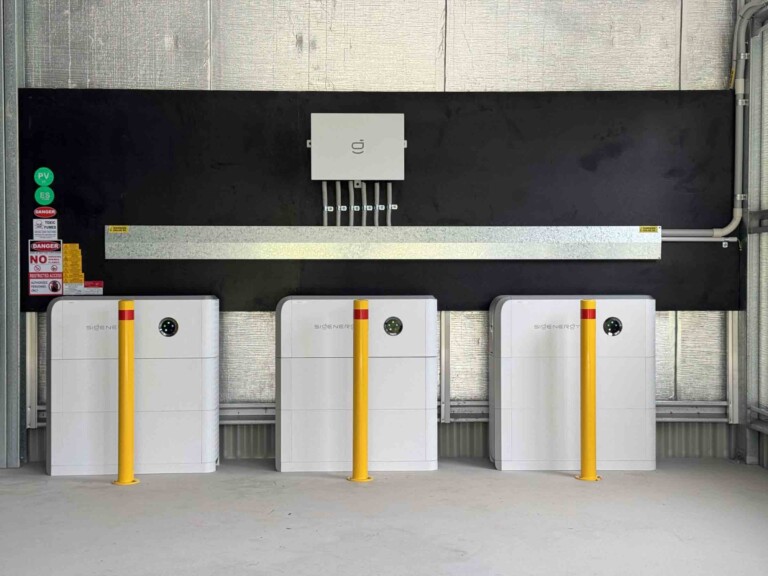
Sigenergy combines the inverter, modular high-voltage battery system, gateway and monitoring into one integrated platform.
For this installation, the important part isn’t simply that it’s newer technology. It’s that the architecture gives us the battery capacity, inverter redundancy and monitoring we want while remaining modular if the property’s energy requirements change later.
That’s what we’re looking for in an off-grid platform: equipment that supports the way the system needs to be engineered, rather than designing the house around the limitations of the equipment.
Because this is off-grid. The job of the solar array is not simply to replace 20kWh of energy on an average day. It also needs enough capacity to run the home, cover system losses and recover the battery when useful winter solar is limited. That is why the array is 27.1kW, even though the household design load is 20kWh/day. The extra solar capacity gives the system more opportunity to recover during short winter production windows instead of depending on a generator every time the weather turns grey.
An inverter is critical infrastructure in an off-grid home. A single large inverter may provide enough power, but it also creates a single point of failure. This system uses two SigenStor EC 8.0 SP inverters in parallel. Together they provide up to 16kW of inverter capacity. If one inverter needs attention, the second unit remains available to operate the home at reduced maximum inverter capacity. For a property relying entirely on its own power system, that redundancy matters.
This configuration is our starting point for a 2-bedroom home, up to 3 occupants and approximately 20kWh of daily energy use. Your actual requirements can change if you’re running large pumps, electric heating, workshop equipment, an EV charger or other significant loads.
If you’re not sure, tell us what you’re building and who’s going to live there. We’ll work out the load first, then size the off-grid system around it.
Fred installed our solar. Very honest very reliable. He goes above and beyond. Tries his best to help. Does a great job. I recommend.
Dino Papa
Verify reviewQuotation & installation process. They have been unfailingly helpful and never failed to communicate pro-actively & effectively.
Andrew Webb
Verify reviewFred did a great job was extremely patient with the slow build Clean and tidy Explained what he was doing along the process
Darcy Joynson
Verify review