
Container solar: off-grid power in a 20 ft box
Solar, battery and inverter built into a shipping container. It arrives closed and opens on site at the press of a button. No crane and no concrete.

What it is
What is container solar?
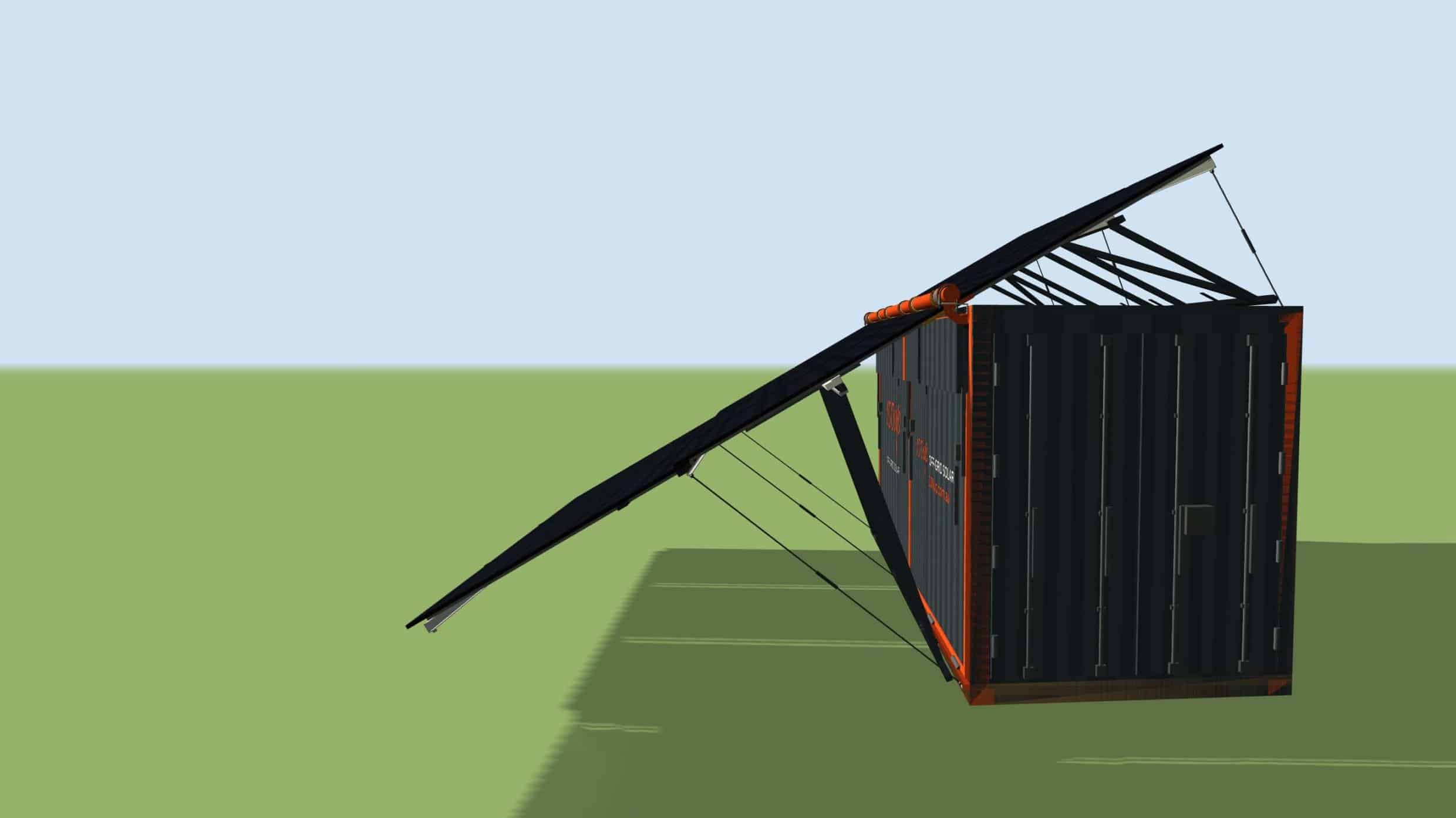
A complete off-grid power system that travels as a 20 ft shipping container.
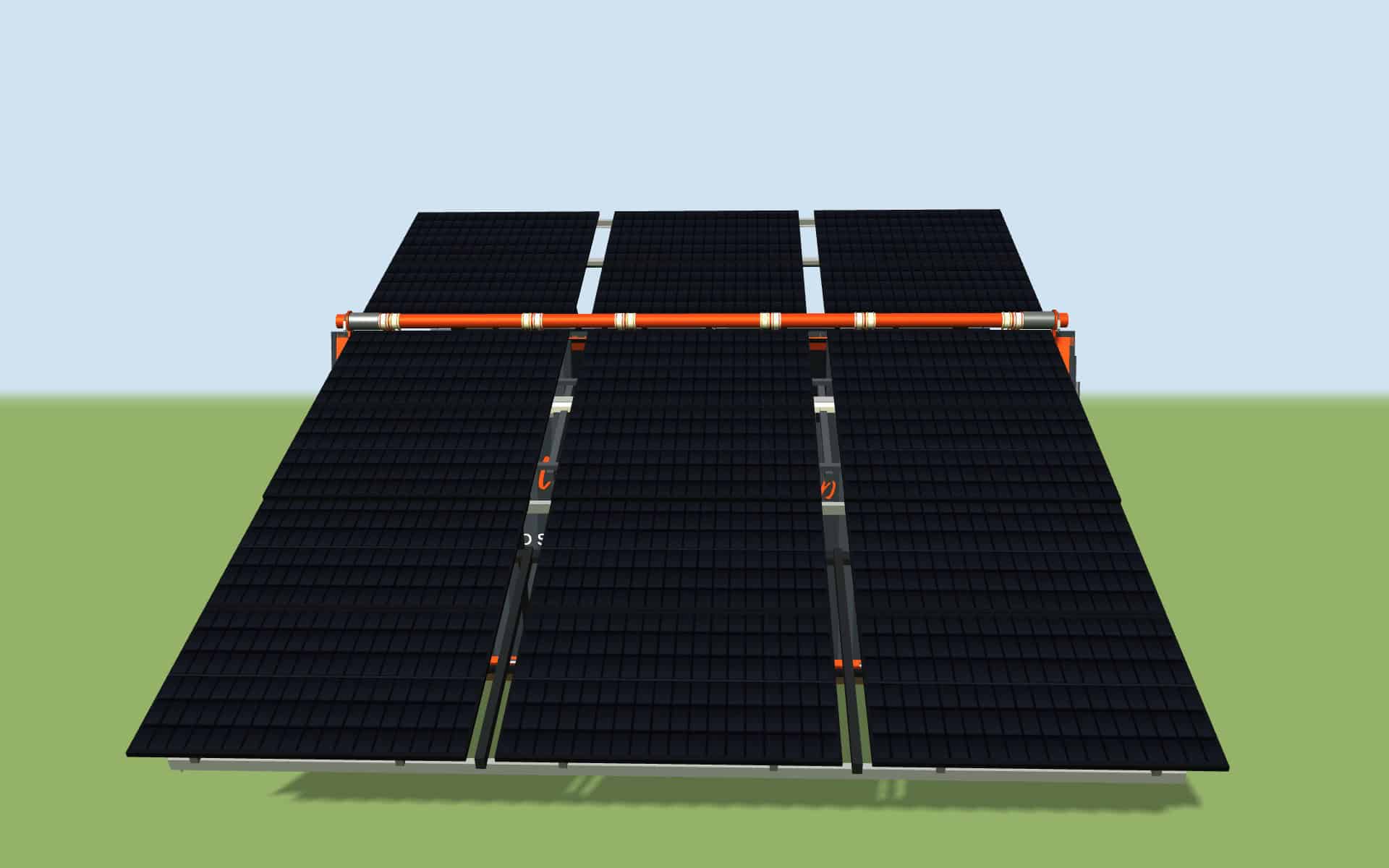
Fred's design folds out into 18 solar panels, about 9 kW of solar. The battery, inverter and switchboard sit inside. We wire and test it in our yard before it leaves.
It suits sites that need power now, or need it somewhere else next year. Close it up, put it on a truck and take it to the next job.
- 18 panels, about 9 kW of solar
- Battery and inverter built in
- Opens and closes at the press of a button
- Off-grid specialists since 2015
- 20 ft high-cube, fits a standard truck
Closed to open
What does it look like on site?
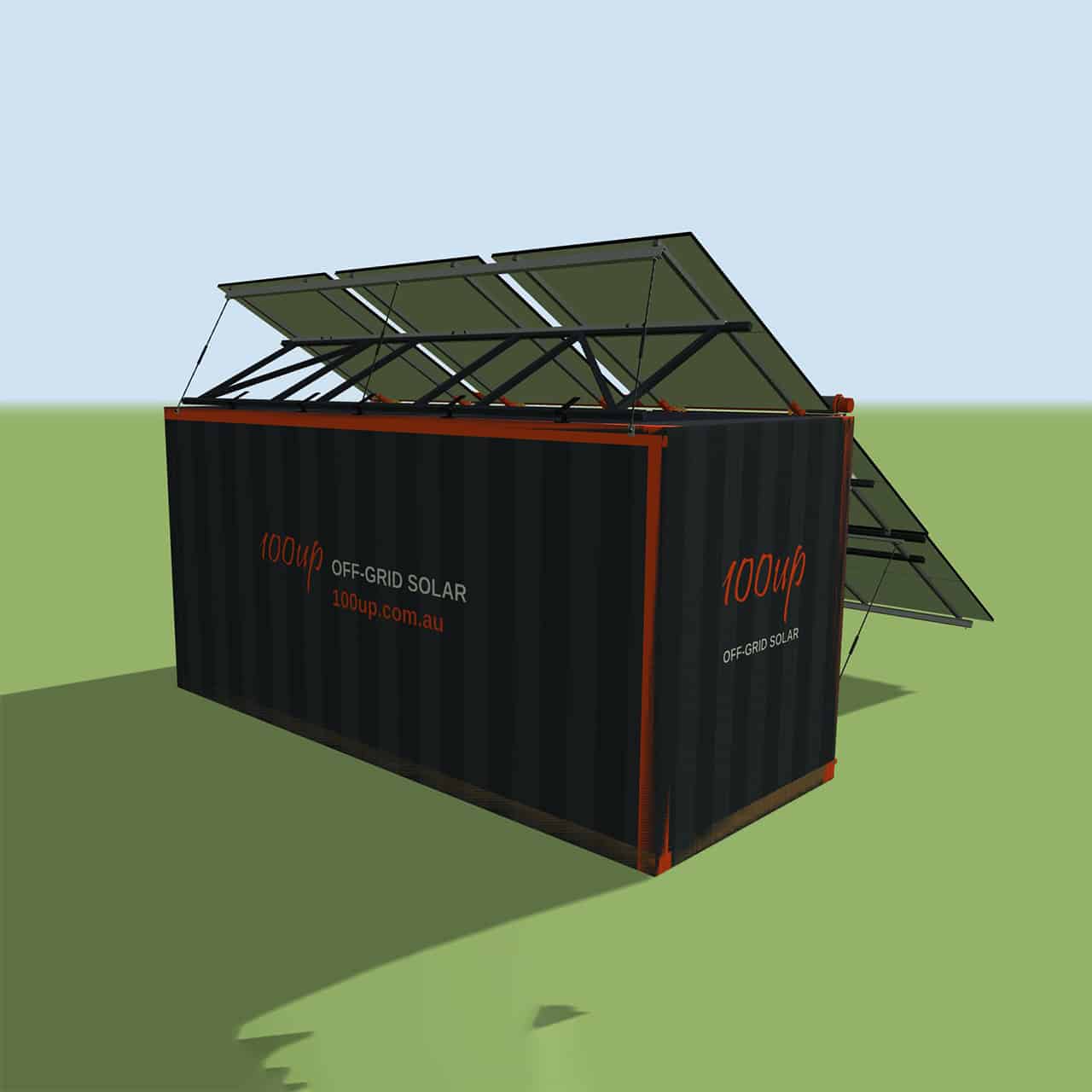
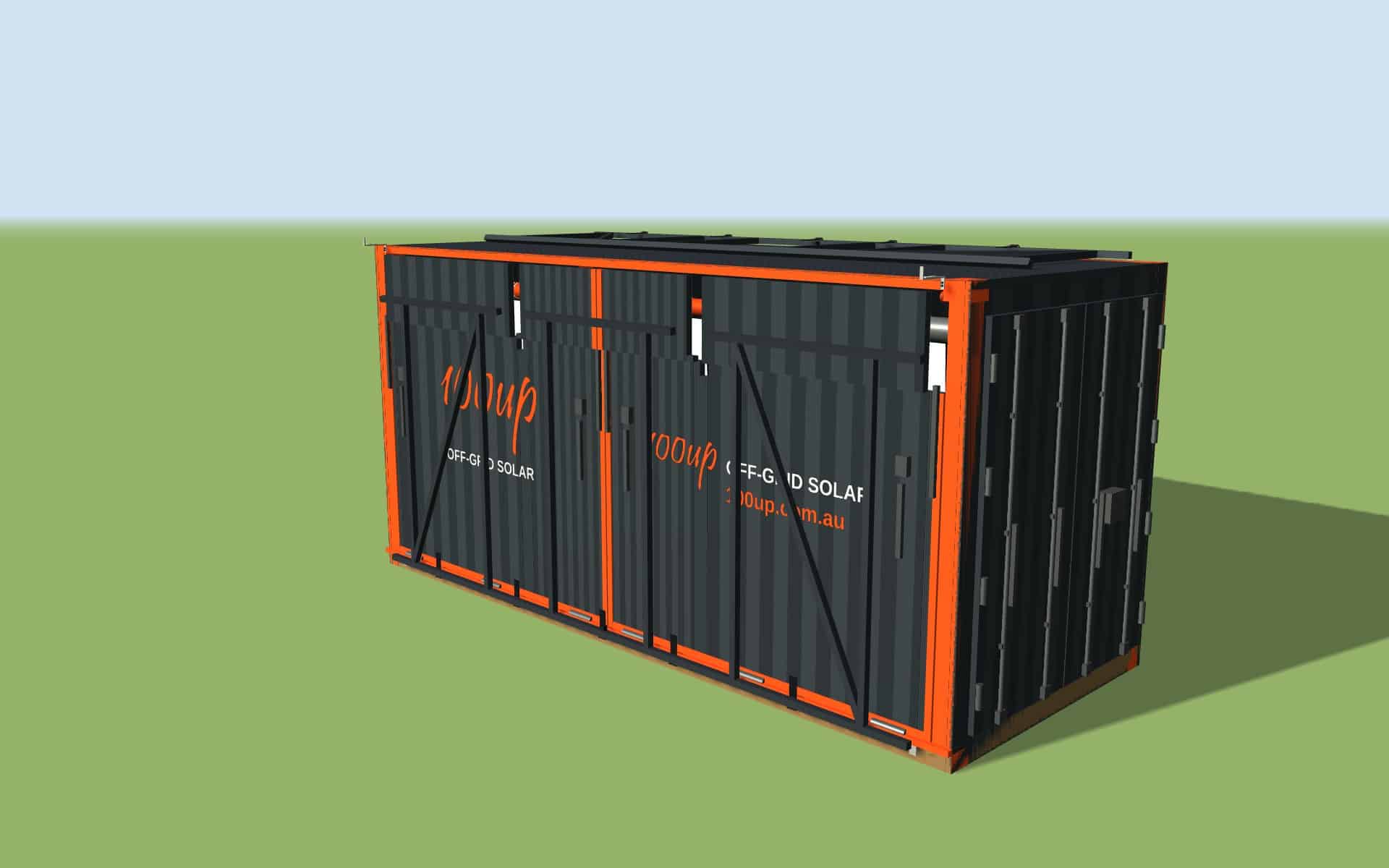
It travels as a closed container. One button opens it into a full solar array.

1. Closed for the trip
Everything stays inside. Standard size, standard tie-downs, standard truck.
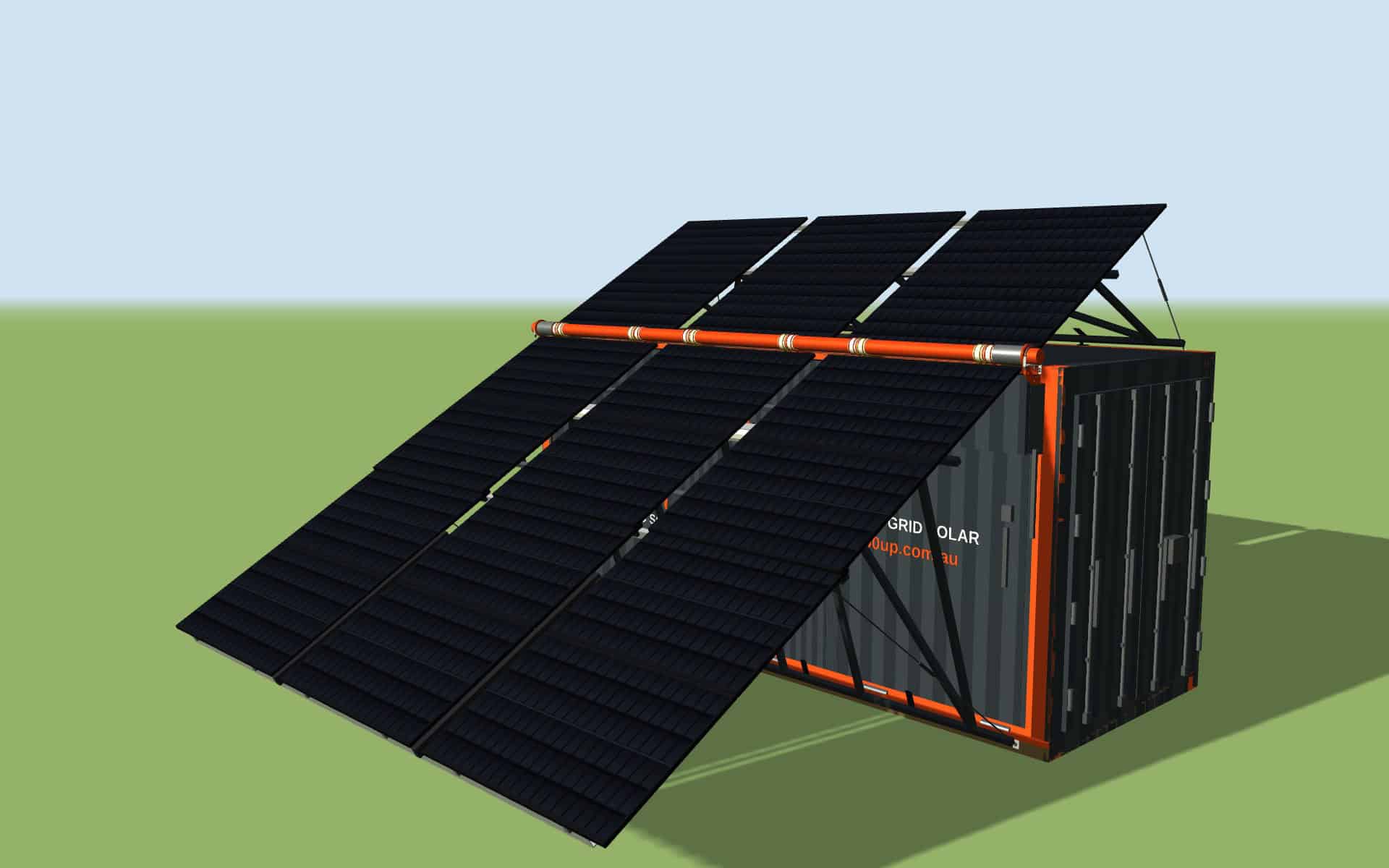
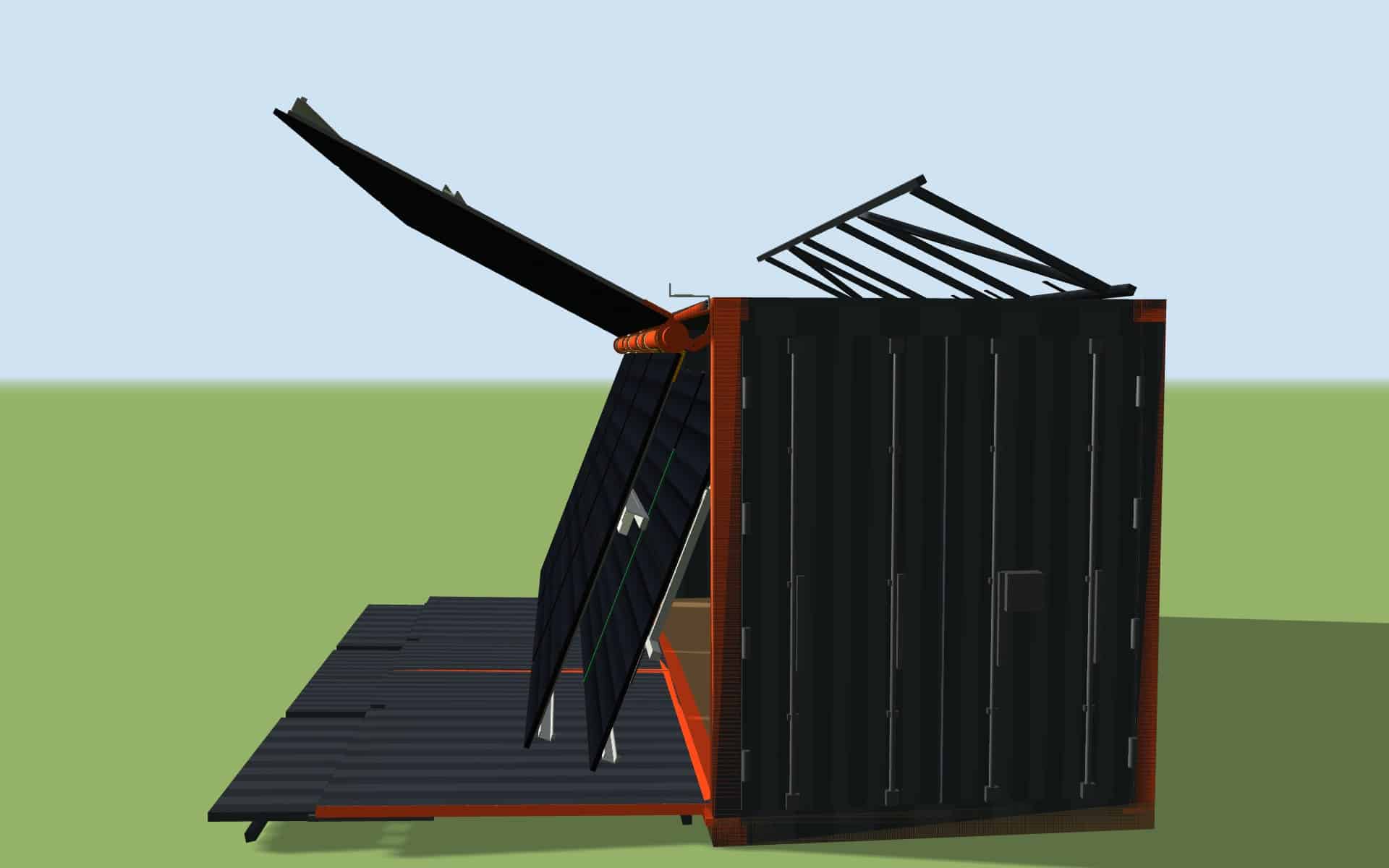
2. Opening by itself
Press open. The side doors drop and the panel rows swing up over the roof.
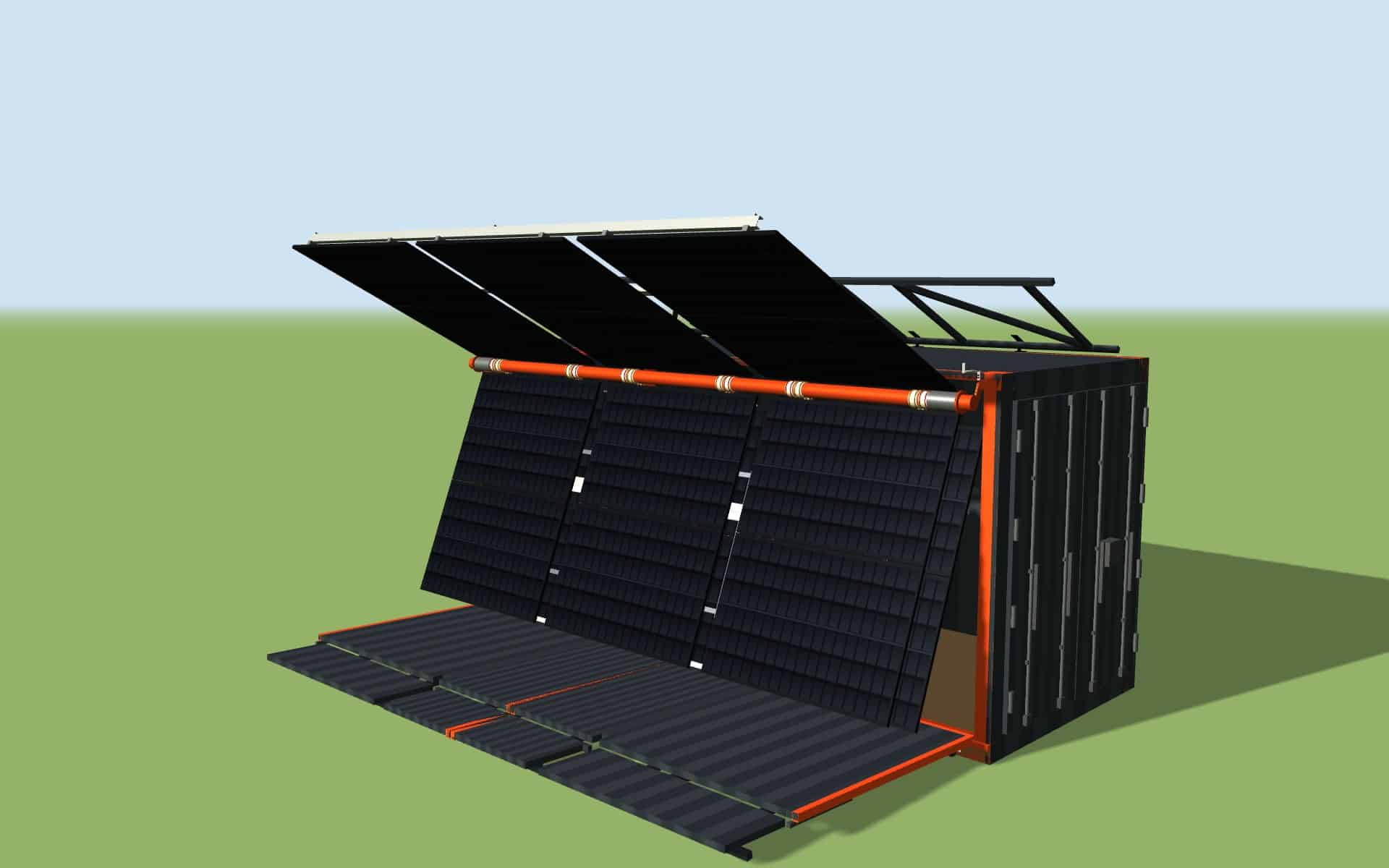
3. Fully open
Three rows of panels over the roof and down the sunny side. The lower row tucks just under the one above.
How it works
Delivered closed. Opened on site.
Opening and closing are automated. Nobody climbs a ladder or lifts a panel.
-
1
Set it down. A tilt-tray or side-loader drops it on level ground, open side facing north.
-
2
Press open. The doors drop and the panels swing up over the roof and down the sunny side.
-
3
Switch on. The braces lock as it opens. Peg the feet and it's live.
We size every off-grid system on what it makes in a Ballarat July. We'll match the battery and inverter inside to what your site needs to run.
Images are design renders. The final product may differ.
Who it suits
Where does container solar make sense?
Mine sites, camps and site offices
Power from day one. Move it to the next job when you're done.
Farm outstations and pumps
Run a shed, pump or shearers' quarters far from the house. No trenching.
Events and seasonal sites
Set up for the season. Pack it down at the end.
Remote monitoring and telco
Steady power for gear that has to stay on. We've powered remote fire towers across three states.
Power while you build
Live on your land while the house goes up. Keep it as backup, or move it on.
Sites that keep growing
Add a second container, or link a ground array as your load grows.
Why a container
What makes container solar different?
The whole system is built, wired and tested before it reaches you. On site there is very little left to do.
No crane, no concrete
No footings, trenching or scaffolding. The container is the base and the plant room.
Everything in one box
Battery, inverter, switchboard and monitoring go in and get tested in our yard before it leaves.
Built for the weather
Open, the panels brace to the ground. Closed, they sit inside the steel shell.
Moves with you
Mine sites, farms, events and camps. Close it up and it's ready for the truck to the next site.
Grows with your load
Add a second container or a ground array later. It all runs through the same system.
Made in regional Victoria
Designed and built by 100UP, off-grid solar specialists since 2015.
Questions
Container solar questions
18 panels, about 9 kW of solar.
We match the battery and inverter inside to what your site needs to run. For bigger loads, add a second container or a ground array.
The battery, inverter, switchboard and monitoring.
We wire and test everything in our yard before it leaves.
No crane. A tilt-tray or side-loader sets it down on level ground.
The container is the base, so there are no footings to pour.
Press a button. The side doors drop, then the panel rows swing up over the roof and down the sunny side.
Closing up is the same button the other way.
Yes. Close it up and it travels as a standard 20 ft container on a standard truck.
We’re taking expressions of interest now.
Register below and we’ll be in touch about timing, size and price.
Register interest
Tell us about your site
Where is it going, what does it need to run, and for how long? We'll be in touch about timing and size it to suit.

Fred reads every enquiry himself. He's the one who designs, installs and looks after 100UP systems.
What helps us plan
- Where the site is (a Google Maps pin is perfect)
- What it needs to run
- How long you need power there