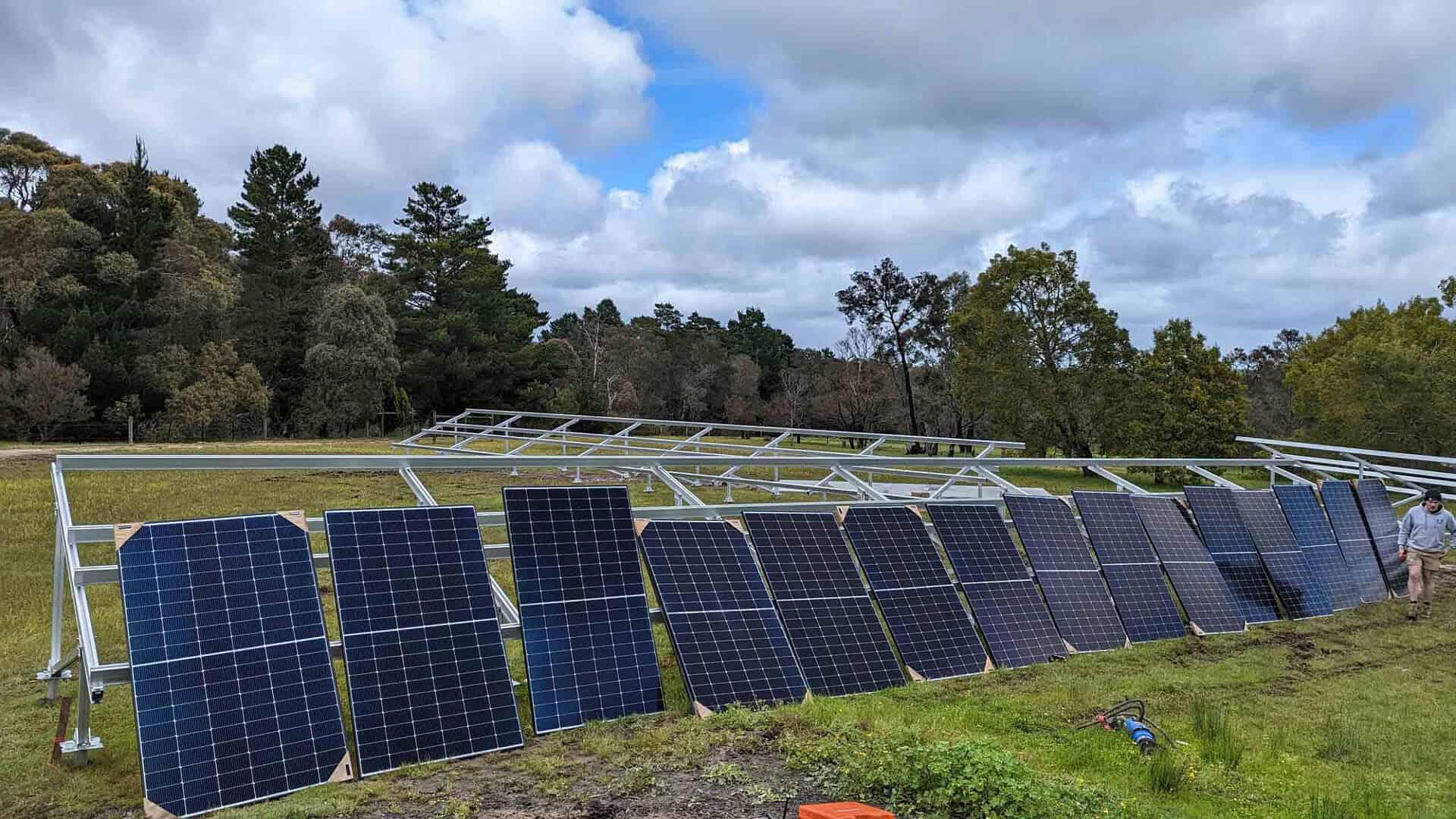
Ground mounted solar panels for off-grid properties

When the roof can't carry the system you need, we build it on the ground. Aimed at true north and tilted for your land.

Off-grid ground-mounted solar panel array on steel frames

Ground or roof?

When are ground mounted solar panels the better choice?

When the roof can't carry the system you need.

Solar panel mounting on the ground makes sense when the roof faces the wrong way. Ground installation also works when the site is shaded, has the wrong pitch, or is too small. Off-grid systems are sized for winter, so they often need more panels than a roof can hold.

The main advantage is control. We choose where the panels go, how they tilt, how big the array is and what holds it up.

  • Aimed at true north
  • Pitch for winter sun
  • Room to add panels later
  • Off-grid specialists since 2015
Ground-mounted solar panels on a steel frame in a rural paddock

Who it suits

Are ground-mounted solar panels right for your property?

Fred from 100UP in a hard hat on a rooftop solar install

Fred did a great job, clean and tidy, explained was he was doing along the process

Darcy J

  • The roof faces the wrong way

    East, west or south. A ground array can face true north, however the house sits.

  • Trees shade solar energy production

    Another spot on the block may get clear sun all winter.

  • The roof is too small

    A solar system sized for July can need more panels than the roof can fit.

  • The roof isn't a good base

    Old iron, a weak frame, or a roof you'd rather not drill.

  • You run a farm or workshop

    Big loads and three-phase power need a big solar array.

  • You'll want more power later

    With spare land, adding panels is simple.

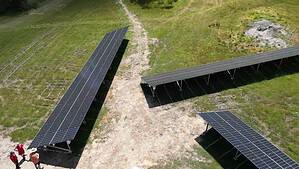
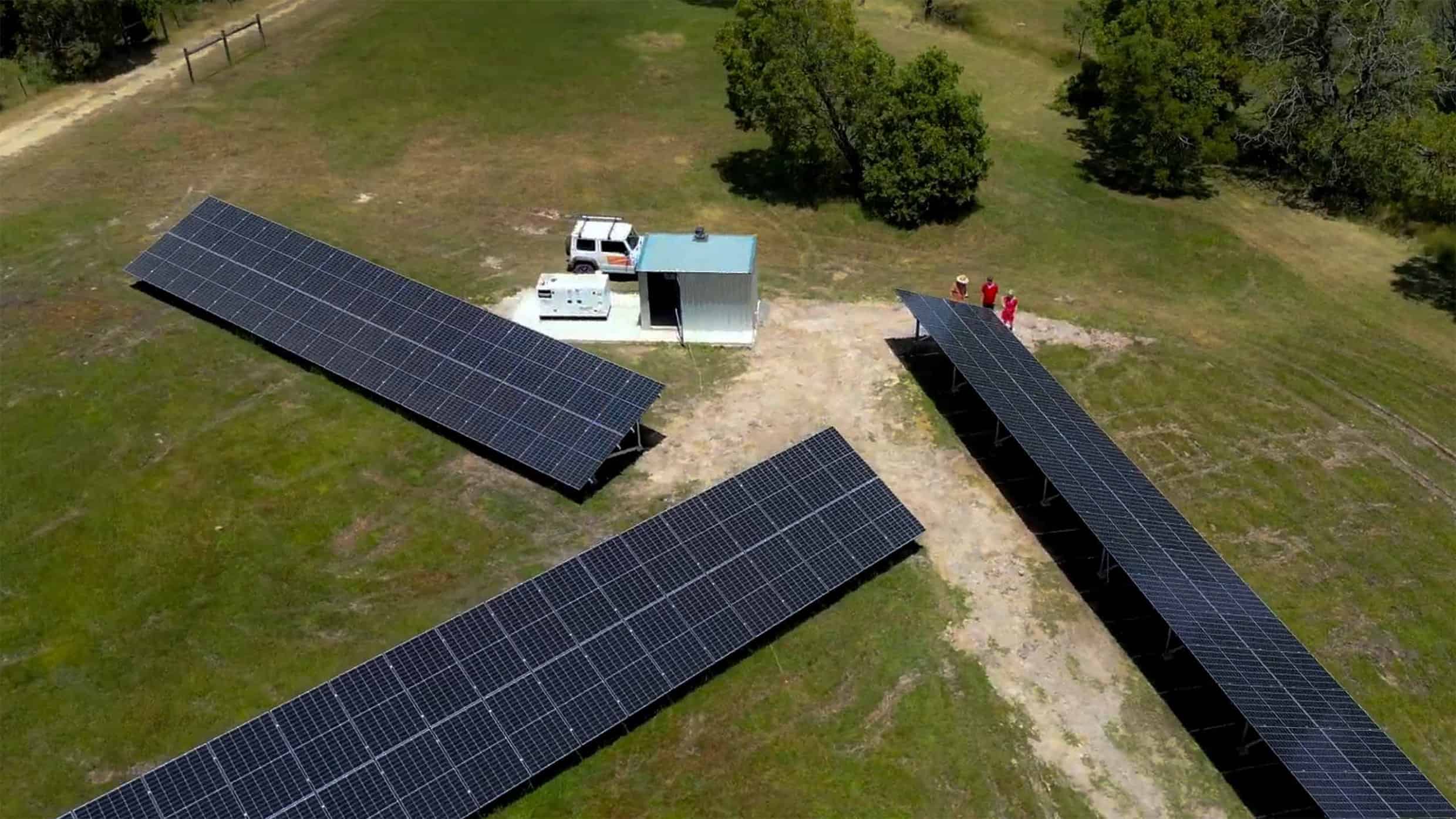
Large ground-mounted solar array in a rural paddock with a 4WD parked beside it

Why position matters

Aimed at true north and tilted for winter

A ground mount isn't limited by the way your roof faces. We point the panels at true north. In Ballarat, true north and the compass are about 11 degrees apart, so we set out every array by true north.

  • 43%

    less power in July from a west-facing array at the same tilt.

  • +64%

    more power in July from panels tilted at 30 degrees than from flat panels.

  • 99.9%

    of the best possible yearly output at a 30 degree tilt in Ballarat.

We size every off-grid system on what it makes in July. Getting the orientation and tilt right is how a ground install earns its keep in winter.

Modelled for Ballarat using PVGIS solar data.

Send us your site details

Mounting options

Which solar ground mount suits your site?

Each mounting frame is set out on site. We aim it at true north and position it to suit your land, your shading, and whether you need the most power in winter or across the year.

  • Fixed frame

    The most common mounting hardware. One orientation, set for the sun you need most.

  • Pole mount

    A few panels on a single pole. Handy for small arrays or ground that's hard to dig.

  • Rail and leg mount

    Rails on steel legs, tested as one system. Suits bigger arrays.

  • Driven posts

    Posts driven into the ground. Quick to install on the right soil.

The best fit depends on the size of the system, your soil, how far the cable has to run, and whether you'll add panels later. Bigger systems can be split into several arrays, each set out to suit the land.

Watch a ground-mounted system go in

The frame is set out on site, lined up to true north and set to the right tilt before a single panel goes on.

Fixed or tracking?

Why we add panels instead of tracking the sun

Tracking frames and adjustable-tilt frames move to follow the sun. They can lift output. But they cost more, they have moving parts, and someone has to look after them. On an off-grid property, that's one more job to remember.

Fred's advice is to put that money into a few extra panels on a fixed frame. It usually costs less, makes more winter power, and there's nothing to service. It's the easier system to own, now and in ten years.

Side by side

Ground mount vs roof mount

A ground mounted system costs more to build than the same panels on a sound roof. Here's what you get for it.

Ground mount Roof mount
Direction Faces true north, however the house sits Stuck with the way your roof faces
Tilt Set at up to 30 degrees to suit the site Fixed to your roof's pitch
Array size Limited by land Limited by roof space
Upfront cost Higher. Frame, footings and a trench Lower. Uses the existing building
Cleaning At ground level. A hose and soft brush Needs roof access
Adding panels later Easier where land is free Limited by the roof left over

Want the full ground mount vs roof mount comparison? Read What Are Ground-Mounted Solar Panels and How Do They Work?.

Ask if a ground mount suits your site

Ground-mount kits

Ground-mount kits for farms and bigger properties

Three-phase kits for farms, workshops and large homes. Smaller ground mounts are designed to suit the site.

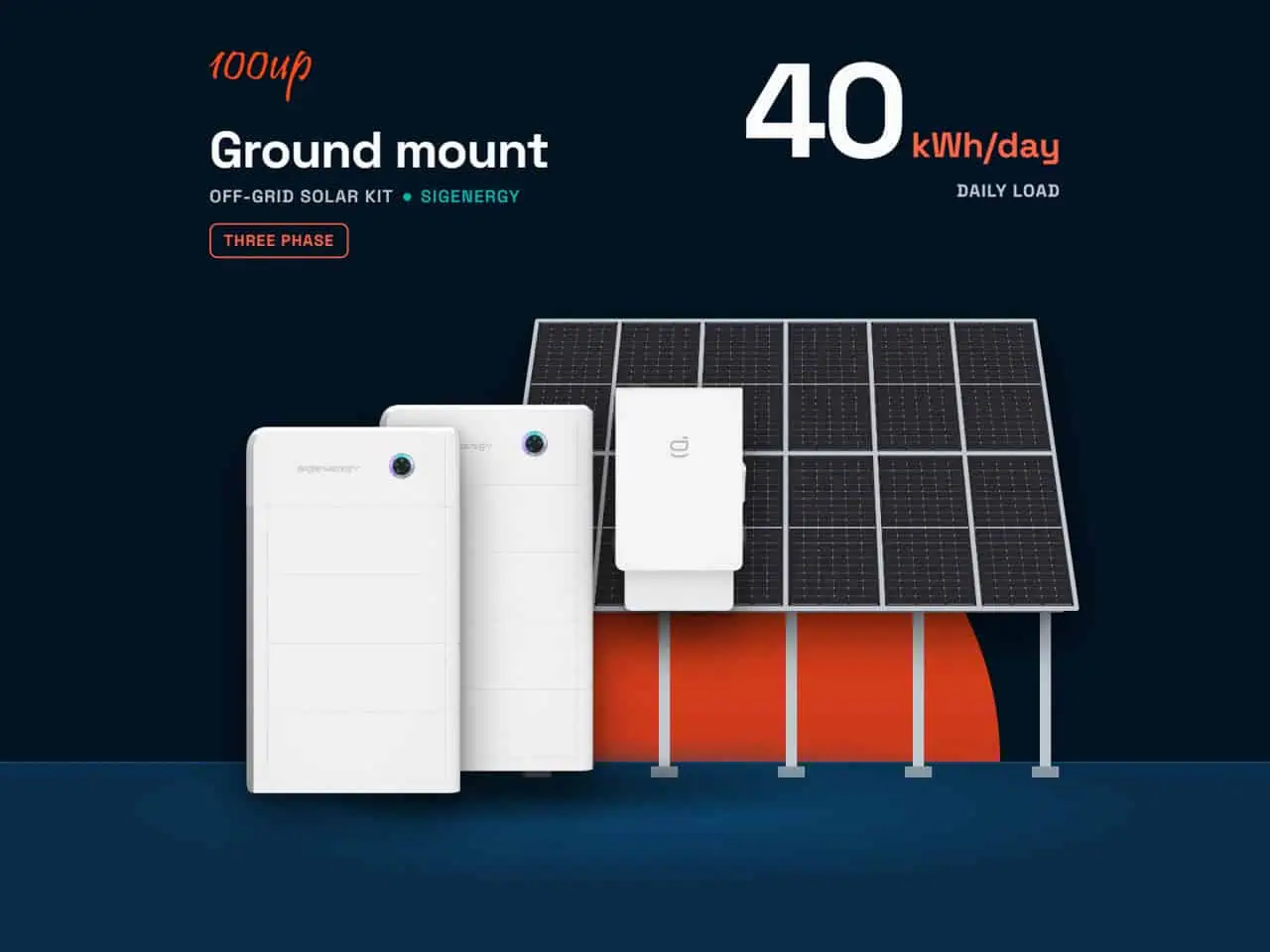
Ground-Mount Three-Phase Off-Grid Solar Kit – Sigenergy 2 x 15 kW Inverter, 72 kWh Battery, 47.5 kW Solar

Ground-Mount Three-Phase Off-Grid Solar Kit – Sigenergy 2 x 15 kW Inverter, 72 kWh Battery, 47.5 kW Solar

Three-phase off-grid solar kit for farms, workshops and large homes using about 40 kWh a day: Sigenergy 2 x 15 kW inverters, 72 kWh battery storage and a ground-mounted 47.5 kW sol...

See the kit
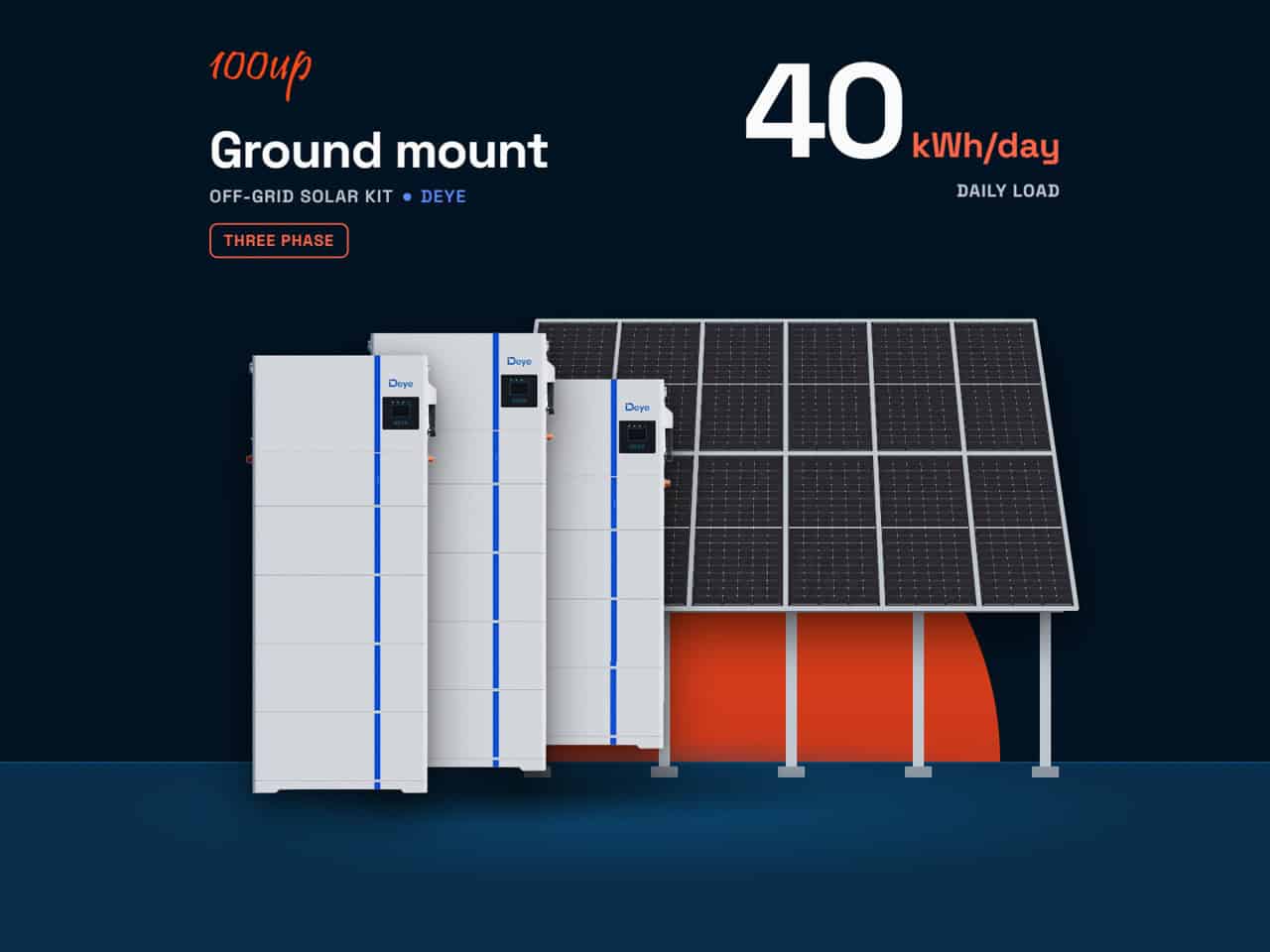
Ground-Mount Three-Phase Off-Grid Solar Kit – Deye 3 x 12 kW Inverter, 71.4 kWh Battery, 47.5 kW Solar

Ground-Mount Three-Phase Off-Grid Solar Kit – Deye 3 x 12 kW Inverter, 71.4 kWh Battery, 47.5 kW Solar

Three-phase off-grid solar kit for farms, workshops and large homes using about 40 kWh a day: Deye 3 x 12 kW inverters, 71.4 kWh battery storage and a ground-mounted 47.5 kW solar ...

See the kit
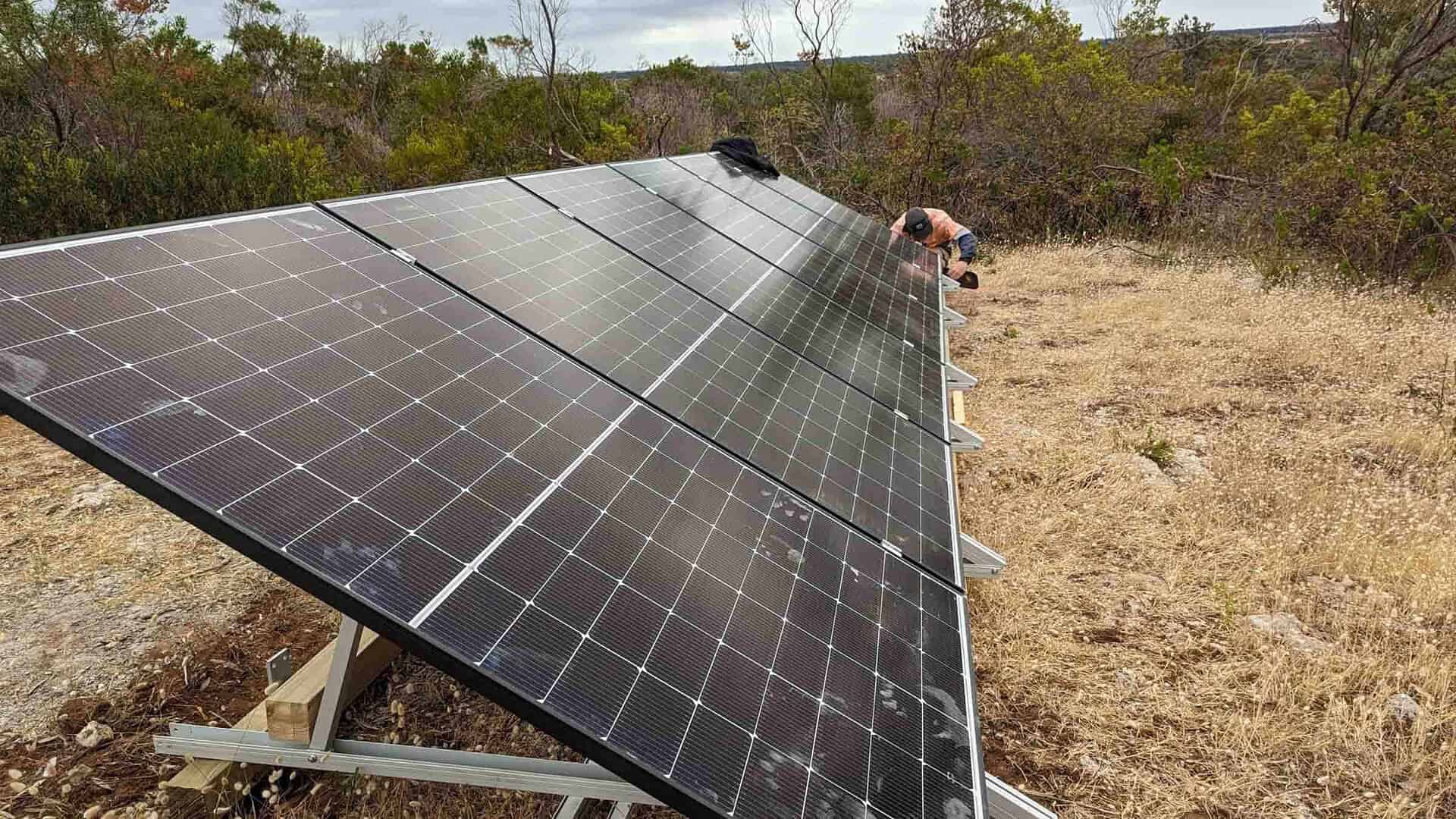
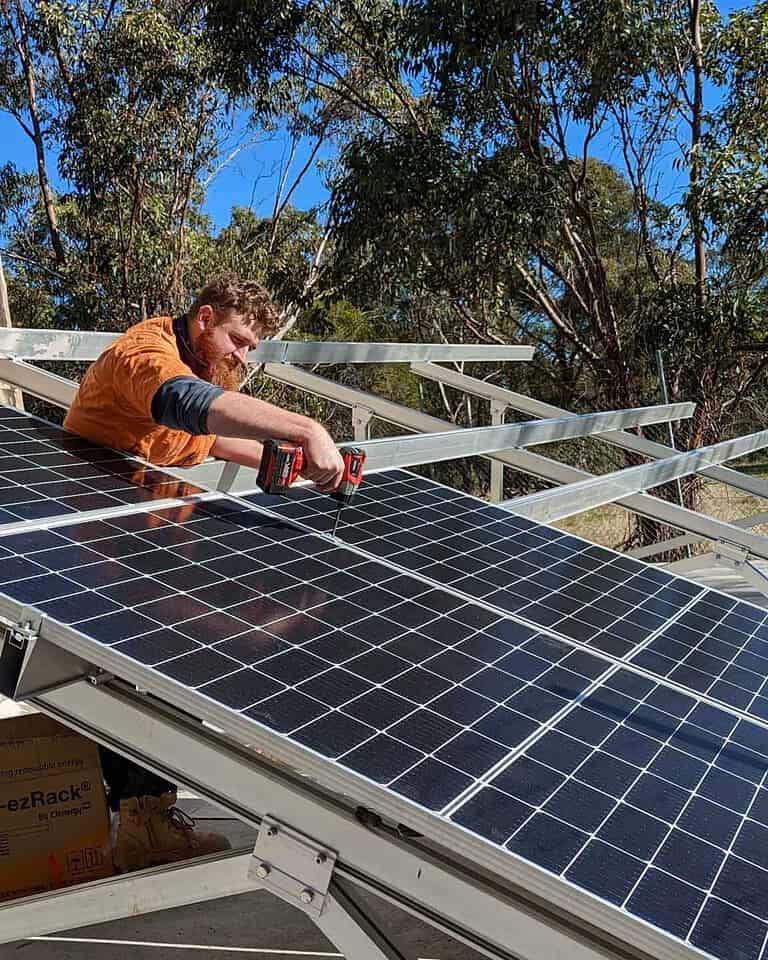
Technician connecting a ground-mounted solar array being installed in rural bushland

Cost

What does a ground mount cost?

Ground-mounted solar costs more than rooftop solar on a sound roof. You pay for the rack, footings and trench back to the house.

Panel count, soil conditions, footings, cable runs and travel distance affect the overall cost. We quote each ground-mounted solar system after inspecting the site.

Questions

Ground mount questions we get asked

Further than many people expect. The longer the cable run, the more it costs and the more power it loses on the way.

We size the cable to keep that loss low. The best spot is usually the closest one with clear sun all winter.

It depends on your council, your zoning and where the array goes.

We check what is needed before we start, so there are no surprises.

It depends on how many panels you need. Rows also need a gap between them so they don’t shade each other when the sun is low in winter.

We mark out the space with you on site.

The footings and the trench take the longest. Once those are in, the frame and panels go up quickly.

You’ll get a timeline with your quote.

They’re at ground level, so a hose and a soft brush usually do the job. No ladders and no roof.

Clean them early or late in the day, when the glass is cool.

Not always. If your roof faces north, has room and no shade, a roof mount usually costs less.

Panels on the ground win when the roof limits the system you need.

Keep stock clear of the frame and cables.

If animals share the paddock, we can fence the array or set the frame higher.

Yes, if there’s room. We plan for it when we set out the site.

A new row or a second array can then go in without starting again.

Get expert advice

Tell us about your property

Send us a Google Maps pin and a few photos of where the panels could go. We'll tell you if a ground mount makes sense.

We respect your privacy - View our Privacy Policy.
Fred from 100UP in a hard hat on a rooftop solar install

From first enquiry to after-care: One small team designs, installs and looks after every 100UP system.

What helps us plan a ground mount

  • A Google Maps pin of the property
  • Photos of where the panels could go
  • How far that spot is from the house or shed
  • What you run, especially in winter