Microgrids for regional communities and business groups

One shared solar and battery system for a group of homes or businesses. Reliable power where the regional line lets you down.

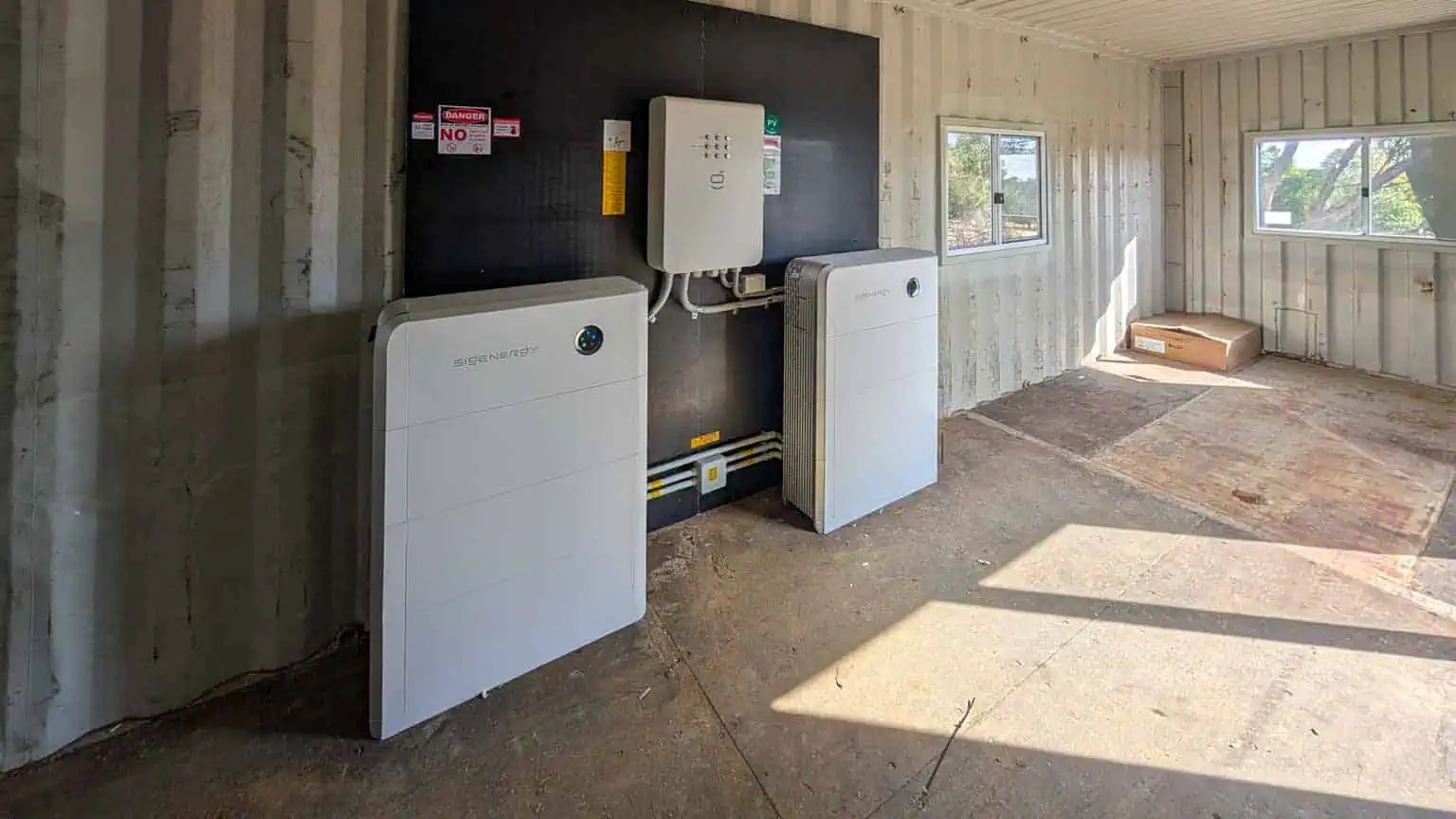
Two Sigenergy inverter and battery stacks in the plant room of a three-phase off-grid system at Allendale, Victoria

What it is

What is a community microgrid?

One shared power system that supplies a group of homes or businesses.

A microgrid links several buildings to shared solar, batteries and inverters. Everyone draws from the same system. It can run fully off-grid, or sit alongside a weak grid connection and keep running when it drops out.

It suits a cluster of 3 or 4 homes, a small estate, or a group of regional businesses tired of outages. It's a bigger project than one off-grid home, so we plan it with you from the start.

  • 3 or more homes or businesses
  • Off-grid or alongside the grid
  • Sized for a Ballarat July
  • Off-grid specialists since 2015
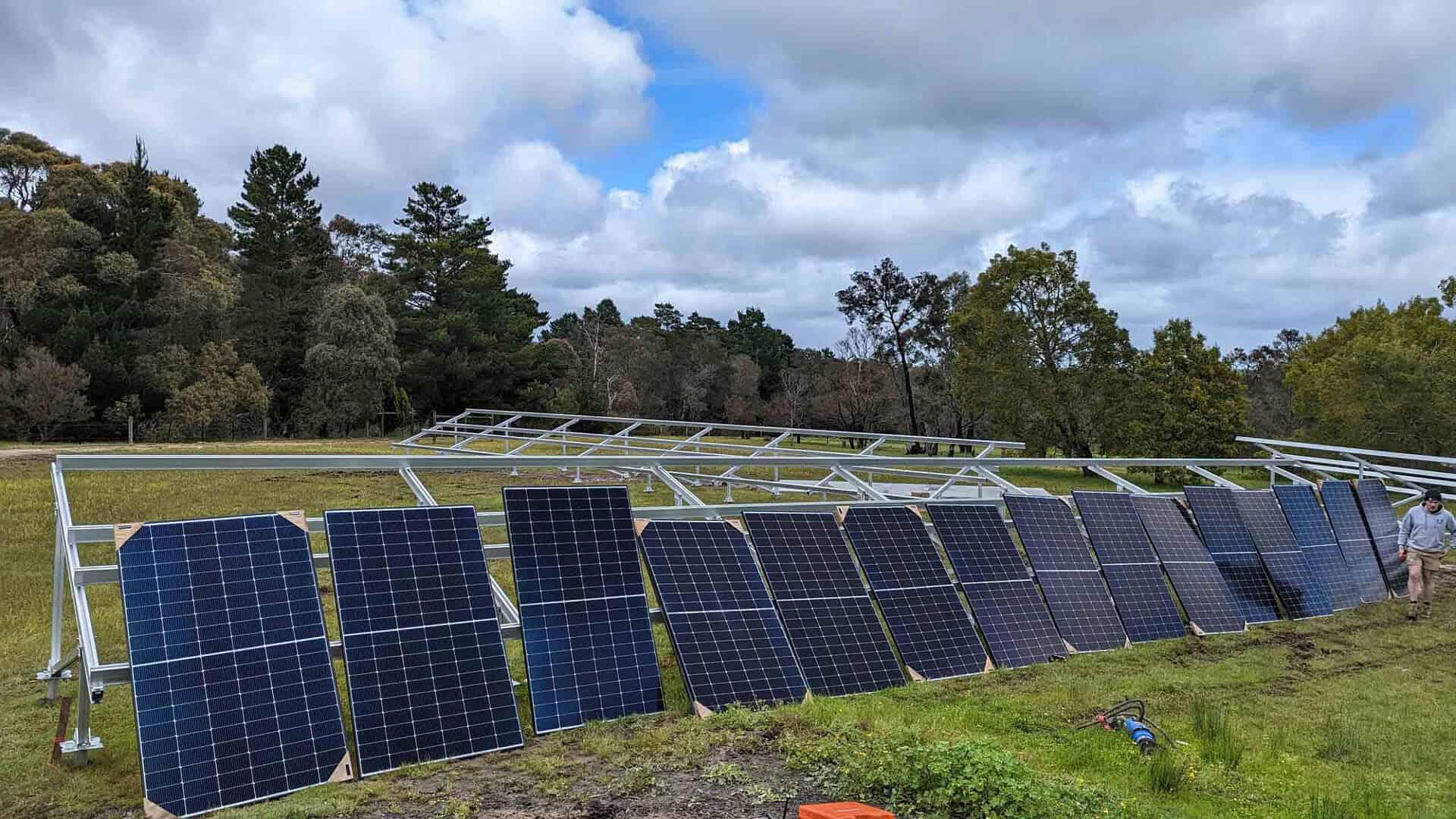
Ground-mounted solar panels on a steel frame in a rural paddock

Who it suits

Who builds a microgrid?

  • Neighbours on the same road

    Share one larger system instead of each building your own.

  • Small estates and eco-villages

    Plan power once for the whole site, before the houses go up.

  • Regional business groups

    Keep trading when the line goes down. Shops, workshops and cool rooms stay on.

  • Remote communities and camps

    Places the grid doesn't reach, or reaches unreliably.

  • Custom plant rooms

    Battery racks, inverters and switchgear in a purpose-built room or shed beside the array.

  • Room to grow

    Add homes, panels or batteries as the group grows.

Large ground-mounted solar array in a rural paddock with a 4WD parked beside it

How we plan it

Planned for the whole group, sized for winter

We size the shared system on what it makes in a Ballarat July, across every home or business on it.

  • 1

    Load list. We add up what every home or business runs, and when.

  • 2

    Winter check. We model the shared system against a Ballarat July.

  • 3

    Storage and backup. At least 2 days of battery from full, plus a plan for long grey spells.

Then we design the plant room, the cabling between buildings, and how power is shared between sites.

Modelled for Ballarat using PVGIS solar data.

Talk to us about your group

Bigger builds

Large off-grid systems 100UP has built

Microgrids start with the same parts: big arrays, plant rooms and three-phase power.

Two Sigenergy inverter and battery stacks in the plant room of a three-phase off-grid system at Allendale, Victoria

Allendale Vic

80kW Ground-Mounted System with Room to Double Battery Capacity

Installing an off-grid solar system before construction is complete can be worth it, but only if the system is designed around the finished home's loads. This Allendale property used that window to run conduit, size the electrical room, and...

Solar panels covering the metal roof of a farm shed at Scotsburn winery, with vineyard rows visible in the background

Scotsburn, Victoria

Scotsburn Vineyard Powers Winery Operations with a 17kW Sigenergy Off-Grid System

Scotsburn winery off-grid install (20km from Ballarat): 17kW solar, 12kW Sigenergy inverter, 16kWh battery. Sized for pumps, refrigeration, and processing equipment with battery for overnight loads. Strong daytime production offsets cloudy ...

Victoria · New South Wales · South Australia

Off-Grid Solar Solutions Powering Fire Monitoring Towers Across Eastern Australia

PANO engaged 100up to power their remote fire-watching tower network across VIC, NSW, and SA. Each tower uses six 475W panels, Victron charge controllers and inverter, and two Pylontech US5000 batteries inside sealed IP-rated enclosures rat...

Questions

Microgrid questions

That’s up to the group. Some groups share ownership. Others have one owner who supplies the rest.

We design and build the system. Get legal and financial advice on the ownership setup.

Yes. A microgrid can run fully off-grid, or sit alongside a grid connection and keep running when the grid drops out.

Grid-connected setups need approval from your network. We’ll talk through what suits your group.

It depends on what each home or business uses.

We start with a load list for every site, then size the shared system for a Ballarat July.

Yes, or at least some backup power source. Our design goal is to avoid routine generator use. Extended grey weather, unusually high consumption or repairs make backup power useful.

We discuss those limits when designing your power supply. Learn what generator-less off-grid design means.

Yes, if your system has capacity for expansion. Extra panels depend on inverter limits. Extra batteries must be compatible.

Learn more about balancing solar and battery expansion. Tell us your plans before installation so we can leave room to grow.

A stand-alone power system runs one site on its own. A microgrid links several homes or buildings so they share one power system.

A microgrid can run fully off-grid, or alongside a grid connection.

Get started

Tell us about your group

Tell us how many homes or businesses, where they are, and what's driving it. We'll tell you what a shared system could look like.

    We respect your privacy - View our Privacy Policy.
    Fred from 100UP in a hard hat on a rooftop solar install

    Fred reads every enquiry himself. He's the one who designs, installs and looks after 100UP systems.

    What helps us plan

    • Where the sites are (a Google Maps pin is perfect)
    • How many homes or businesses
    • What each one runs
    • How often the power drops out now