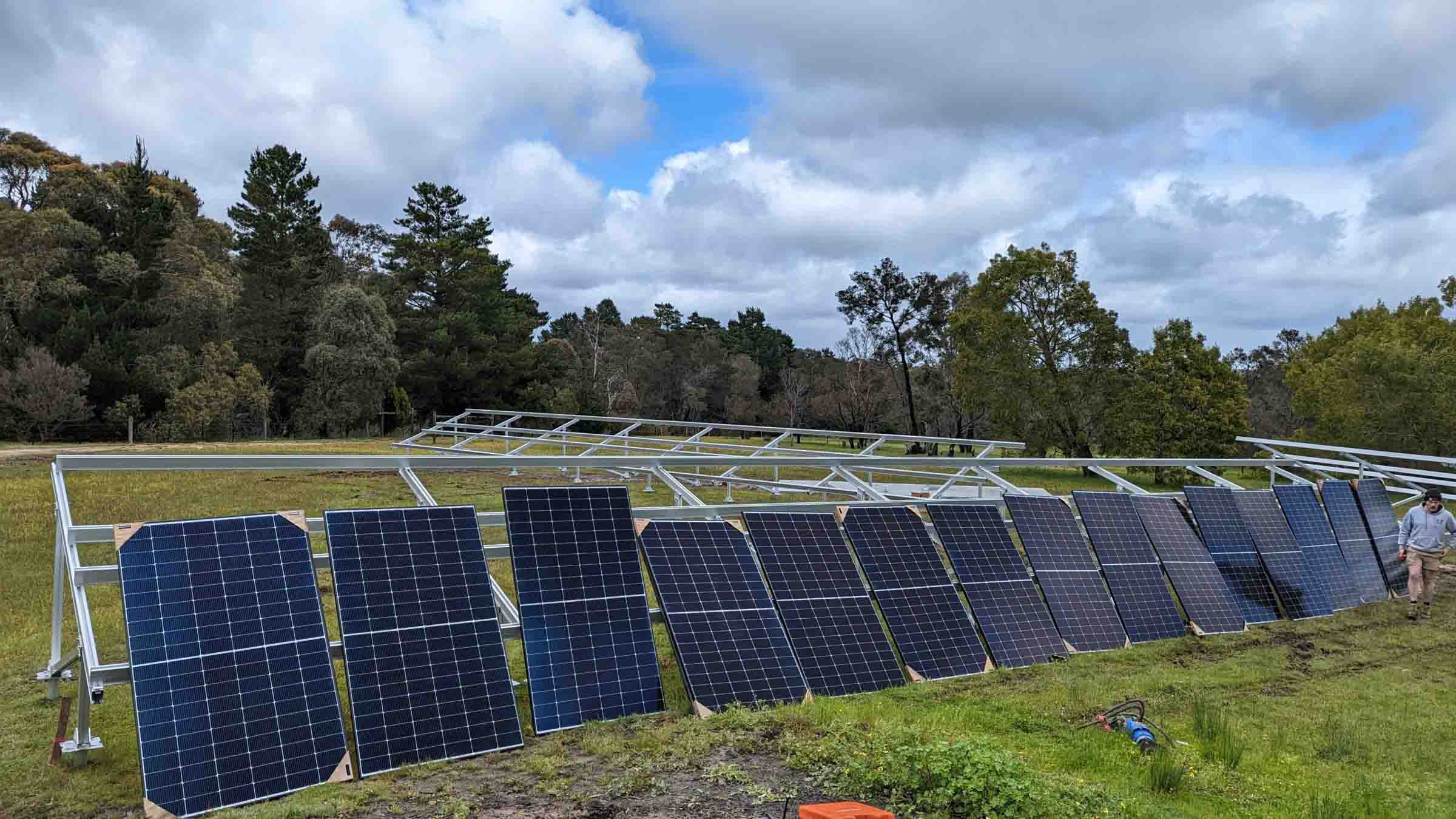
A ground mount solar system makes sense when the roof has poor orientation, shading, the wrong pitch or not enough space to accommodate the size of the system required.
The main advantage is control. You can choose the panel location, tilt, array size and foundation system. Depending on the site, that may mean a fixed frame, pole mounted systems, a Clenergy ground mount, or posts driven into the ground.
The best option depends on system size and complexity, soil conditions, cable distance and future expansion.
For off grid homes, good design is about more than installing solar panels. It is about building an efficient system that supports long term energy independence.
Choosing Solar Ground Mount Systems for Off-Grid
There is really only one reason you would choose ground mount solar panels over rooftop solar. You don’t have enough suitable roof space for the solar array your off grid system needs.
A ground mounted solar installation will almost always cost more upfront than using your roof. There is additional racking, ground preparation, footings, trenching and electrical work. The roof might not be the right place for the amount of solar required. That might be because:
- The orientation doesn’t work. Your available roof faces the wrong direction. It wont provide enough useful solar exposure. Ground-mounted solar lets the array be positioned independently of your house or shed.
- There is shading you can’t alter. Trees, nearby buildings or other obstructions might cover the roof. Or not be suitable for winter sun angles. Removing shading may not be practical or desirable.
- The roof pitch isn’t suitable. Ground mounting lets us choose the panel angle independently of the roof pitch. You can choose a steeper fixed angle where better winter production is important.
- Limited roof space. Off grid systems can require a much larger solar array compared to a grid connected home. The roof may not be able to supply adequate winter generation.
- The roof structure isn’t suitable. An older iron roof, ageing structure or a roof that needs replacement may make a rooftop installation impractical.
Why Off Grid Systems Use Ground Mount Solar Panels
| Factor | Why It Matters |
|---|---|
| Panel position | Choose the best location, direction and tilt for the site. |
| Winter production | Tilt can favour lower winter sun when generation matters most. |
| Shading | Move the array away from trees, buildings and roof obstructions. |
| Expansion | Add more panels without being limited by existing roof space. |
| Maintenance | Easier access for cleaning, inspection and repairs. |
| Ground conditions | Soil, rock, slope and drainage affect foundations and installation cost. |
| Cable distance | Longer runs can increase trenching, cable size and voltage drop. |
| Foundations | Ground screws, driven posts or concrete may be used depending on the site. |
| Space | Requires enough clear land around the array. |
| Cost | Usually higher than rooftop solar because of the extra structure and installation work. |
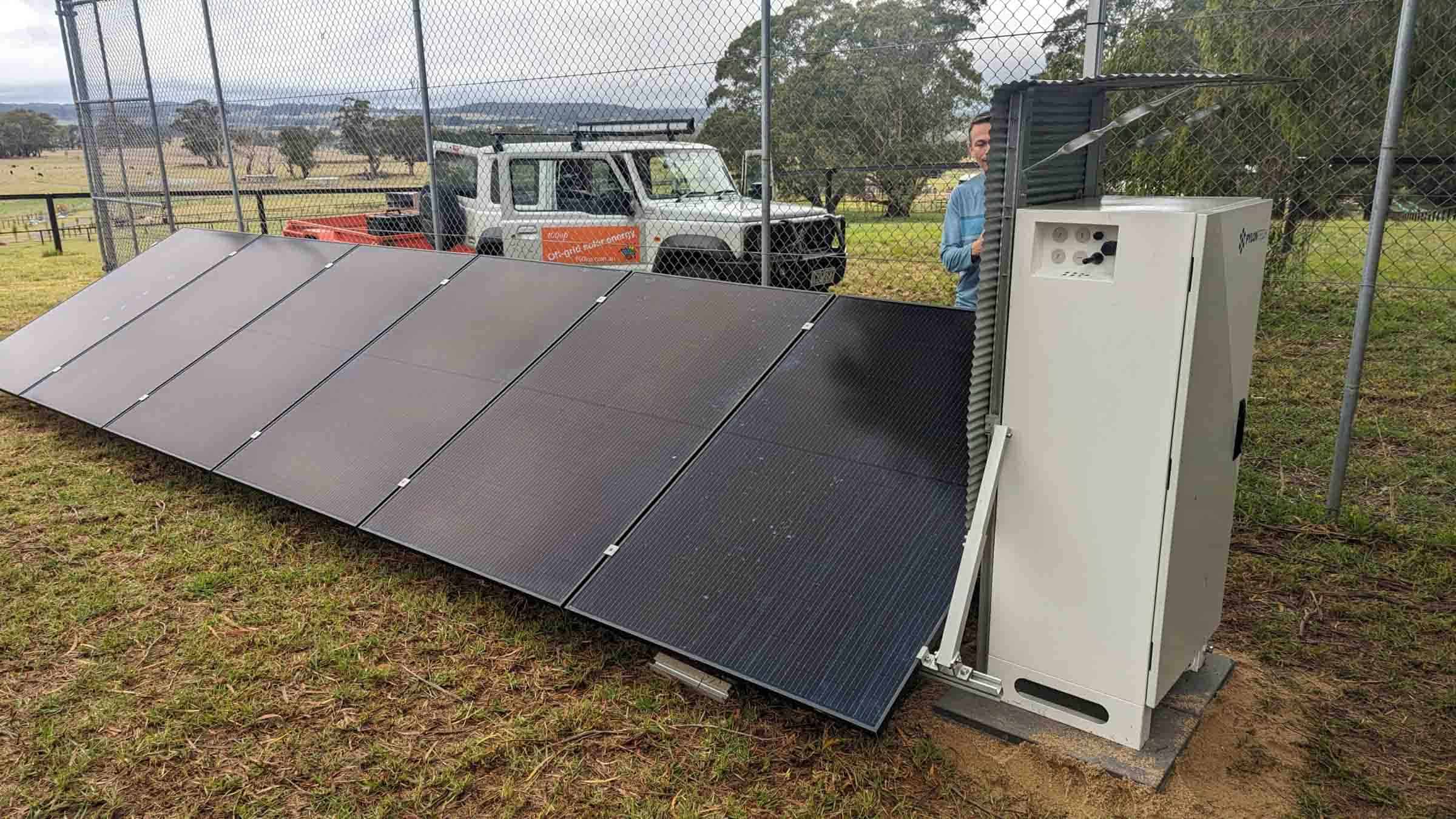
Ground Mount Kit Racking system Options
Once the panels are going on the ground, the next choice is the racking. Solar mounting on the ground is often fixed tilt or adjustable tilt. Solar tracking systems also exist, but more movement means more cost, complexity and maintenance.
Fixed vs Adjustable Ground Mount Racking
A fixed tilt ground-mounted solar panels hold the array at one permanent angle. For off grid systems, that angle is often set to favour winter solar production. An adjustable ground-mounted solar system lets you change the panel angle seasonally. This can improve production, but it costs more and adds moving parts, maintenance and another job to remember.
Sometimes Another Solar Panel Is Better Than an Adjustable Frame
Often, the simpler solar design option is a fixed frame with one or two extra panels. The added solar capacity can offset the gain from seasonal tilt adjustment, without the extra cost, moving parts or maintenance.
It depends on available space, inverter capacity, MPPT limits and the array design.
Other Ground Mount Solar Racking Options
For off grid solar power systems the goal should be to use the least complex system that reliably meets the property’s energy needs. Other ground mount racking options can include:
- Pole-mounted for smaller arrays, sloping sites or limited space.
- Single axis trackers that can follow the sun through the day.
- Dual axis trackers that also adjust for seasonal sun angle.
- Ballasted systems for solar panels on the ground where penetration is not suitable.
- Ground screws, driven posts or concrete footings depending on soil, slope and wind exposure.
Trackers can maximise solar energy production, but they also add cost, moving parts and maintenance.
Solar Panel Carports and Canopies
Solar carports and canopies are essentially an elevated ground mounting structure. For off grid renewable energy, they can be useful where ground space is limited or where EV charging is part of the system design.
They use steel frames and engineered footings to support solar panels above parking, sheds or other usable space. They cost more than a standard ground mount, but the structure can serve two purposes at once. It can provide shade or weather protection while also generating power.
Where on your property is Suitable for a Ground-Mounted Solar System?
A good ground mount location needs clear sun, stable ground and practical access. The best location is not always the closest to the house. It is the site that gives the array the best solar window without creating unnecessary installation complexity.
- Minimal shading. Check trees, buildings and other obstructions, especially during winter when shadows are longer.
- Suitable slope. Flat or gently sloping ground is easiest. Steep or uneven sites can increase racking and installation costs.
- Stable ground. Soil conditions affect whether the system uses ground screws, driven posts or concrete footings.
- Good drainage. Avoid low lying areas where water collects or flooding is likely.
- Reasonable cable distance. Longer runs back to the inverter and battery system can mean more trenching, larger cables and greater voltage drop.
- Room around the array. Allow access for maintenance, vegetation control and future work.
What a Ground Solar Array Changes About Your solar design
Ground mounting gives you more control over the array. You can choose:
- The tilt for stronger winter production.
- The direction for better solar exposure.
- The location to avoid shading.
- The array size without being limited by roof space.
- Future expansion for more panels, batteries or EV charging.
- Better access for cleaning, inspection and maintenance.
For off grid systems, flexibility matters a lot in winter. Solar production is lower. Every extra kWh helps with battery recovery. Ground mounted panels are also much easier to access and keep clean.
When solar installed as a Ground Mounting Makes Sense
For rural off grid properties, several of these often apply at once. Ground mount is worth considering when:
- the roof faces the wrong direction
- the roof pitch is unsuitable
- there is too much shading
- there is not enough roof space
- you expect the system to grow
- you have clear, usable land nearby
Ground Mount Systems Built Around the Site
Different properties need different array sizes, layouts and installation approaches. See how different system sizes and configurations can work across rural properties.
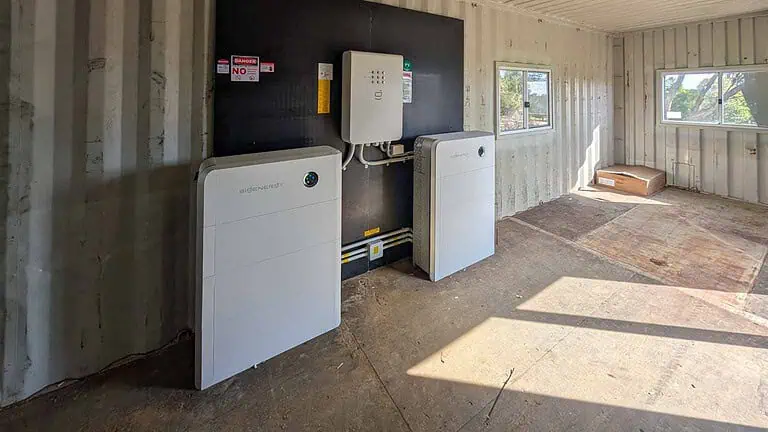
Sigenergy 3 Phase OffGrid Solar Allendale Vic
An 80kW ground-mounted off-grid system designed to power a future family home with enough capacity for high electrical loads, EV charging and planned battery expansion.
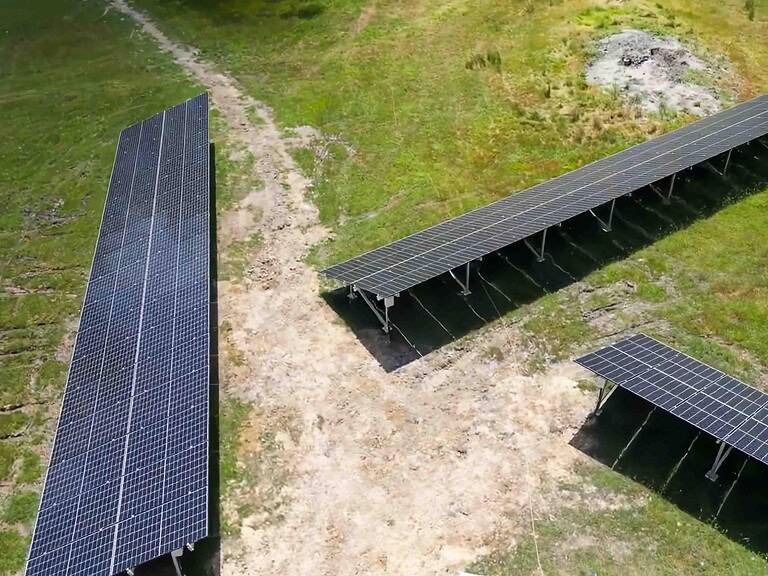
Ballarat 50kW Ground Mount Off-Grid System
A comprehensive 50kW off-grid solar installation featuring three ground-mounted Jinko 470W panel arrays connected to multiple MPPT charge controllers. Power flows underground to a shed housing two Victron inverters and a Pylontech battery system, eliminating grid dependence and monthly power bills entirely.
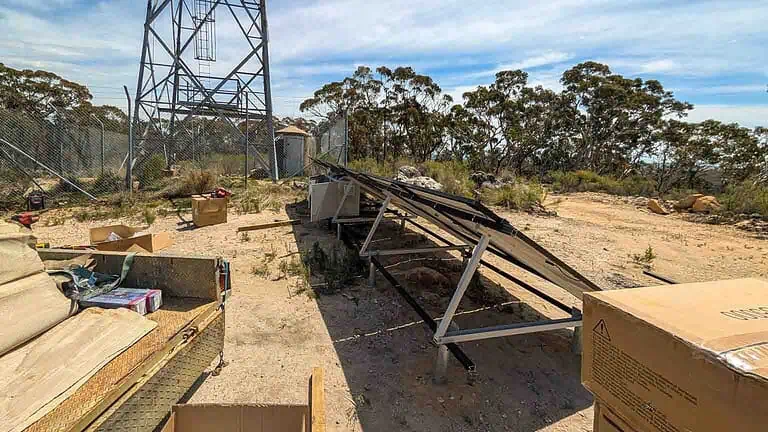
Remote Fire Monitoring Towers Off-Grid Solar Installation
Across Victoria, New South Wales, and South Australia, these systems keep remote fire towers powered where the grid cannot. Quiet, reliable, and built for isolation.
Rooftop Solar System Installation
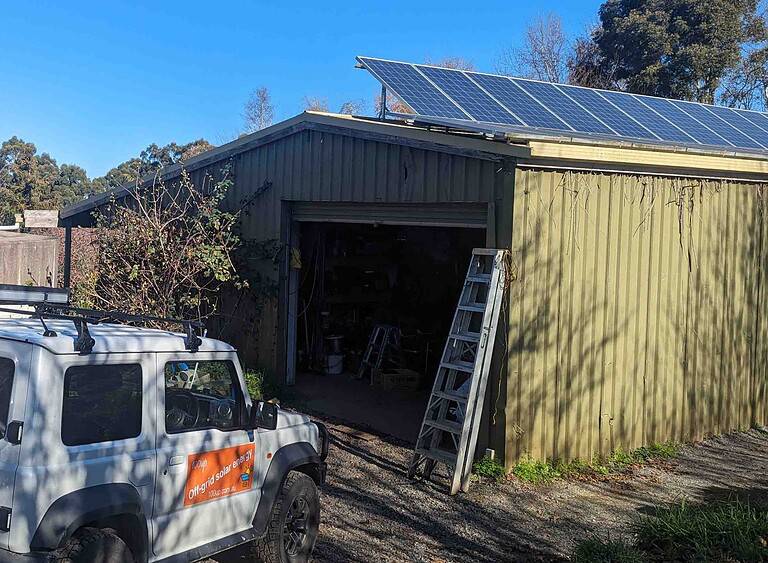
If your roof has good orientation, minimal shading and enough space for the full array, rooftop solar is usually the cheaper option. There is no ground preparation, trenching or separate mounting structure.
The roof-mounted solar trade offs are simple:
- Fixed panel angle. Roof pitch limits how well the array can be optimised for winter production.
- More shading constraints. Trees, chimneys and roof features can reduce usable space.
- Harder maintenance. Cleaning and inspection are less accessible.
- Less room to expand. Adding panels later can be more difficult if roof space is already limited.
If the roof can support the system you need, ground mounting may add cost without adding much value.
What Ground Mounting a solar solution Actually Costs
Solar panels installed on the ground costs more than a rooftop system. A ground mount may add around $2,000 to $6,000 over an equivalent rooftop installation, depending on the array size and site conditions. For a larger off grid system, that can be a relatively small part of the total project cost. What you gain is better control over panel position, easier maintenance and more room to expand.
You are adding:
- footings, piles or ground screws
- more racking and materials
- trenching and cabling
- extra labour
- possible clearing or levelling
Ground Mount Solar Systems for Different Properties
From compact base kits to larger off grid arrays, the right setup depends on your energy use, available space and future plans. Explore the systems below.
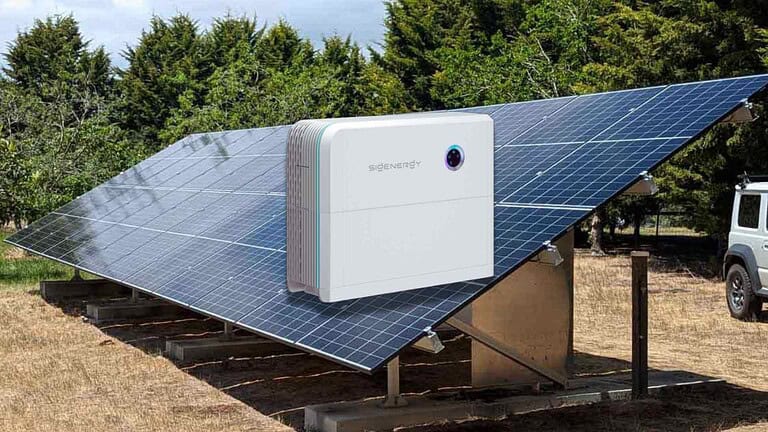
Ground-Mount Power Made Practical
Take control of your power with a simple, expandable off grid solar system. Designed for smaller properties, this kit combines high quality Jinko panels, Sigenergy battery storage and a ground mounted frame for straightforward installation.
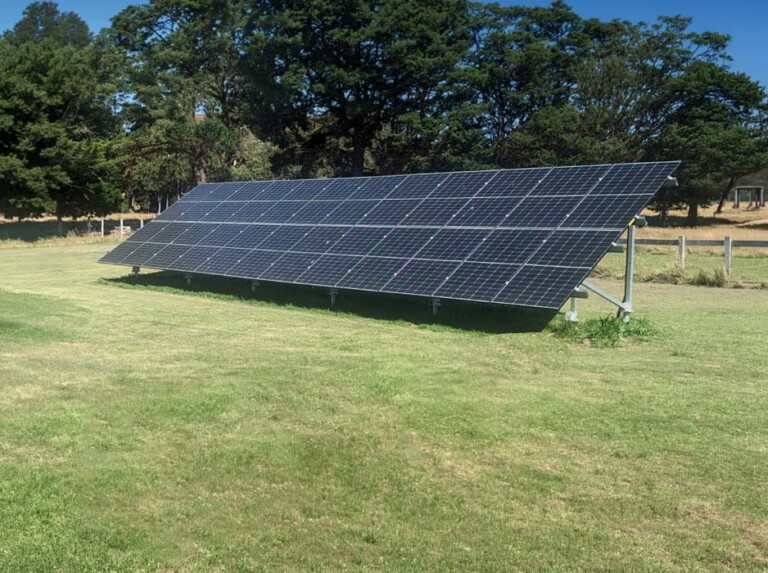
Flexible Ground-Mounted Solar Panels
No suitable roof? No problem. This 10kW ground mounted off grid solar system gives you reliable energy independence with a clean, purpose built installation positioned exactly where it performs best.
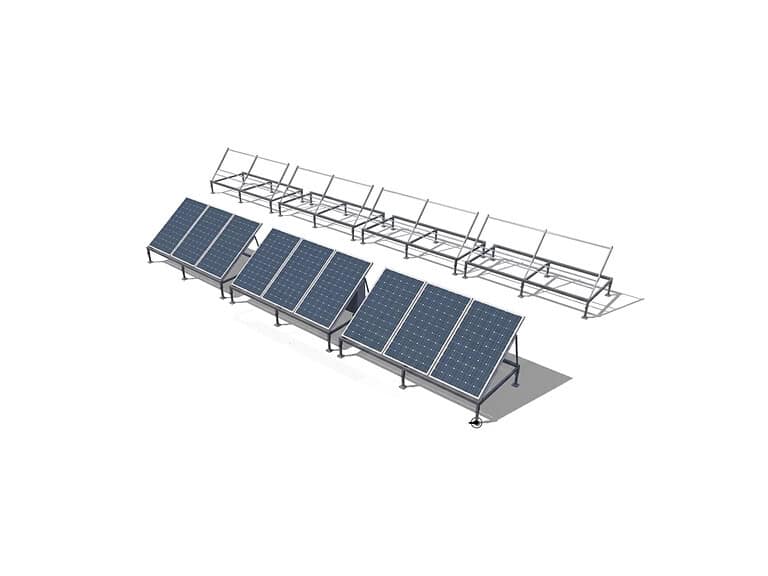
Rapid Install Off-Grid Base Kit
Fast off-grid solar base system Three panels. One battery. Two people and a few hours. The BASE is 100UP’s smallest off-grid configuration. A free-standing ground mount designed for fast and easy assembly without heavy machinery or complex installation. It runs on 1.4kW of solar and 5kWh of Sigenergy storage. Supplied with a galvanised steel solar […]
A ground mount is not always necessary. But when the roof cannot fit the array your off grid system needs, it can be the better long term option. Want to know what will work on your property? Talk to Fred