A generator-less off-grid system isn’t defined by the absence of a generator.
It’s defined by how rarely you need to use it.
The goal is to make it unnecessary for day-to-day living. “Generator-less” is often misunderstood terms in off-grid solar. A well-designed off-grid system should get through a Victorian winter without planning generator run time into normal life.
In sunny regions like Queensland or WA, and some dry areas, going completely off-grid without a backup generator is not only possible but increasingly common. Many residents around Ballarat have successfully adopted a solar-only lifestyle, even though winter can pose a challenge.
The key to success lies in having a generously sized solar panel array and a substantial battery bank. Additionally, installing a bidirectional DC car charger allows your electric car to act as an extra backup during the colder months, ensuring a seamless off-grid experience.
What “Generator-Less” Actually Means and Why Oversizing the Array is importatnt for Off the Grid properties?
When we talk about generator-less design, we’re talking about a design standard. The solar array, battery storage, and inverter capacity are sized so the property can operate normally through winter without planning generator run time into everyday life.
That means:
- Normal household occupancy
- Typical Victorian winter weather
- Consecutive low-solar days
- Everyday appliance use
The goal is that you shouldn’t need to schedule or run a generator every week just to keep the lights on. If that’s happening, the system wasn’t designed to be generator-less in the first place.
Solar Arrary & Battery Sizing and Generator Need Depends On The Property
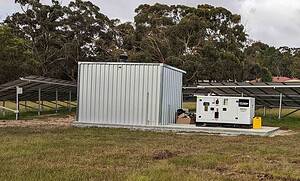
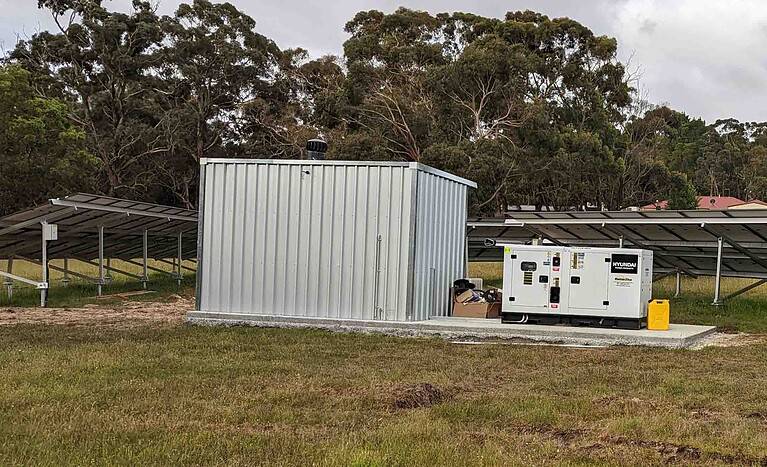
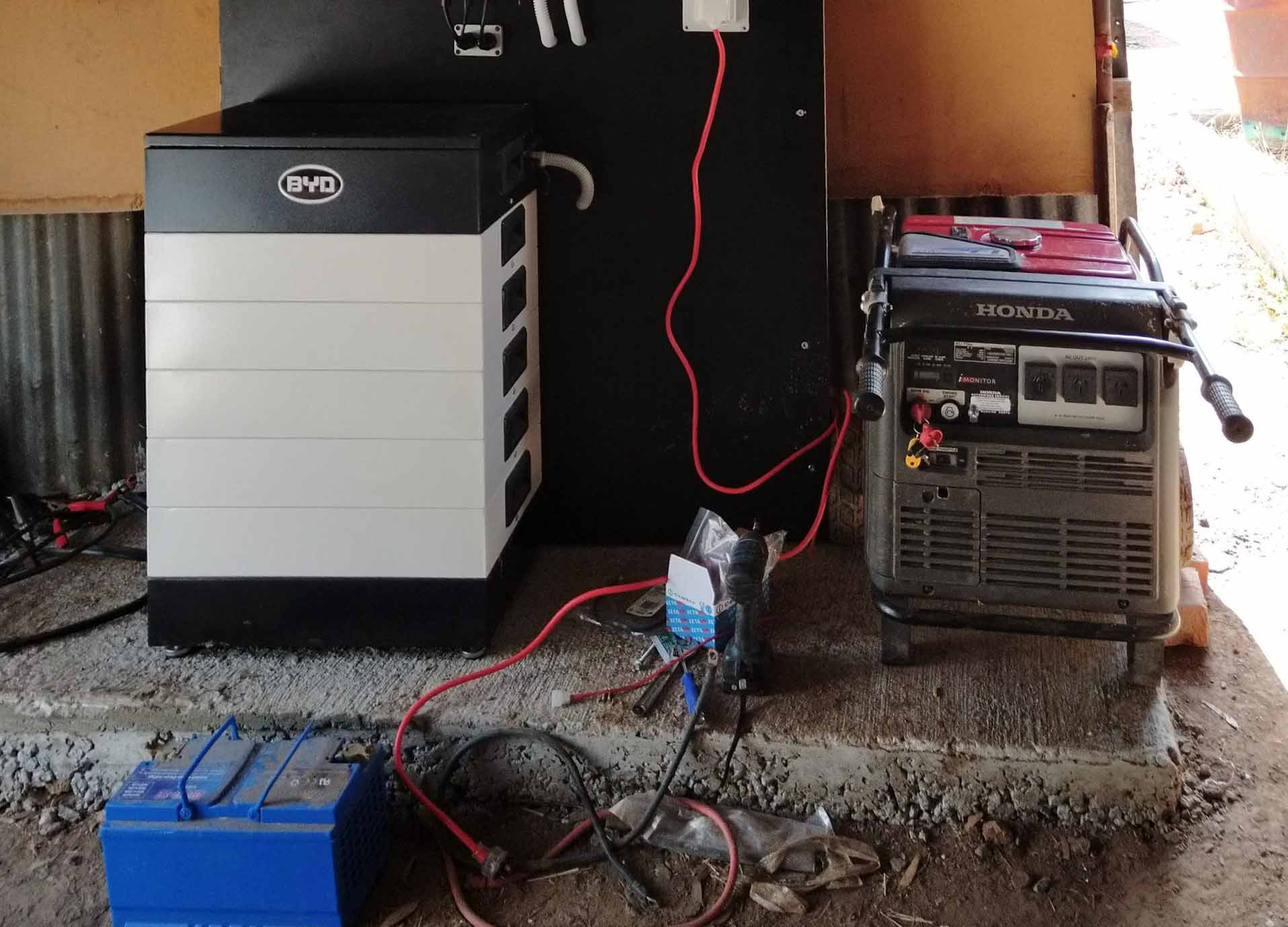
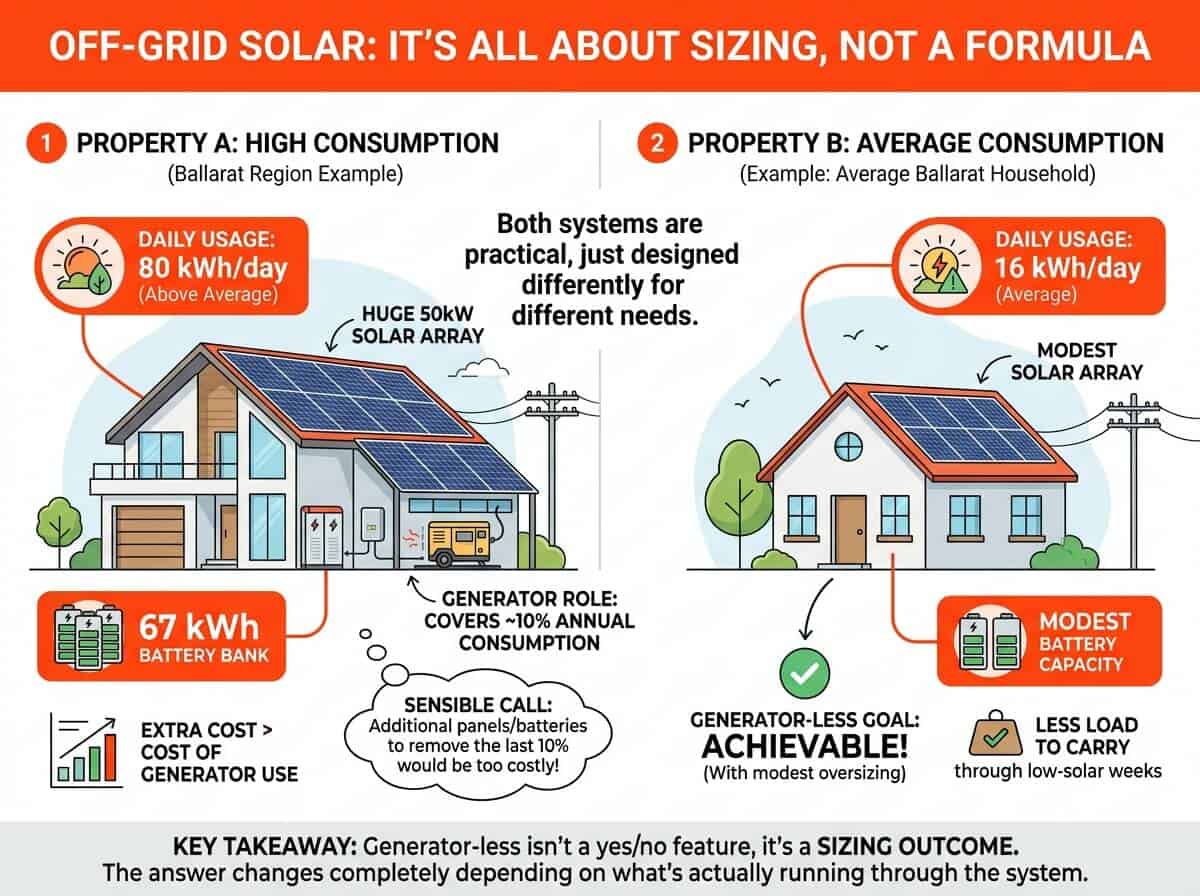
We installed a system at a property about ten minutes from Ballarat. The household draws around 80kWh a day. Thats well above average. They are running a 50kW solar array with a 67kWh battery bank. Even at that scale of oversizing, the generator still covers roughly 10% of annual consumption.
Pushing further wouldn’t have been a sizing problem. It would have been a cost problem.
The extra panels and battery capacity needed to remove that last 10% would cost more than designing the system for generator use. At that consumption level, keeping the generator was the sensible call.
Compare that to an average Ballarat household drawing closer to 16kWh a day. The same generator-less goal becomes achievable with far more modest oversizing. There’s simply less load to carry through a low-solar week.
Generator-less isn’t a yes/no design decision, it’s a possible outcome determined by sizing. The answer changes completely depending on things like what’s actually running through the system, usable capacity and how the system has been configured.
Winter Sets The Size, The Generator can Fill the gap if needed.
Summer is easy. Long days, a high sun angle. Panels running close to rated output most afternoons. Almost any system looks adequate in January.
July is a different story. Shorter days cut total sun hours, and a lower sun angle means panels capture less even on a clear day. Three or four overcast days in a row is not unusual for a Ballarat winter. The battery reserves end up doing more work than the panels can.
That’s why sizing gets built around winter performance first. A system that gets through July without drama coasts through January without anyone noticing.
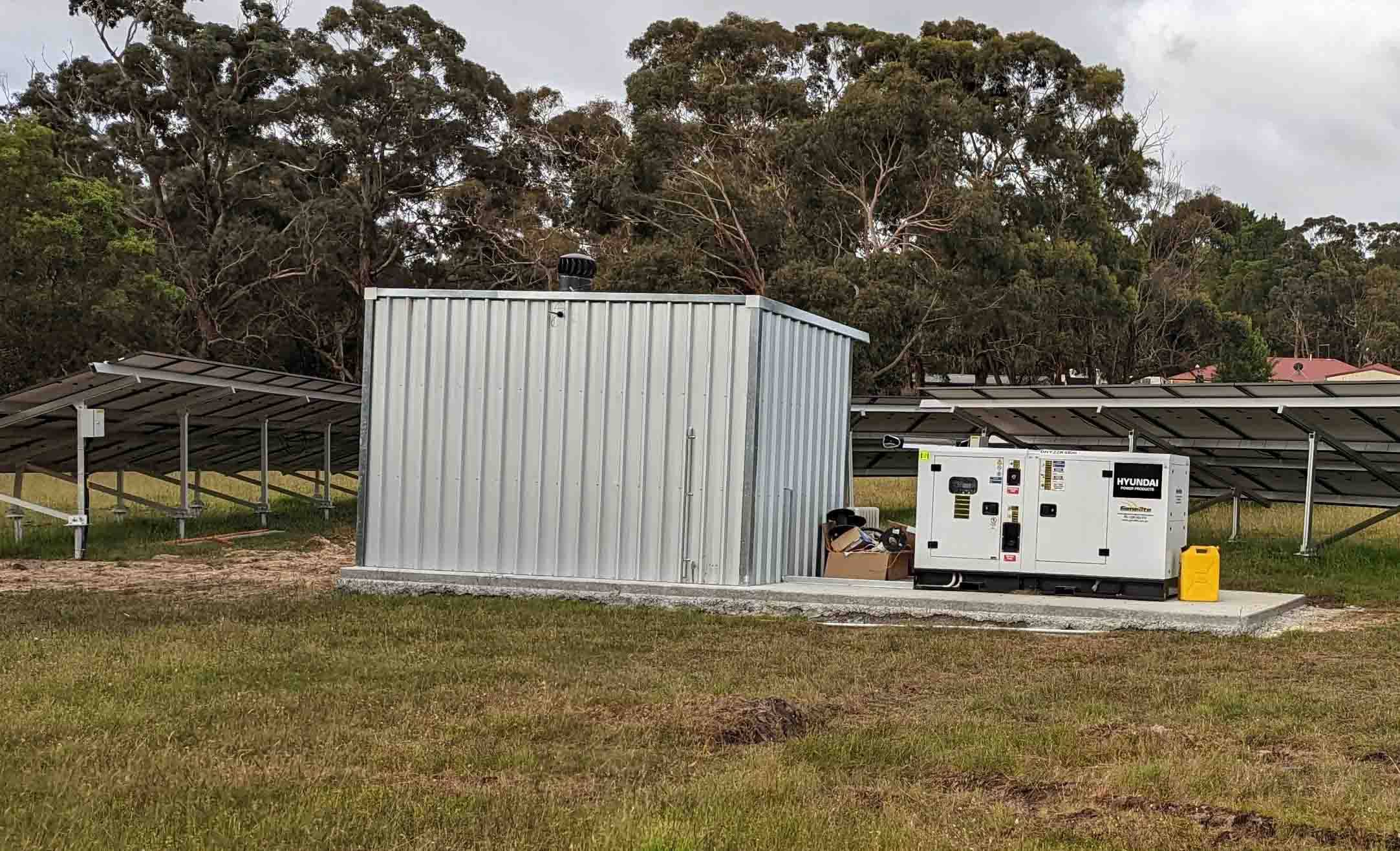
Bigger Battery capacity reduces dependency on a generator, but its not the full picture.
Generator-less operation isn’t only about battery size, reducing single points of failure is just as critical. A large battery bank won’t help much if a failed inverter shuts down the entire property.
Where practical, we design with:
- Multiple inverter capacity
- Modular battery systems
- Independent solar inputs
If one component fails, the property can usually continue operating while repairs are organised. That’s a very different outcome from losing power entirely because a single piece of equipment stopped working.
Less Generator Dependence Means Less Ongoing Maintenance
There’s a maintenance question too, separate from cost.
What does keeping the generator actually involve day to day, not just the diesel bill?
A generator that’s part of the system or a backup plan needs to run periodically. Even when nothing’s gone wrong. If you skip that, and fuel goes stale, seals dry out, the one time you actually need it, it might not start.
That’s not a generator backing you up.
Its worth deciding one way or the other. A generator properly worked into a routine maintenance schedule is fine. One that’s assumed to work because it’s there usually isn’t.
If less ongoing upkeep is part of the goal, removing the generator altogether makes sense. But that assumes you have the sizing to supports it. Sufficient sizing is the first step to less maintenance hassle. But it can mean a higher upfront cost.
What Questions To Ask When Deciding If You Need A Generator
A good place to start is “What does removing a generator actually cost me?” In both time, maintenance, upfront and ongoing cost.
Start with consumption. What’s your actual average daily use, not your peak?
In our example above a property running 80kWh a day asks far more of a system than one running 16kWh, the same generator-less target needs a completely different, and far more expensive, build to reach it.
Then look at your solar exposure. How many overcast days does the property typically string together in winter, not just on a bad week but across the season? That number drives battery sizing more than panel count ever will.
Occupancy and use matters too. Is the property lived in full-time, or does it sit empty for stretches? A holiday home with intermittent use can ride out a longer low-solar run than a property carrying full-time appliance load every day.
And there’s the cost question underneath all of it: what would it actually cost to remove that last 10% of generator reliance. Dose it make sense to keep the generator for the handful of weeks or scenarios it’s genuinely needed?
For some properties that’s a small jump. For others, like the case above it isn’t worth it.
A bidirectional EV charger changes the calculation too, worth asking about if you’re already planning to go electric. They can be used as a backup battery source.
Should You Still Have A Generator?
Designing for generator-less operation doesn’t mean refusing to install a generator. This is where the decision to include one can become confusing.
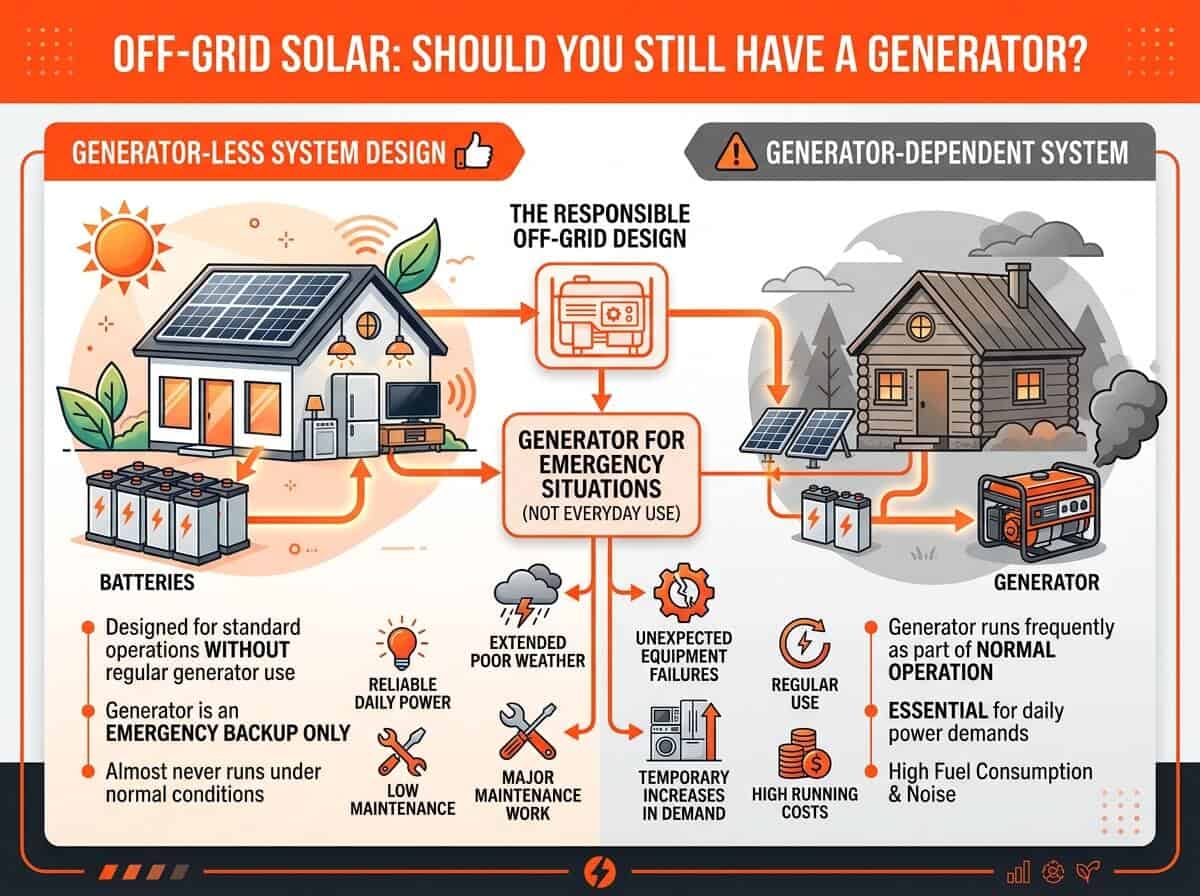
In practice, almost every well-designed off-grid property can still have a properly integrated backup generator available.Not for everyday use. For the situations that are difficult to accurately predict.
- Extended periods of poor weather.
- Unexpected equipment failures.
- Major maintenance work.
- Temporary increases in energy demand.
These events may only happen occasionally, but planning for them is part of responsible system design.
Generator-Less Design And Generator Ownership Are Different
A property can have a generator and still be considered generator-less by design. At 100UP, generator-less doesn’t mean there’s never a generator. It means the property is designed to live on solar.
Generator-dependent systems expect the generator to be used regularly. Its part of normal operation
Generator-less systems are designed so the generator rarely needs to run at all. It becomes emergency infrastructure.
A generator may still be there for genuine emergencies, but it isn’t required to get through a Victorian winter. That’s what the solar and battery system is sized to do. Want to know whether your property can live on solar without routine generator use? Get in touch with Fred at 100UP.