Off-grid solar kit

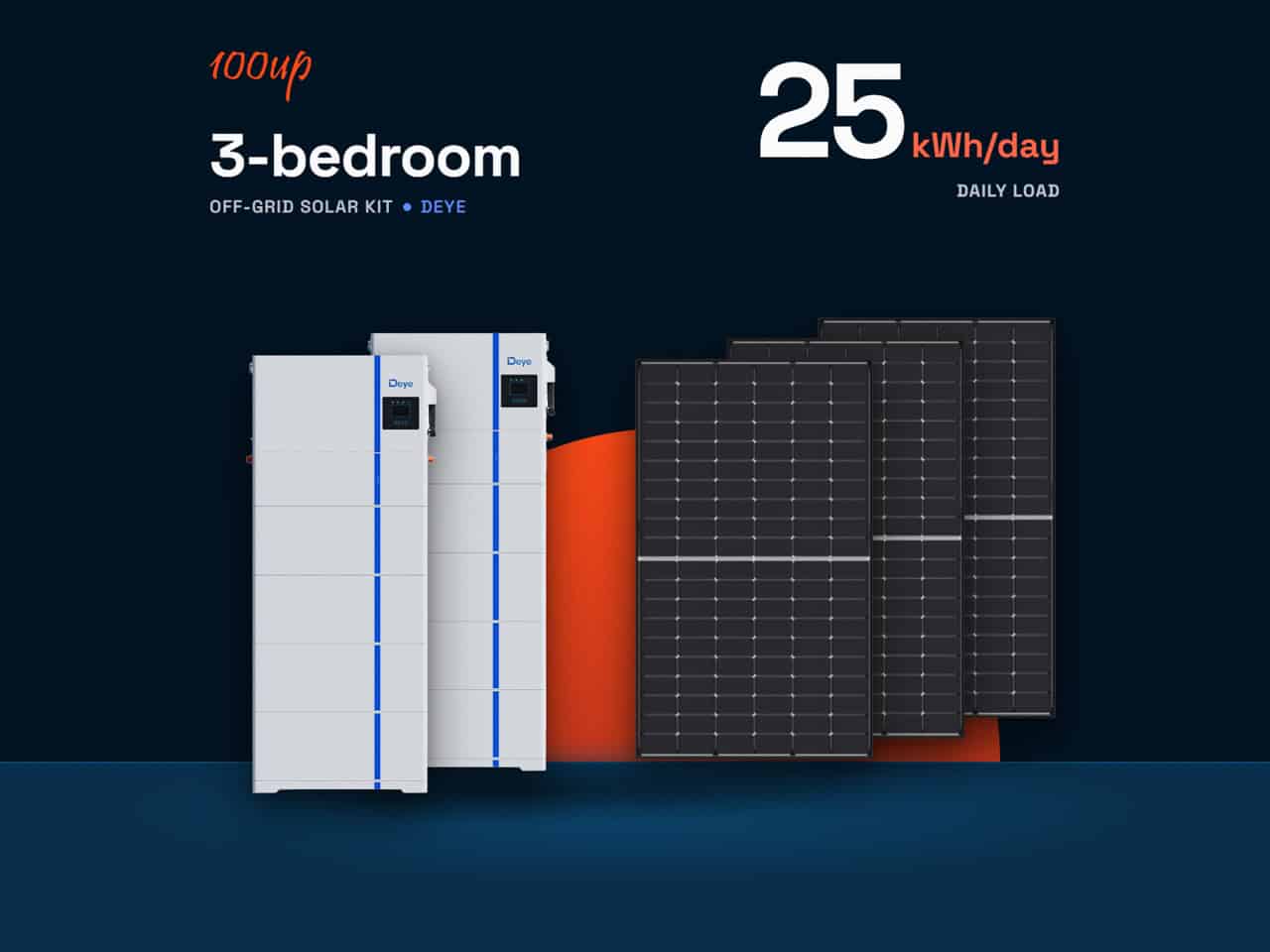
3-Bedroom Off-Grid Solar Kit – Deye 2 x 10 kW Inverter, 51 kWh Battery, 29.93 kW Solar

$61,100

Off-grid solar kit for a 3-bedroom home (4 people, about 25 kWh a day): Deye 2 x 10 kW inverters, 51 kWh battery storage and a 29.93 kW solar array (63 panels), and passes the Ballarat July worst-case simulation without a generator. Designed and installed by 100UP.

Passes Worst-Case July
Generator-Free on Day One
Cost-Optimised Design
  • Designed for your daily usage and site
  • Price includes: Installation. Certification. Solar/Battery rebate STCs. GST inc.
  • 10 year manufacturer warranty on inverter and battery.
SKU: 100UP-DEYE-3BR Category: Brand:

Indicative price for a standard install. Your final quote depends on site access, distance and the options you choose. see more

29.93 kW
solar Array
20 kW
Inverter Capacity
51 kWh
Storage Capacity
25 kWh/day
Demand Target

Your Off-Grid Solar System Explained

Passes July Simulation
Battery Autonomy
Oversized Array
No Generator Dependency
Cost-Optimised Design

Your Power. Your Property. Your Confidence.

Going off-grid should give you more freedom, without the limitations. With 100UP, your system is designed around your needs, with reliable power through every season.

Additional information

Bedrooms

3

Household size

4 people

Daily energy

25 kWh/day

Phase

Single phase

Inverter capacity

20 kW

Battery capacity

51 kWh

Solar array

29.93 kW

Panel count

63

Design basis

Passes Ballarat July worst-case simulation without generator

EV charger

No

Inverter model

Deye AI-W5.1-10P1-AU-B

Battery model

Deye AI-W5.1-B (5.1 kWh)

Panel model

Jinko JKM475 475W

Mounting

Roof mount

ESS Interface

Deye AI-W5.1-PDU3

Inverter configuration

2 × 10 kW

System Performance & Winter Modelling

With solar, battery storage and inverter capacity planned together, this system is designed to keep you powered through winter and periods of low solar production.
  • Designed for full occupancy

  • Built for worst-case winters

  • Battery to handle low-solar days

  • Redundancy where it matters

Solar production

Is the array too big or not big enough?
  1. Summer

    Long days and a high sun. A well-sized off-grid array produces far more than a household uses in summer. Put the surplus to work on hot water, pumps or EV charging.
  2. Autumn

    Output falls steadily from March as the days shorten and the sun sits lower. By May, daily production is well under half of summer’s.
  3. Winter

    The real test. June has the shortest days and July often brings the longest runs of cloudy weather. Off-grid systems are sized for winter, which is why the array can look large on paper.
  4. Spring

    Output recovers quickly from September. By October, the system is back in surplus on most days.

What are the worst-month peak sun hours?

Peak sun hours are the equivalent number of hours of full, direct sun your panels receive each day. In Ballarat, the lowest months are June and July. Our Ballarat model averages about 2.4 kWh per day for each kW of panels in July, but individual days can drop well below 1 kWh. Multiply that by the array size for a rough winter estimate.
Figures are modelled. Actual output depends on panel orientation, tilt and shading.

Battery autonomy

How long could this system power your home with zero solar production (worst case)?
Even during cloudy winter weather, your solar panels can still generate some power.
Battery autonomy depends on how much charge is available when solar production drops and how much electricity your household uses.  Actual backup time will vary with your usage, battery charge level and any solar power generated during that period.
The calculator below shows how long a fully charged battery could run your home with no solar production at all. Adjust your daily electricity use to see how it affects battery autonomy.
2.0 days

At 25 kWh a day, a full 51 kWh battery runs the house for about 2.0 days (49 hours) with no solar at all.

Charge left after 24 hours with no sun: 51%

25 kWh/day

This kit is designed for 25 kWh/day

Lean household ~15 kWh · Average family ~25 kWh · Large home with heating ~40+ kWh

Modelled from a full battery with zero solar. Real run time depends on how full the battery is and what's running. Covers dark weather, panel faults or maintenance; anything that stops the panels producing.

zero-solar worst-case estimate.

Generator trade-off

What if I accept some generator use?
  1. No Generator Dependency

    Long days and a high sun. A well-sized off-grid array produces far more than a household uses in summer. Put the surplus to work on hot water, pumps or EV charging.
  2. 10% Generator Dependency

    The generator covers about a tenth of daily energy use, usually a handful of runs in the darkest weeks of winter. That allows a smaller array or battery and a lower upfront cost.
  3. 25% Generator Dependency

    The generator becomes a regular part of winter. System cost is noticeably lower, but you take on more fuel, noise and servicing.

If I rely on a generator how does that change this systems specs and pricing?

Every off-grid design trades upfront cost against generator use. A little generator time in the darkest weeks can take thousands off the system price. Generator not included in kit price.
Good to know
Price: $61,100 supply and install, after STCs. Full price $71,300, less a $10,200 STC discount. STCs are calculated for Zone 4 installs in Victoria. Price updated 1 November 2026.
Backup Power: A generator or backup power source is highly recommended. A backup generator or alternative renewable energy source that automatically kicks in a few times a year during extended winter or stormy weather.
Disclaimer: Final pricing depends on site conditions, roof space, travel, and other site-specific factors. System sizing is theoretical. Performance figures are modelled estimates only and are not a guarantee of output, savings, or payback period. Actual results may vary.

Power what matters, every day

Deye All-in-One Solar & Battery System

A practical, expandable off-grid power solution for households with steady, predictable energy needs. Deye combines hybrid inverter technology with modular lithium battery storage, making it easier to size your system for everyday use and expand as your needs change.

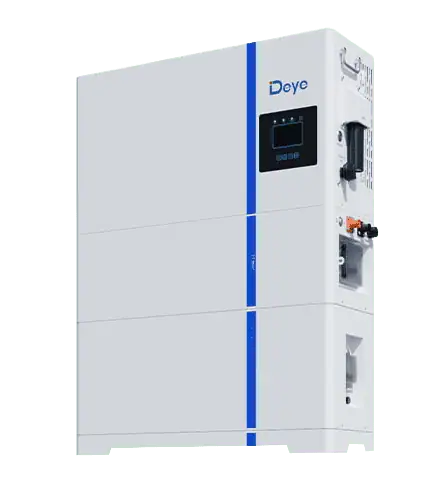
  • Deye AI-W5 off-grid solar inverter front view showing compact all-in-one design for home battery systems
  • Modular Battery Storage

    The Deye AI-W5.1-B uses non-toxic, cobalt-free lithium iron phosphate (LiFePO4) battery chemistry. Each module provides 5.12 kWh of storage, with up to six modules stacked for a total of 30.72 kWh. The modular design makes installation and future expansion straightforward.

    Designed for Regional Conditions

    The IP65-rated enclosure protects against dust and water, with a wide operating temperature range of -20°C to 55°C. Natural cooling and intelligent battery temperature management make it suitable for a range of installation environments across regional Victoria.

  • Long Battery Life and Reliability

    Rated for at least 6,000 charge cycles and backed by a 10-year manufacturer's warranty. An intelligent Battery Management System (BMS) monitors battery performance, charging and protection during everyday operation.

    Remote Monitoring and Easy Control

    Deye Smart Cloud provides remote monitoring and system management, with one-click platform installation and registration. The hybrid inverter's LCD display also provides accessible controls for battery charging, AC and solar charging priorities, and acceptable input voltage settings to suit different applications.

    Download the Deye AI-W5.1-B Fact Sheet
    Source au.deyeinverter.com Feb 2026

Confidence in Every Kilowatt

Customise & Compare Your Off-Grid System

Adjust the solar, battery storage and backup options to see how each changes your system size and cost. Find the right balance for your energy use, budget and property.

We recommend oversizing your solar array and making the most of available roof space. Adjust panel capacity to suit your roof, budget and winter energy needs.

We recommend at least two days of battery autonomy to help cover cloudy periods. Compare storage capacities based on your daily use and budget.

Two inverters operating in parallel can share demand and provide redundancy if one fails. Compare single and dual-inverter options based on your loads and reliability needs.

We design to minimise generator dependency, with a backup generator available for extended periods of low solar production. Adjust your system to balance battery capacity, cost and backup requirements.

A compatible electric vehicle may offer additional backup power through supported bidirectional charging. Explore how EV integration could fit your system and future energy needs.

Confidence in Every Kilowatt

Your Guide to Going Off-Grid

Explore three essential guides covering system sizing, costs and common questions to help you understand your options and make a confident decision.

Generator-Less Off-Grid Solar: What It Actually Means

Generators

Preparing Your Off-Grid System for Winter: Vital Guidelines

Climate & Location Design

Ground mount solar Panels vs Rooftop Mounting system for Off-Grid Properties

System Mounting & Installation

Get expert advice

Is This the Right Off-Grid System for You?

Deye
Brand
20 kW
Inverter Capacity
51 kWh
Storage Capacity
29.93 kW
solar Array

Interested in this kit? Tell us about your property, energy needs and plans.We'll help you check whether the system is a good fit and discuss any changes needed before you commit.

Google