Independent Solar Power for Remote Fire Observation Towers
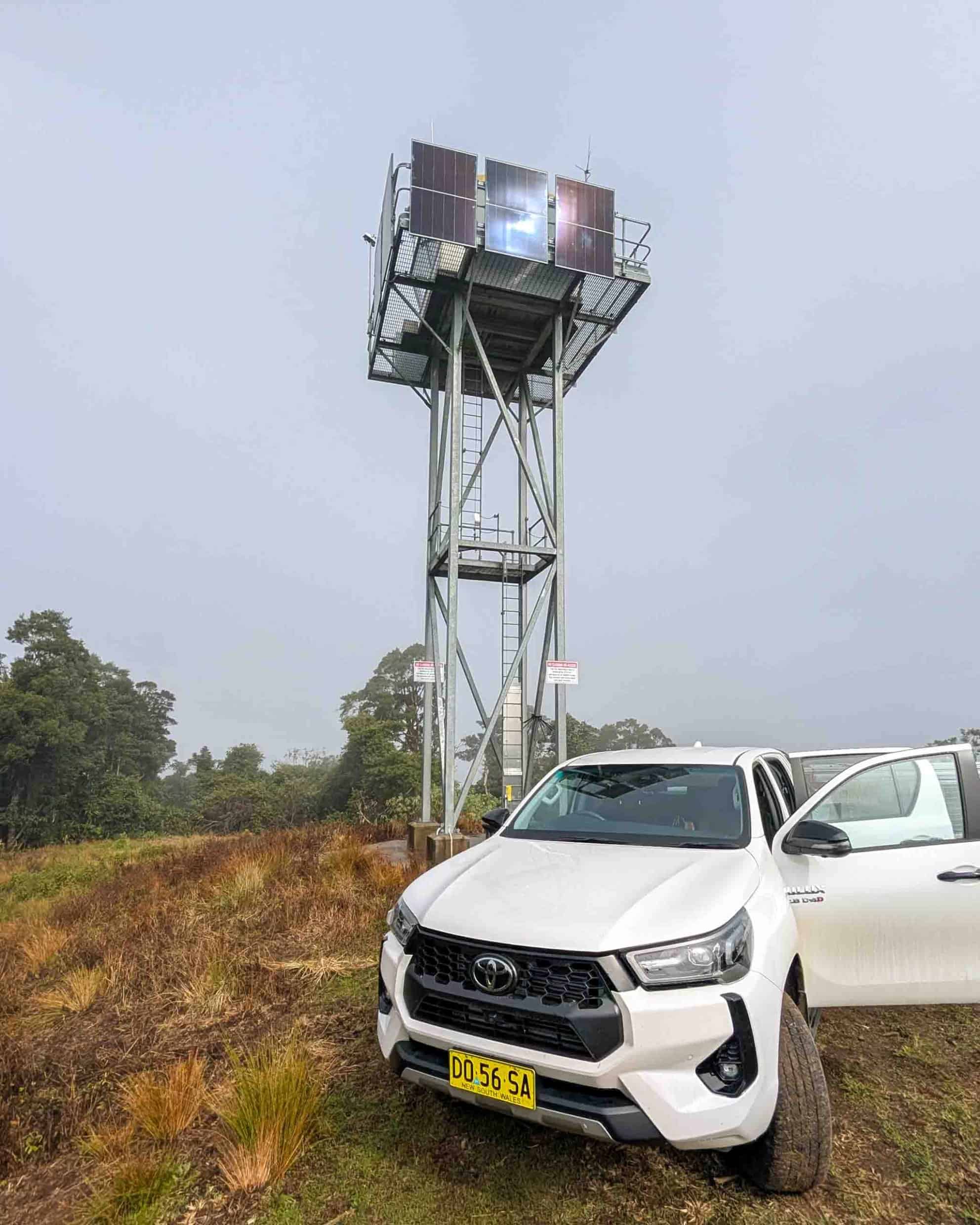
100UP installed compact off-grid solar power systems for fire watch towers in remote, elevated locations across New South Wales.
These towers operate away from conventional electricity infrastructure, requiring a self-contained power supply for equipment used by personnel monitoring surrounding forest and bushland.
The installations combine Victron solar power equipment, Pylontech lithium battery storage and solar panels mounted around the elevated observation platforms.
Unlike a typical residential installation, these systems need to work within a limited space, at an exposed location where access for servicing can be difficult.
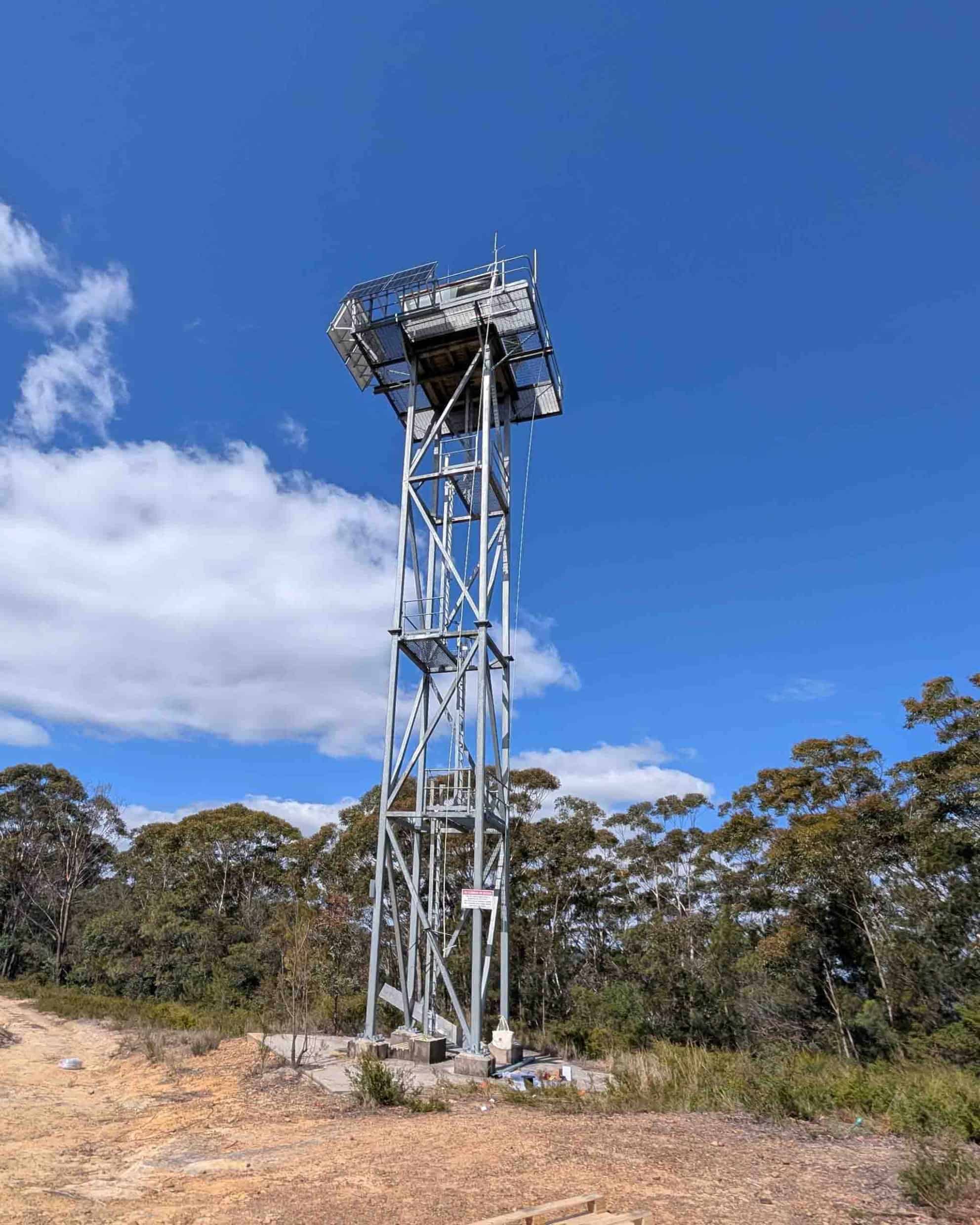
Solar Power at an Elevated Remote Site
Installing solar equipment on a fire watch tower presents different challenges from a ground-level off-grid system.
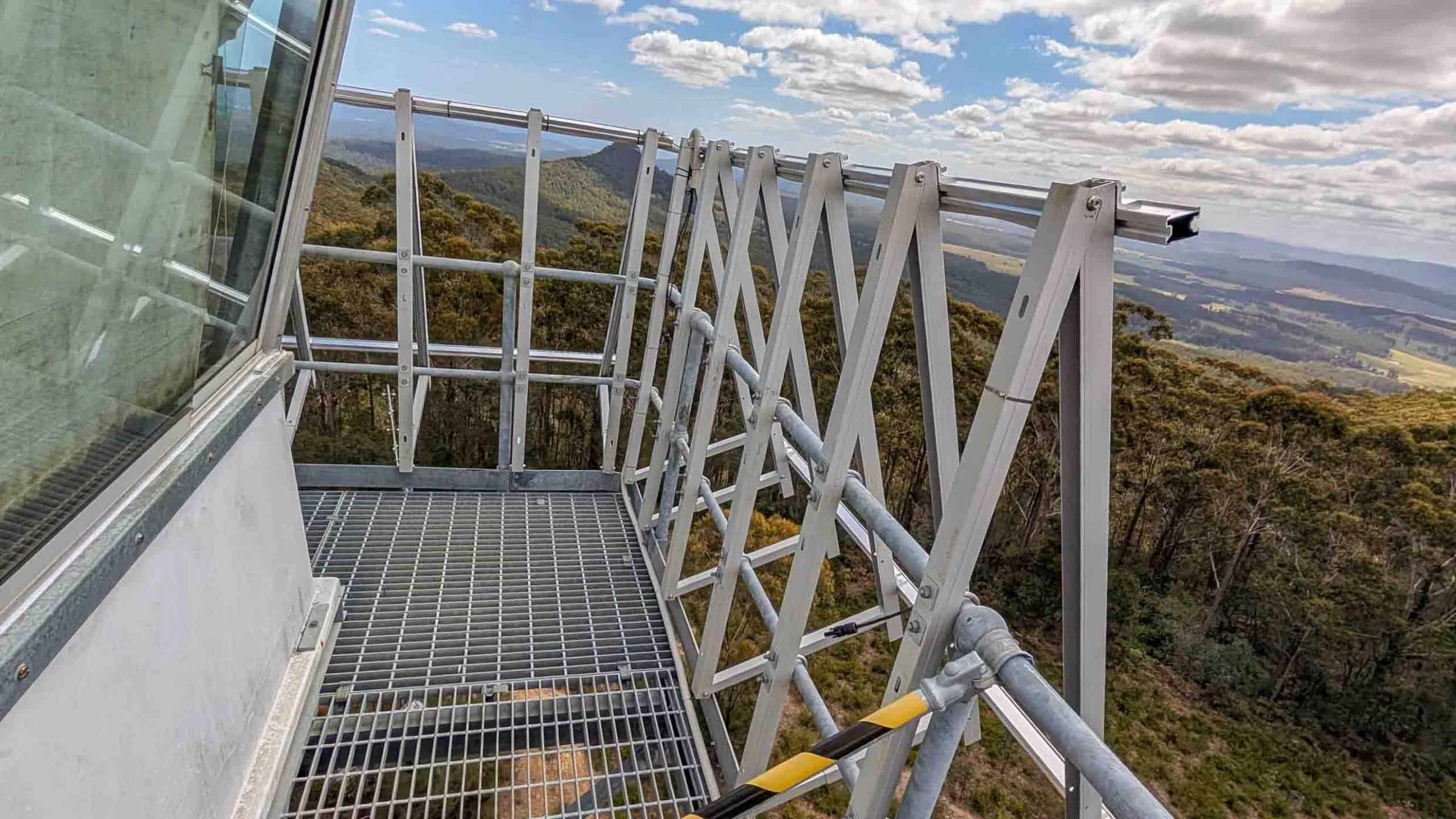
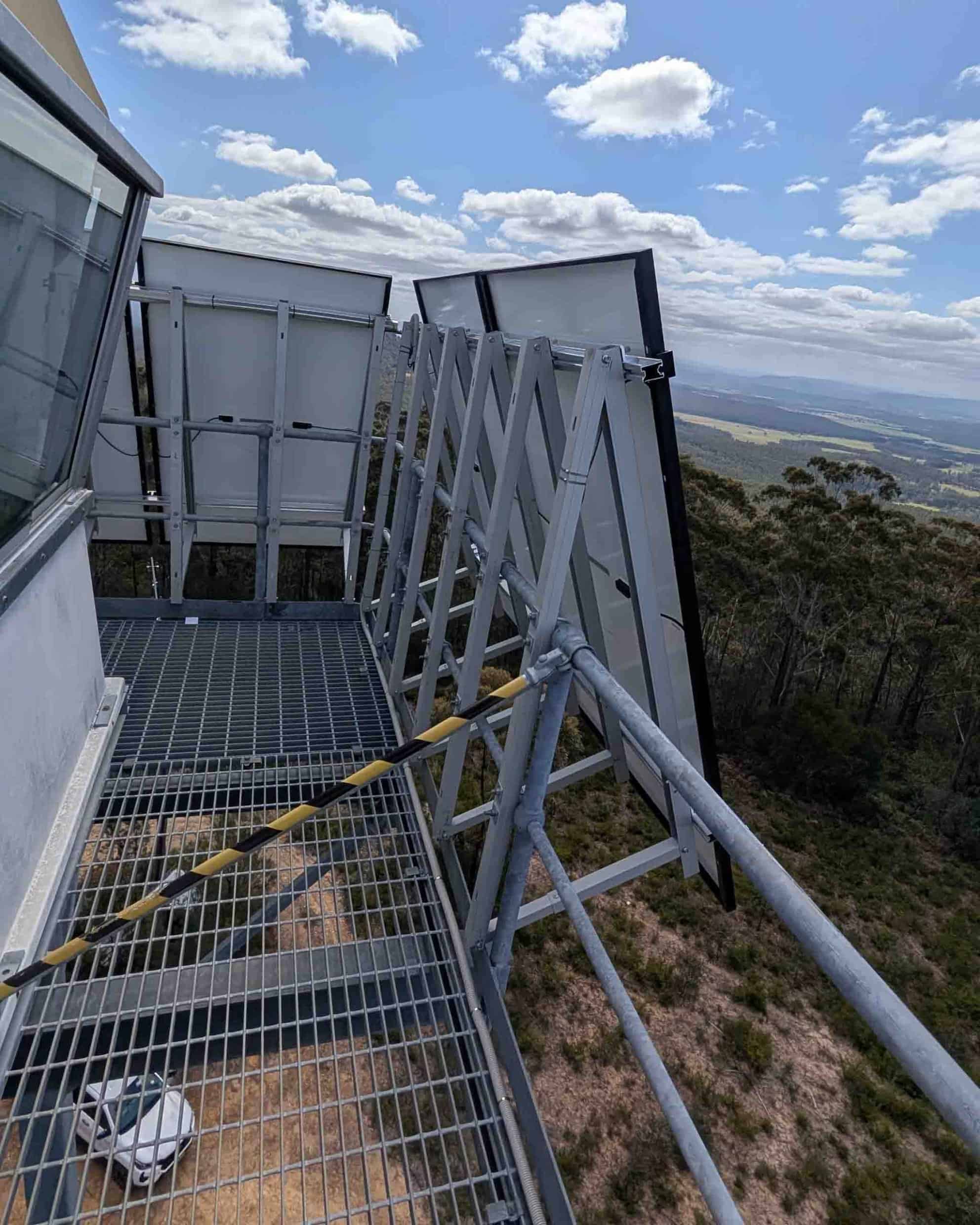
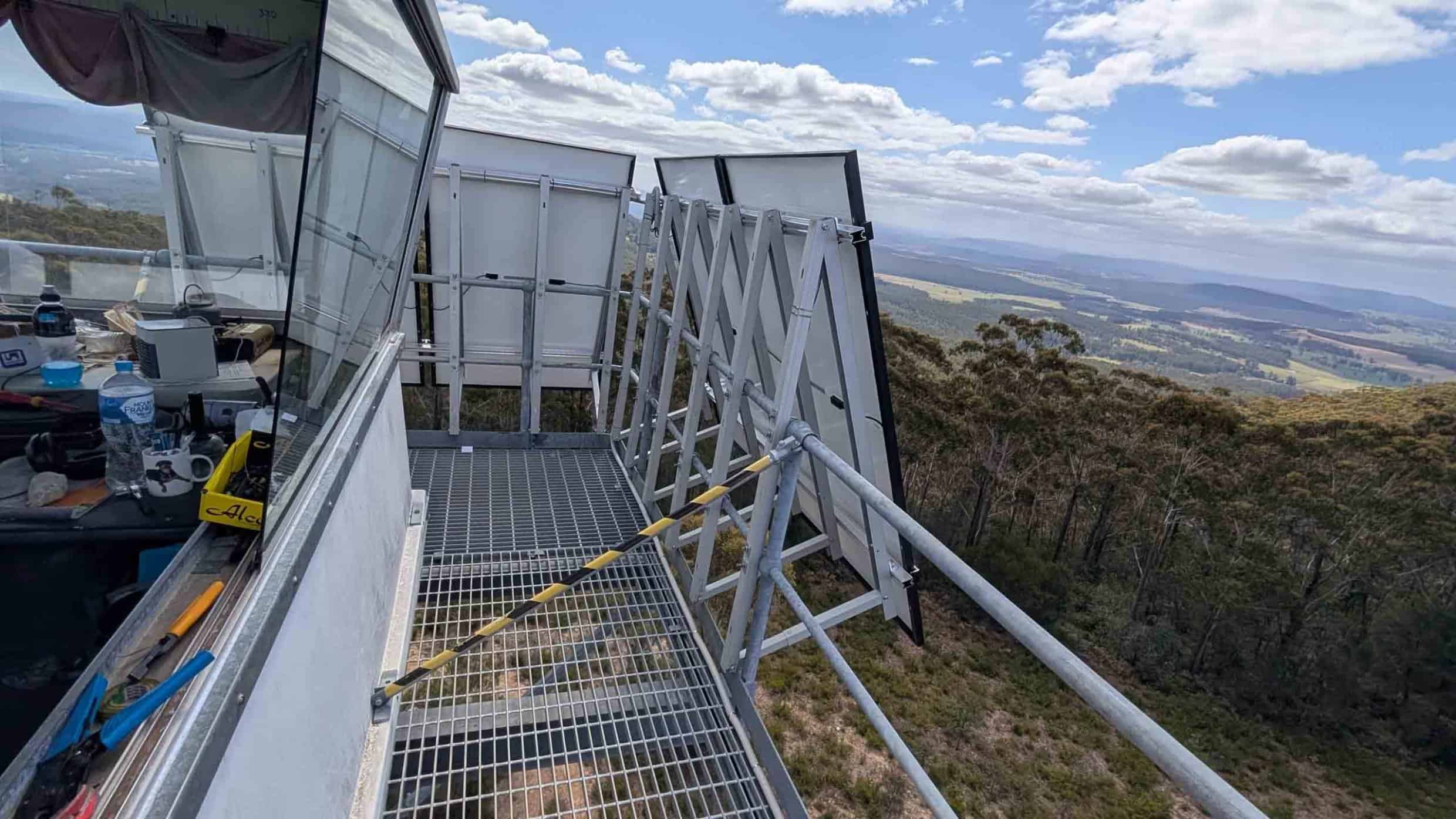
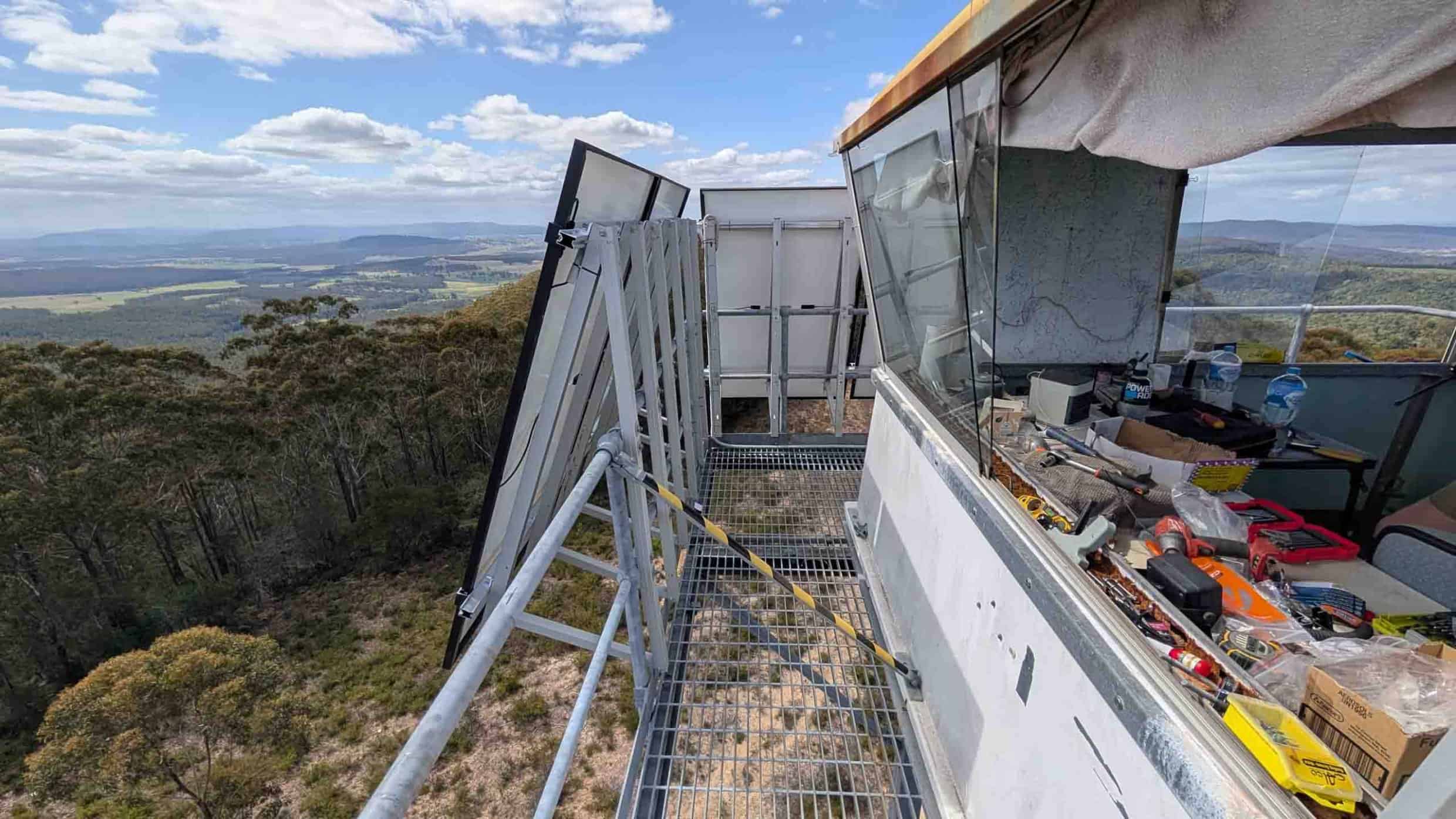
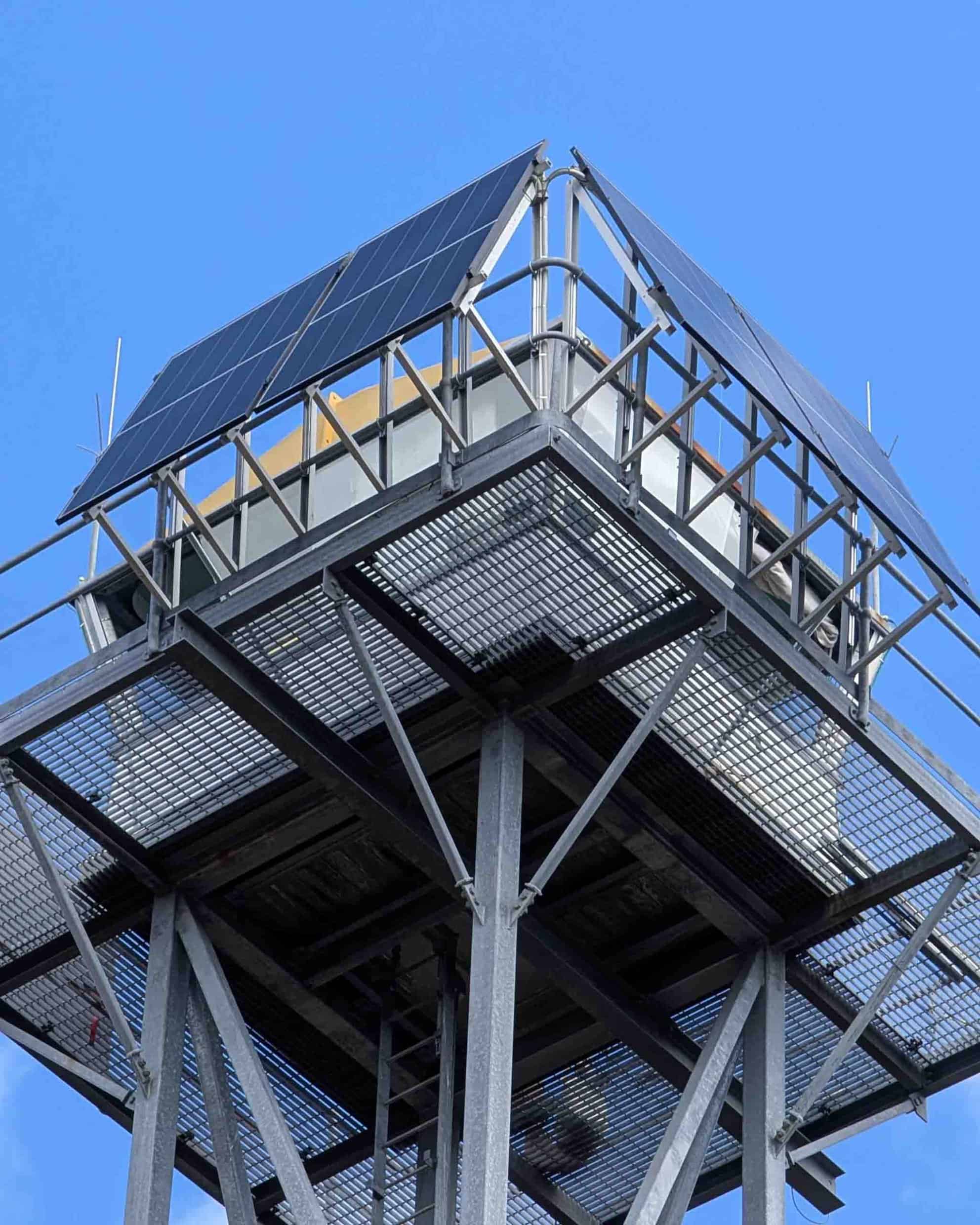
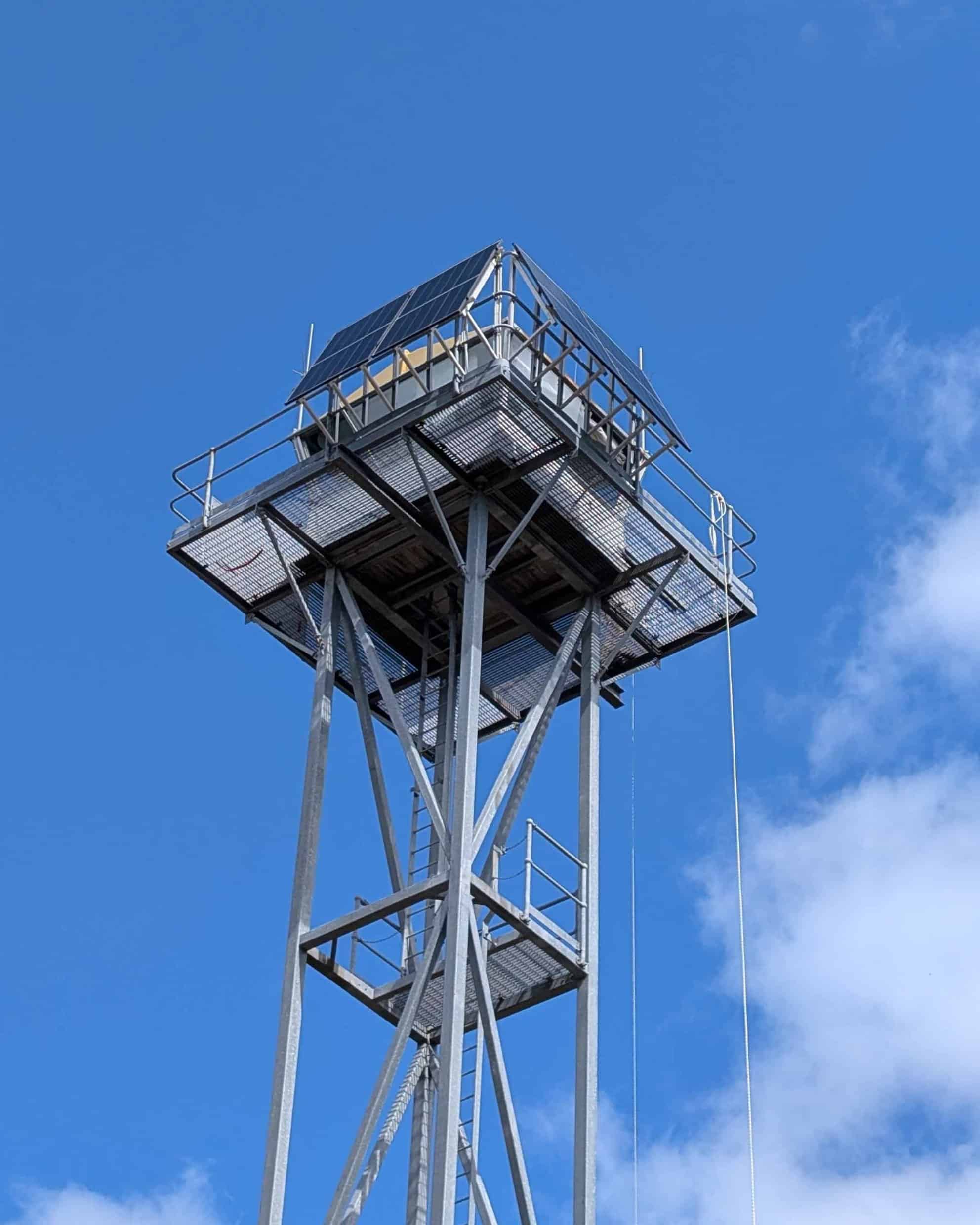
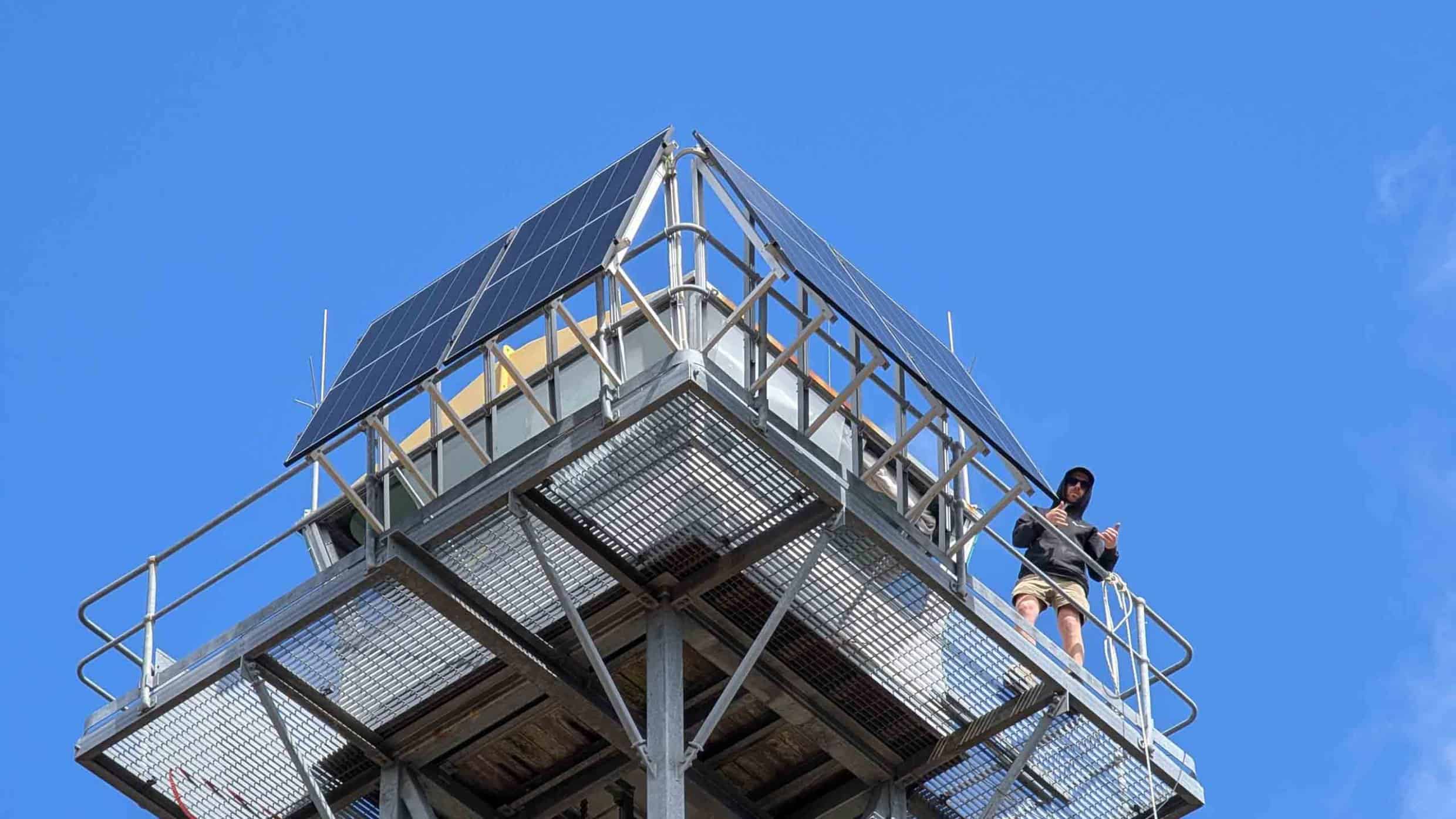
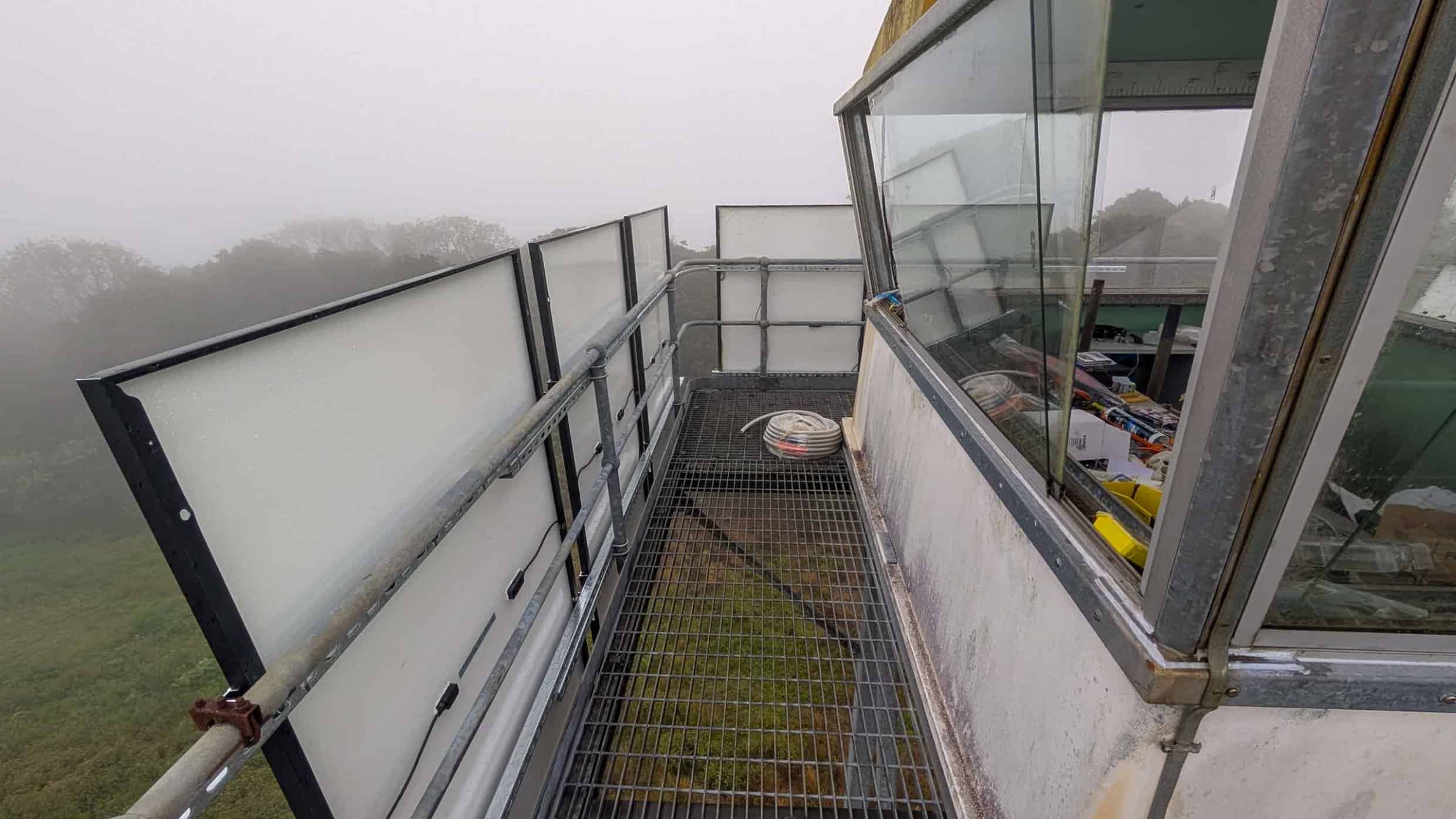
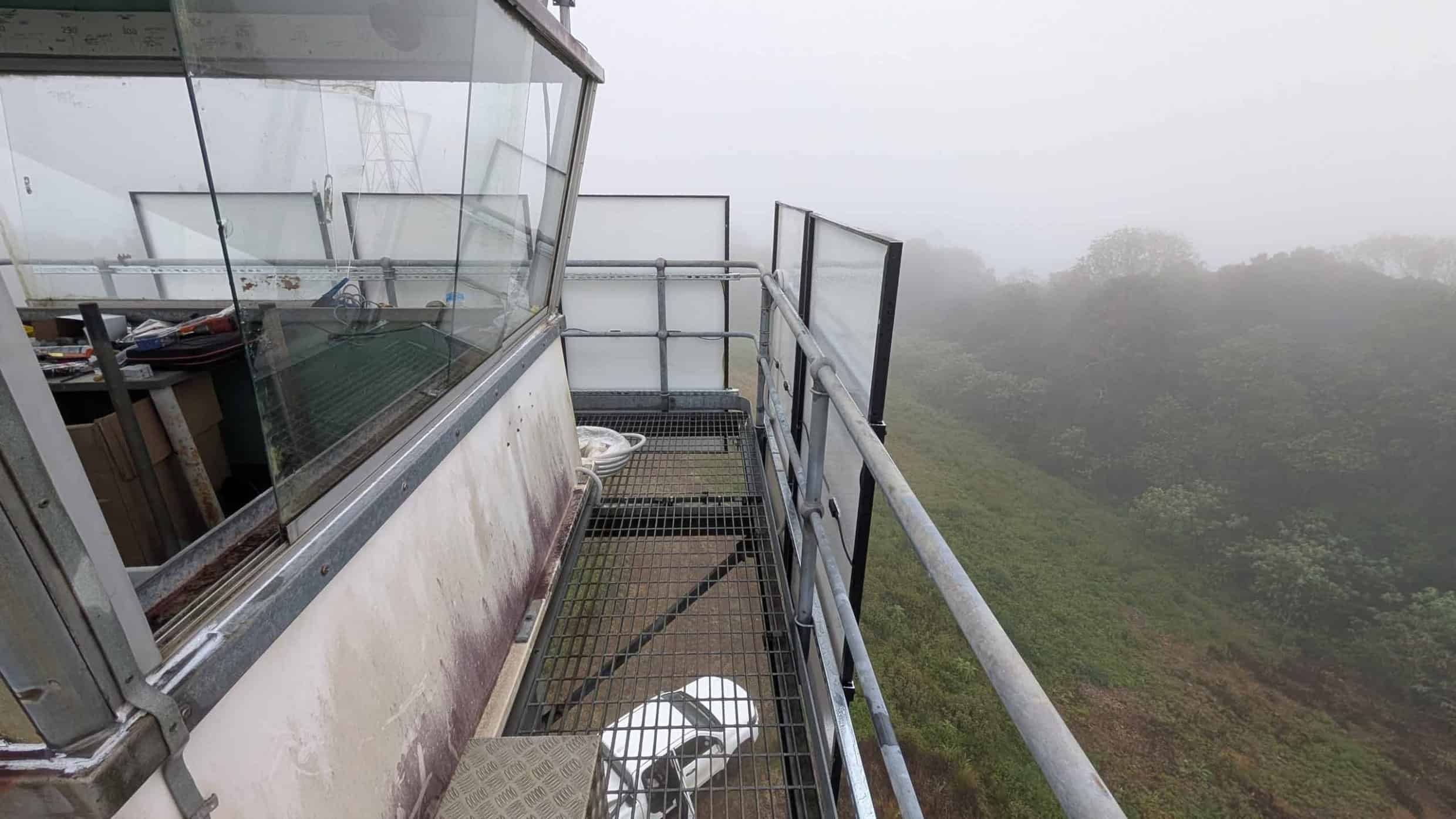
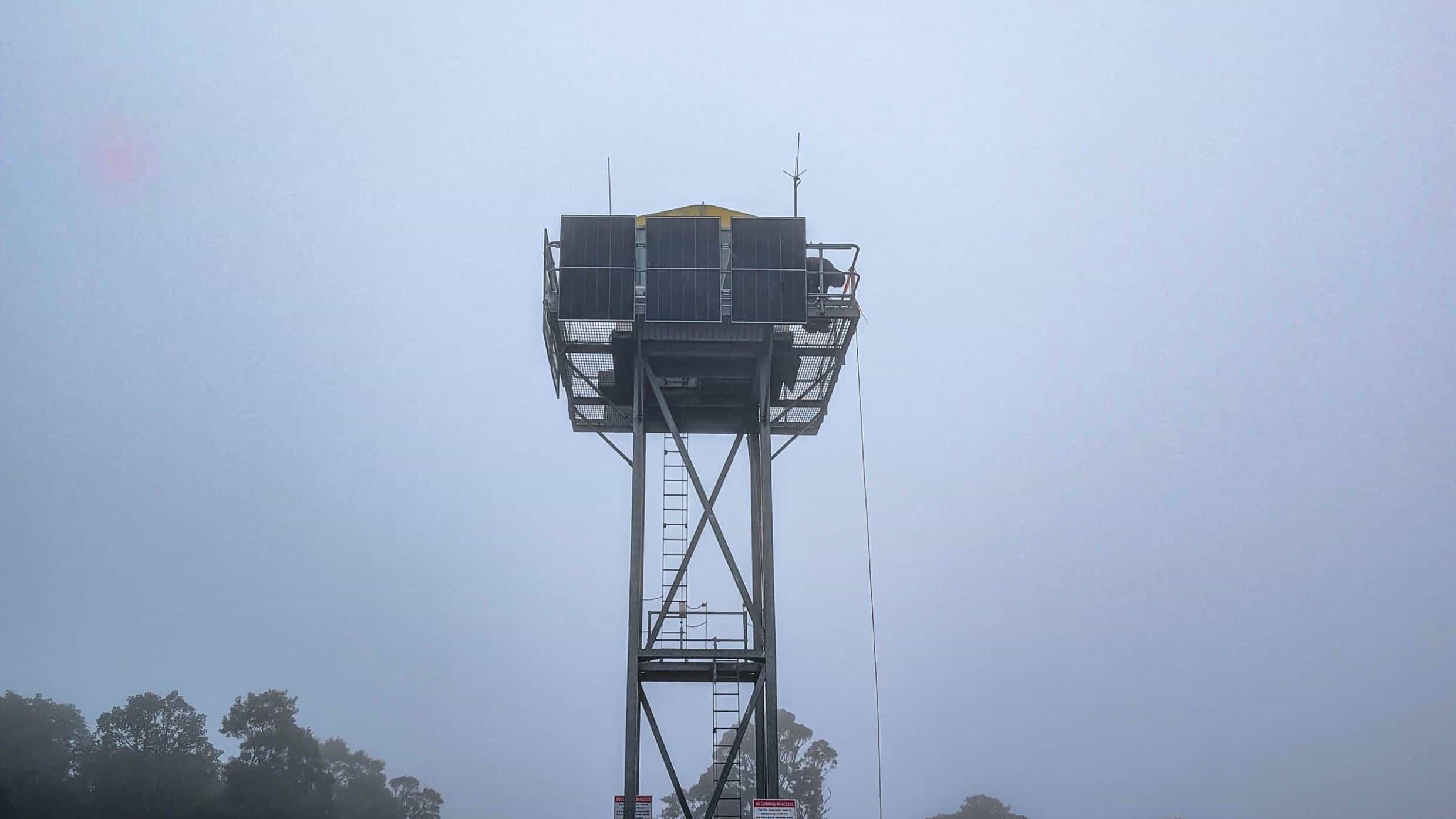
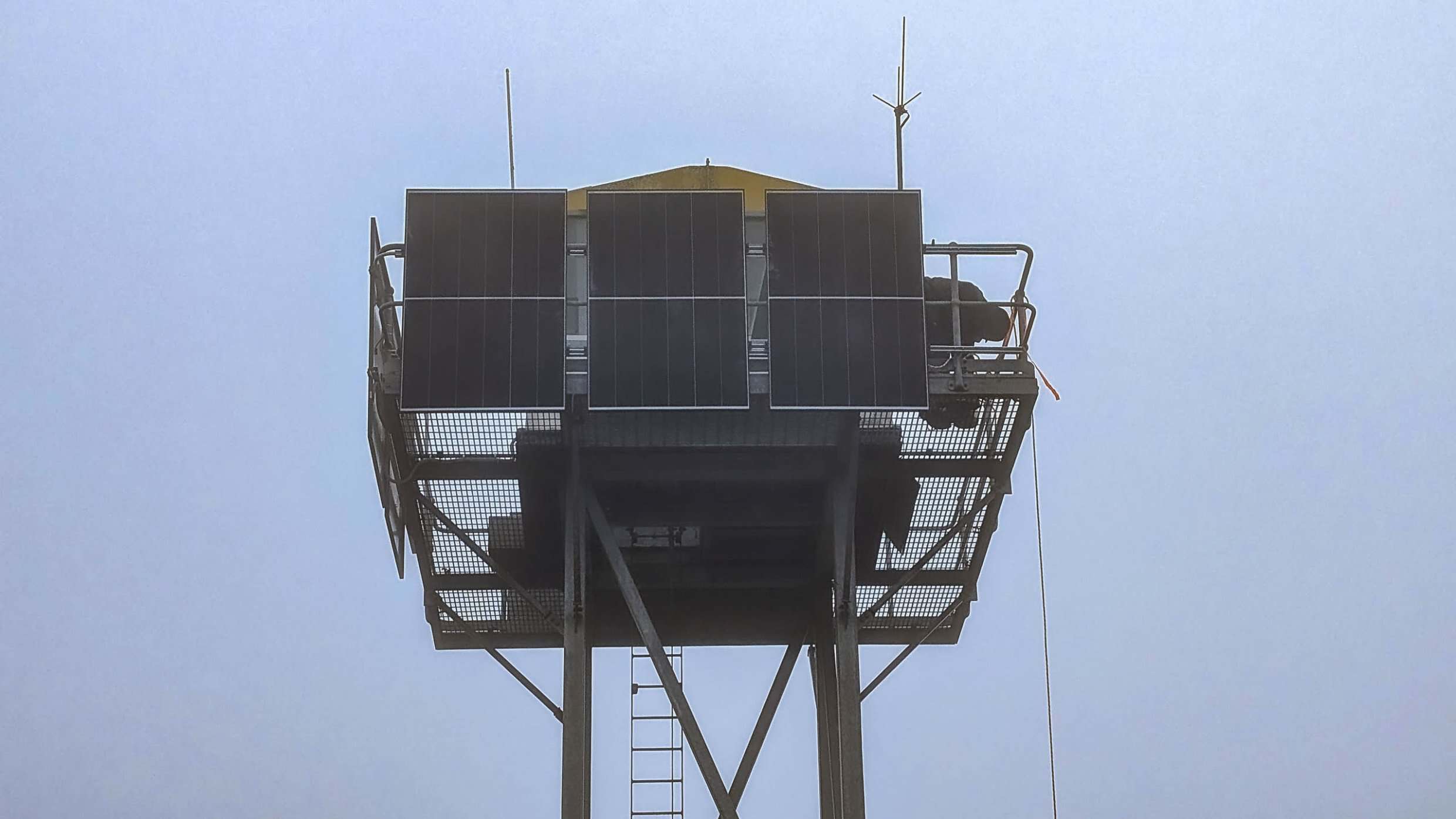
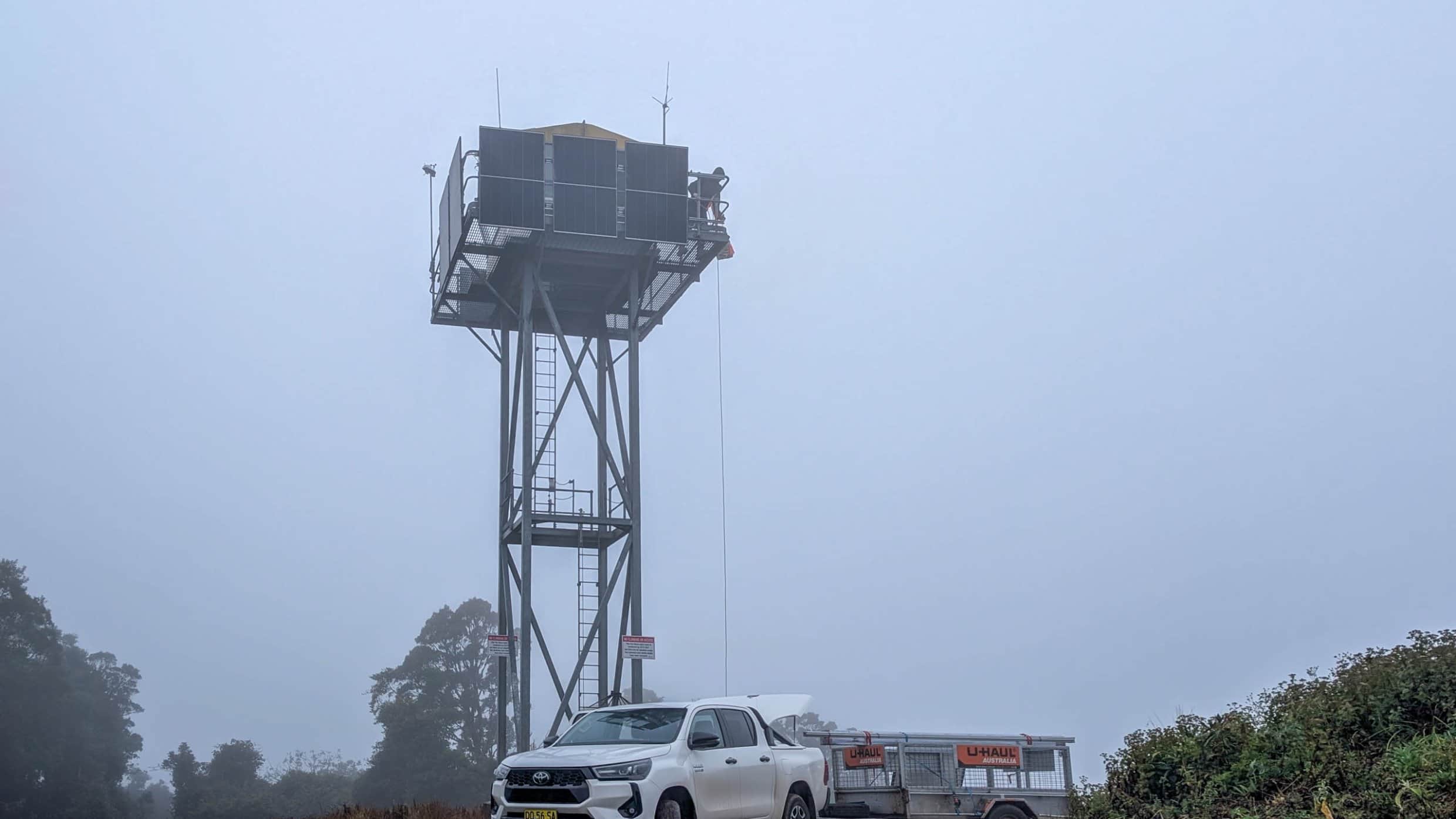
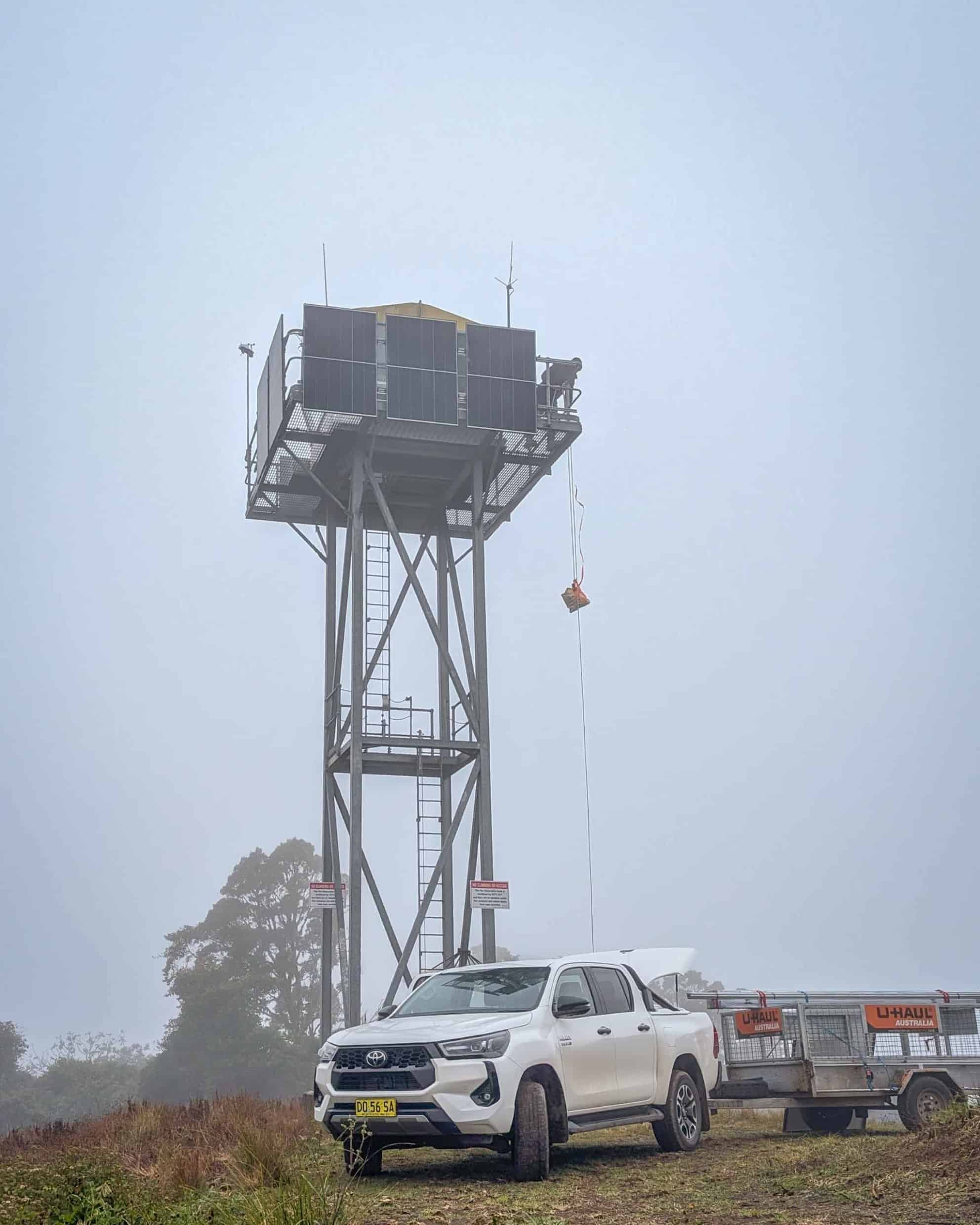
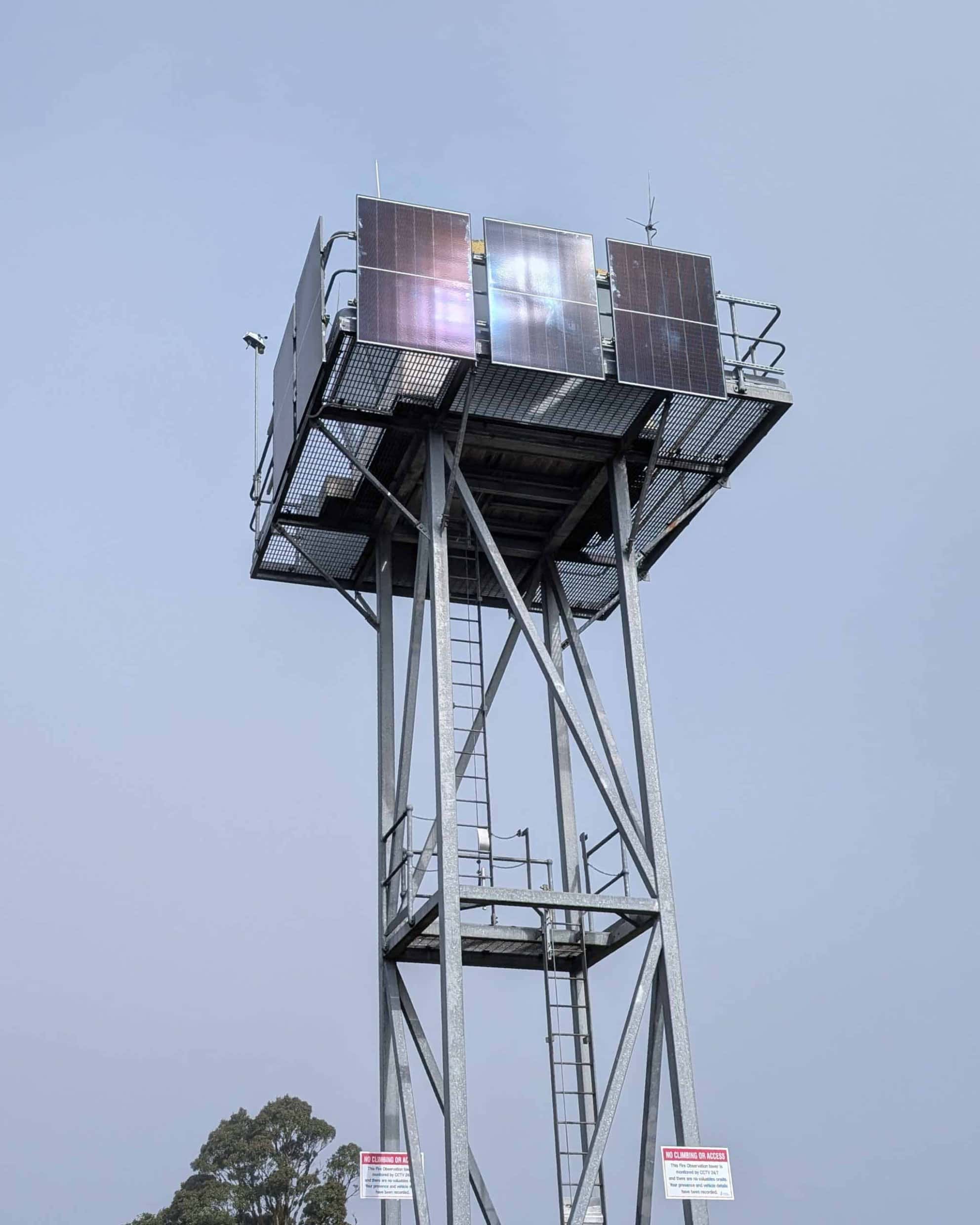
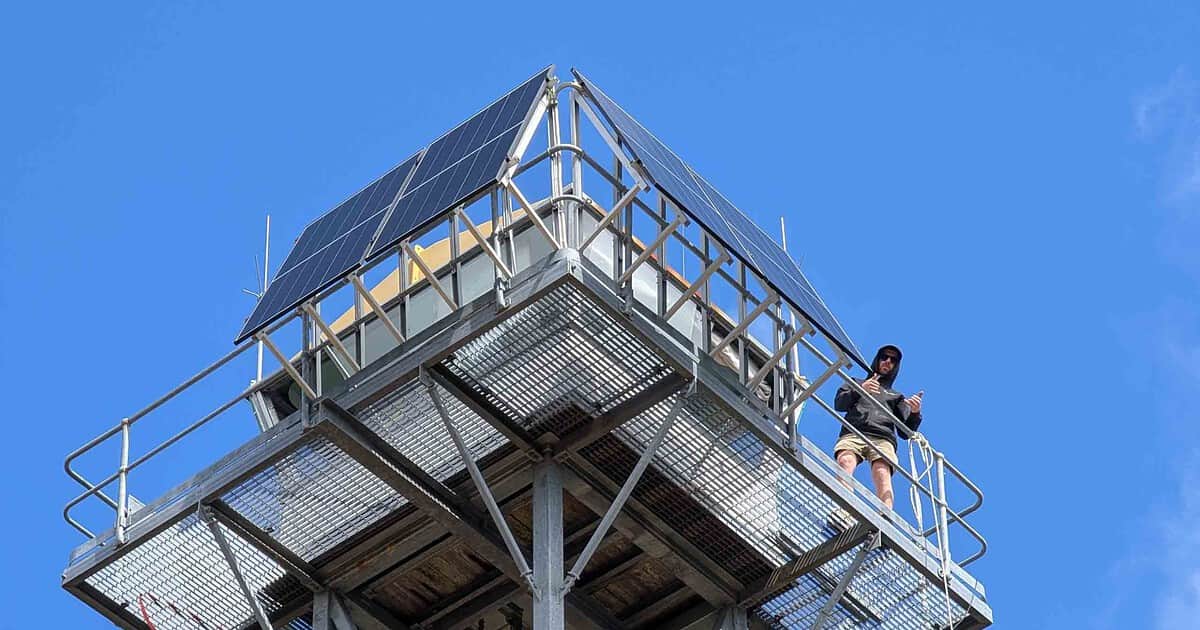
The solar panels are mounted around the upper observation platform, taking advantage of the tower’s elevated position and available mounting space.
The photographs show a steel support structure, grated access platforms and solar panel mounting frames fitted around the lookout cabin.
This arrangement keeps the solar equipment close to the observation station, without requiring a separate ground-mounted solar array.
Victron Solar Control and Battery Storage
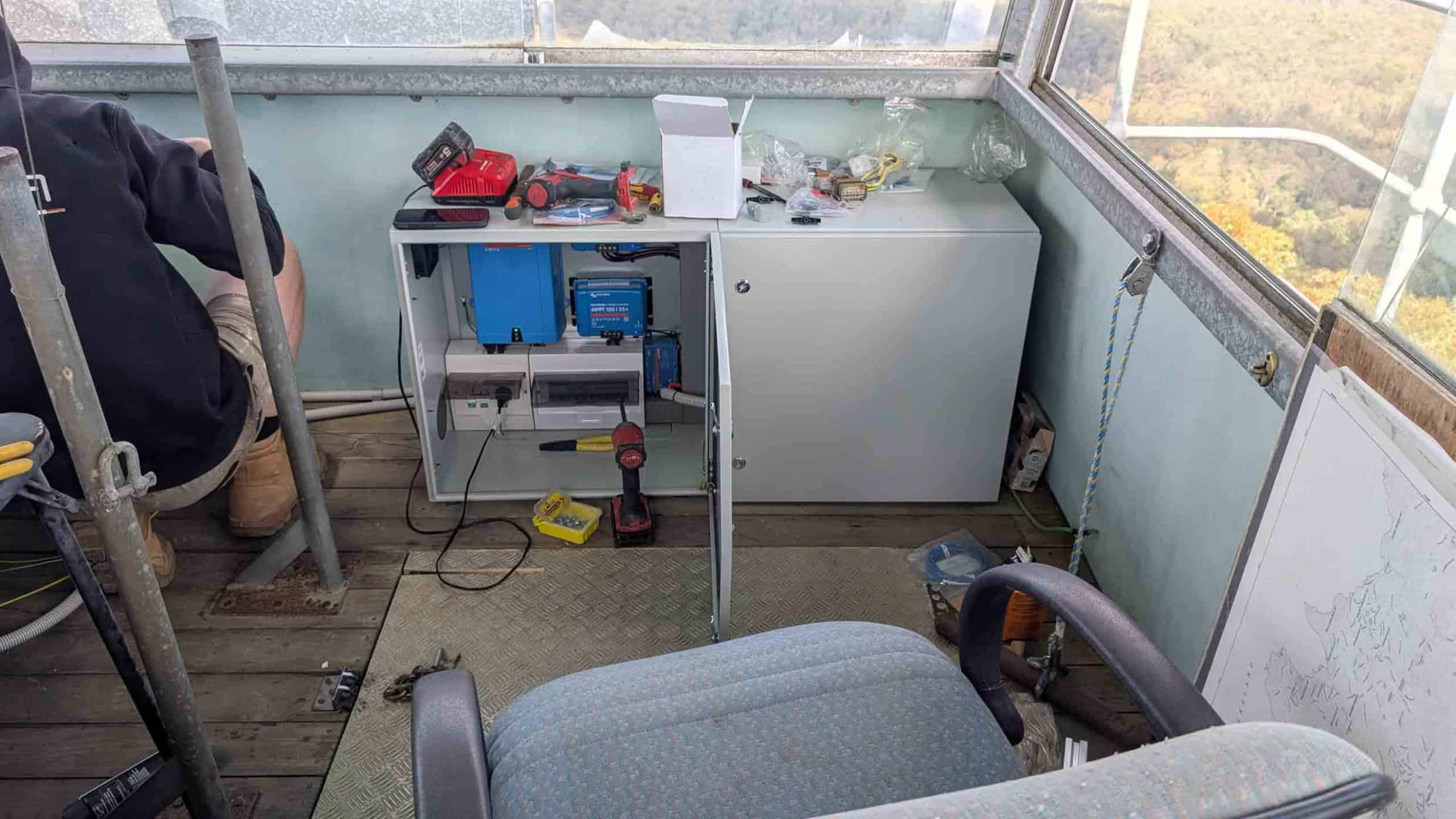
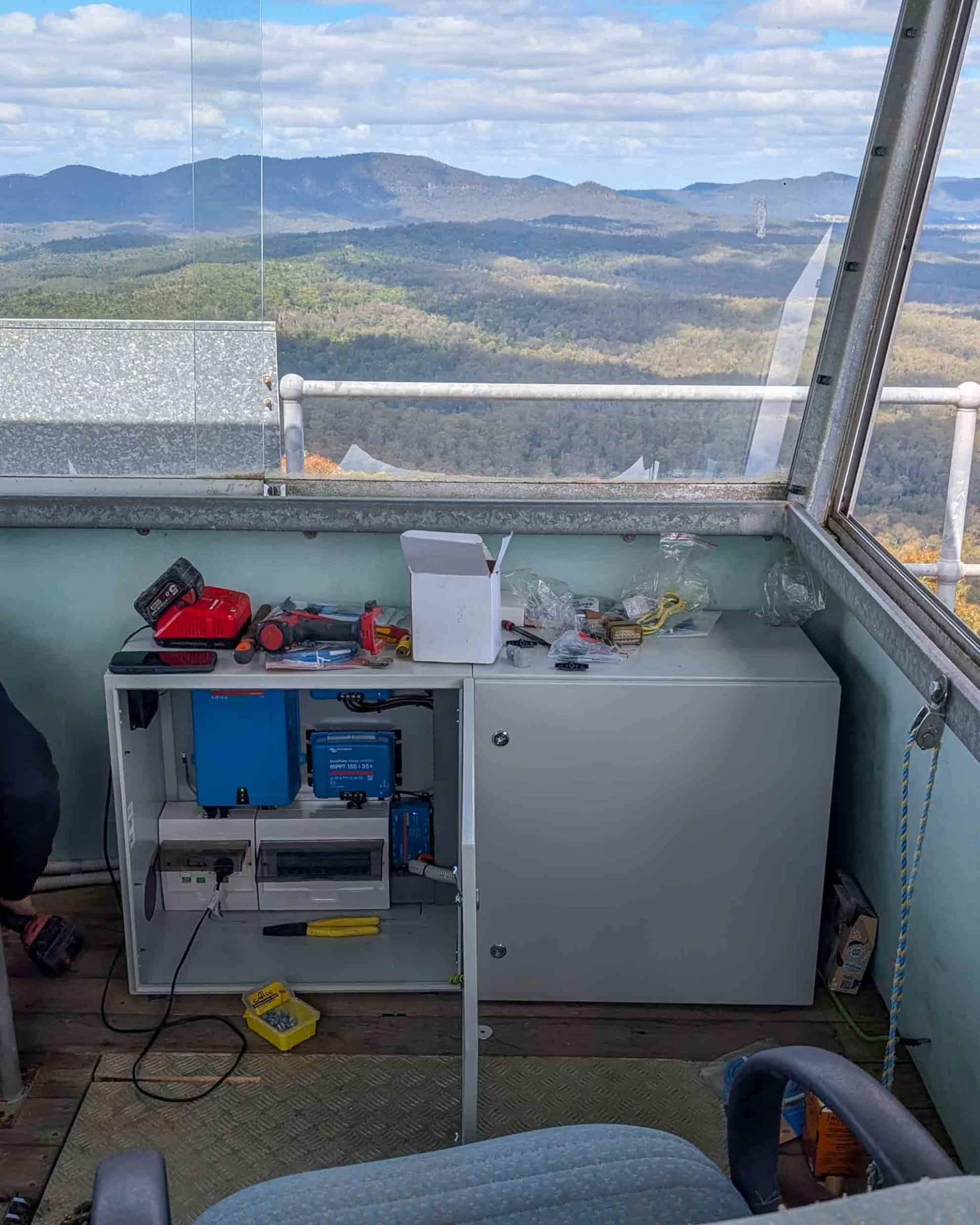
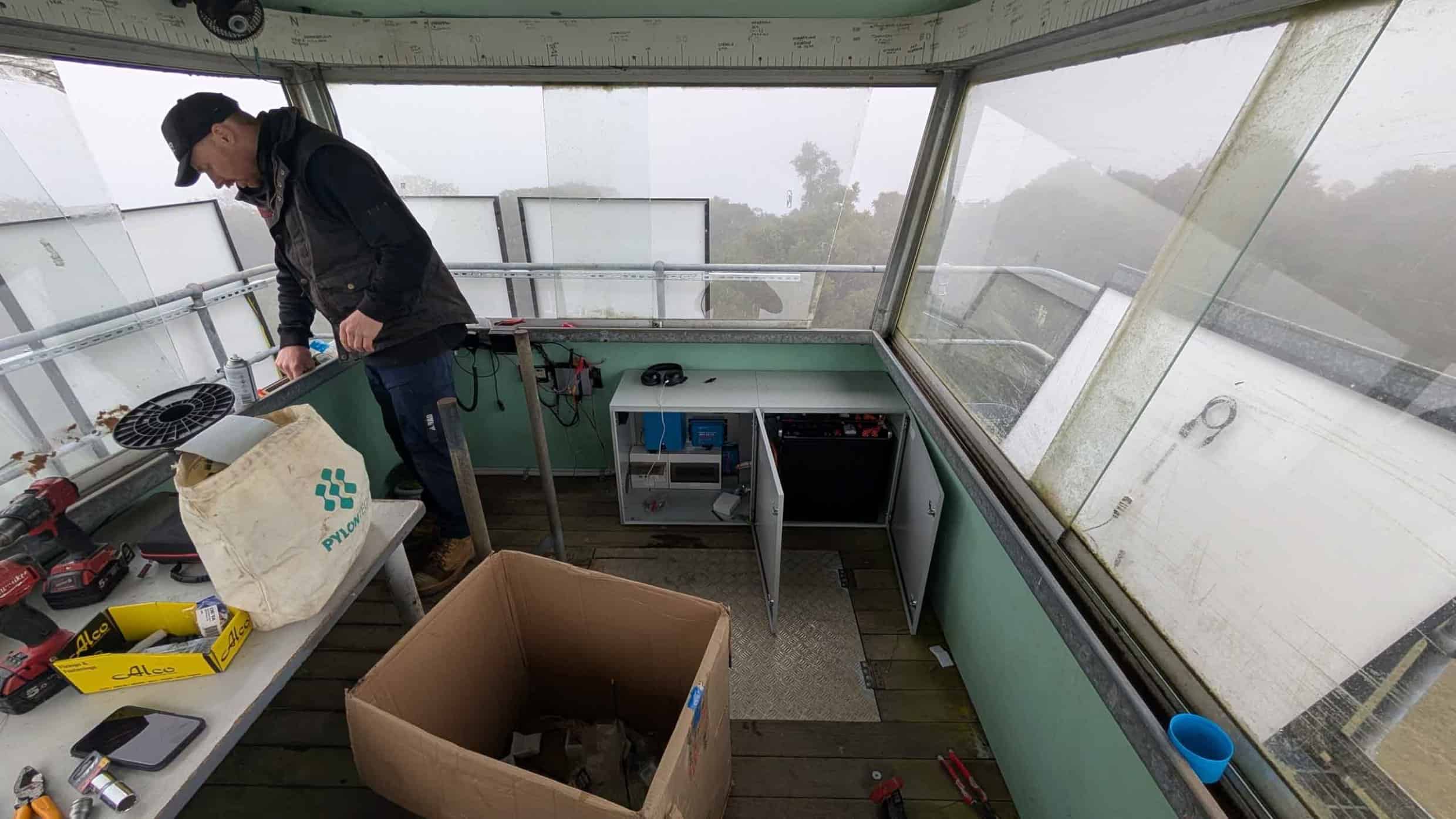
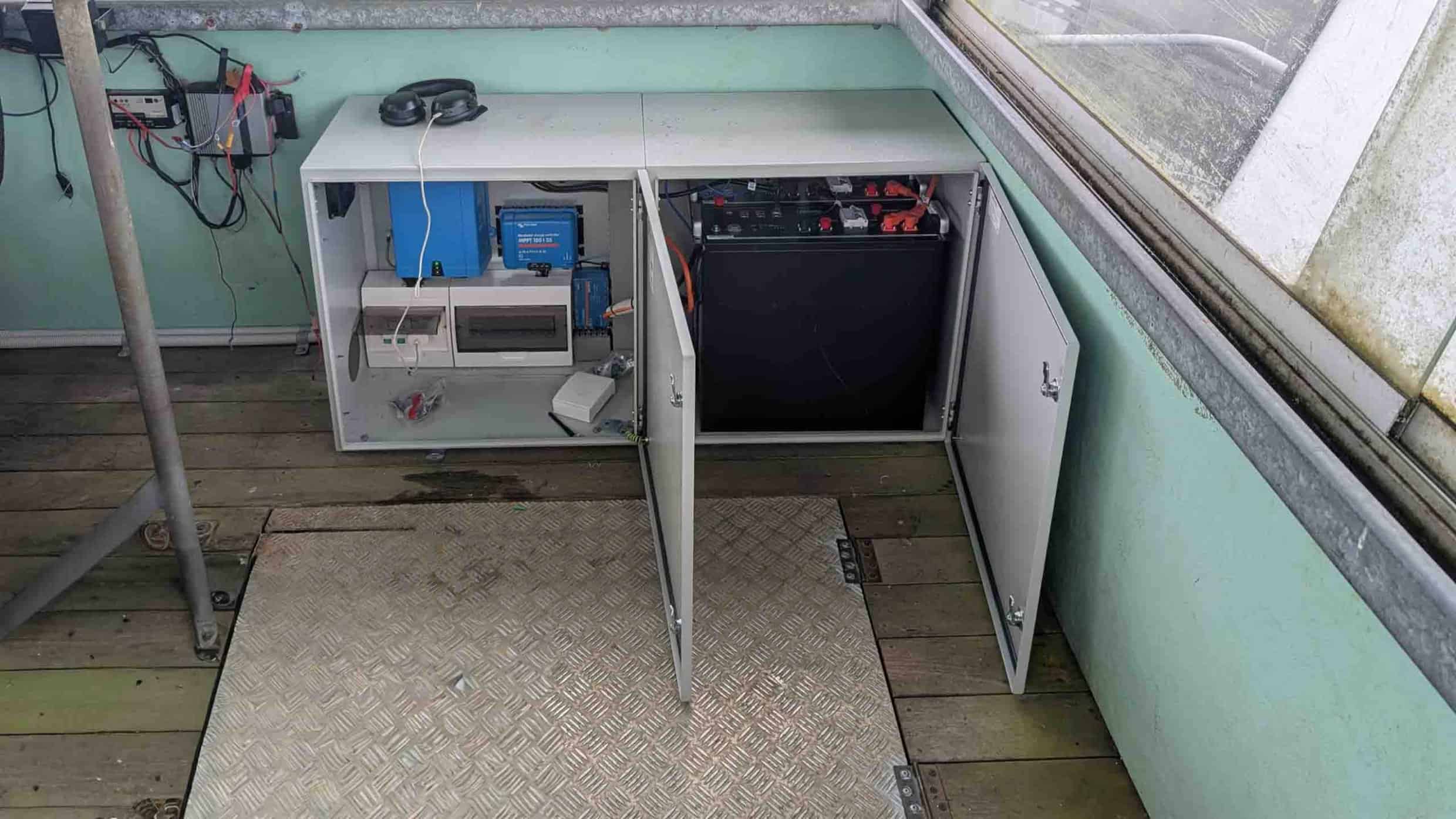
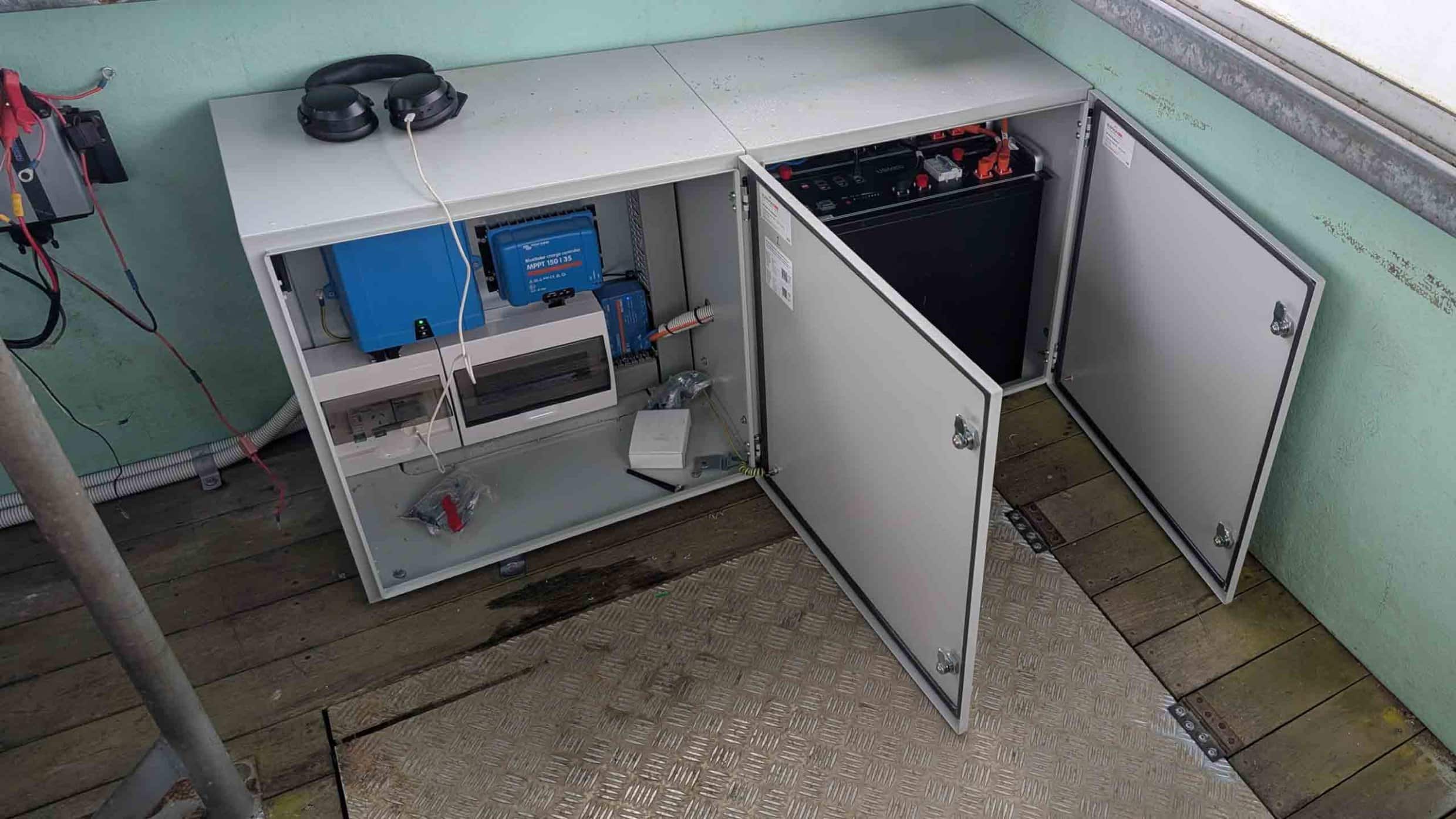
The electrical equipment is housed inside a cabinet within the observation cabin.
A Victron SmartSolar MPPT 150/35 charge controller manages charging from the solar panels into the battery system. MPPT technology adjusts the panels’ operating point to make effective use of the available solar generation as sunlight conditions change.
The system also uses two Pylontech US5000 lithium iron phosphate battery modules, providing a combined 9.6kWh of nominal storage.
Stored electricity can supply the tower’s connected equipment after sunset and when solar generation is reduced.
Compact Equipment for a Remote Installation
Space is limited inside a fire watch tower, particularly where the observation cabin must also accommodate personnel and monitoring equipment.
The Victron electrical components, protection devices and battery storage are grouped within an enclosed cabinet, keeping the main equipment together for access and servicing.
For remote installations like these, the design needs to account for expected electricity consumption, available solar generation, battery autonomy and the practical difficulty of accessing the site.
The result is a compact, self-contained off-grid installation suited to the tower’s location and operational requirements.