Summary
The shift towards integrated batteries and inverters has largely followed our 2024 forecast, but separate components remain relevant. More inverter brands now offer battery platforms, without necessarily manufacturing their own cells. For off-grid buyers, winter performance, equipment compatibility and local support matter more than which brand or architecture dominates.
Solar batteries and inverters are becoming more closely integrated. But that does not mean every off-grid home will end up with the same type of system. Nor that manufacturers must produce their own battery cells to survive.
Our original 2024 article looked at where the solar battery market could head over fives. This 2026 review revisits those predictions and explains what the developments mean for properties running without a grid connection.
The five-year period has not finished. These are interim findings, with some predictions holding up better than others.
Battery and Inverter Integration Will Reshape System Design
The original article anticipated that batteries and inverters would increasingly be supplied as one system. Instead of choosing separate components, buyers would purchase an integrated platform combining energy storage, power conversion and system control.
For off-grid properties, this approach could simplify equipment selection and give the manufacturer more control over how the components operate together.
2026 update: the direction holds up.
Tesla’s Australian Powerwall range includes an integrated solar inverter in Powerwall 3. Sigenergy’s SigenStor platform brings battery storage, power conversion and energy management together, with optional DC vehicle charging. These products support the move towards integrated energy systems. Their availability alone does not establish suitability for every permanently off-grid installation.
Integration also needs a clear definition. Components can share a manufacturer, communications platform and control system while remaining physically separate. A matched battery and inverter package is not necessarily an all-in-one unit.
For an off-grid buyer, the useful question is whether the complete configuration can operate the property continuously without the grid. That requires checking supported operating modes, starting loads, battery limits and recovery after a low-battery shutdown.
All-in-One Off-Grid Systems Are Gaining Ground
The original article predicted that batteries and inverters would increasingly become one integrated system, eventually making separate inverters obsolete.
2026 update: integration is progressing, while separate inverters remain relevant.
All-in-one systems are becoming a more established option for off-grid homes and businesses. Bringing battery storage, inverter functions and controls into one coordinated platform can reduce system complexity and make day-to-day operation easier for owners.
Long-term reliability will take more time to assess, particularly for newer platforms. For off-grid use, the complete system still needs to support the property’s loads, winter operating conditions and recovery after a low-battery shutdown.
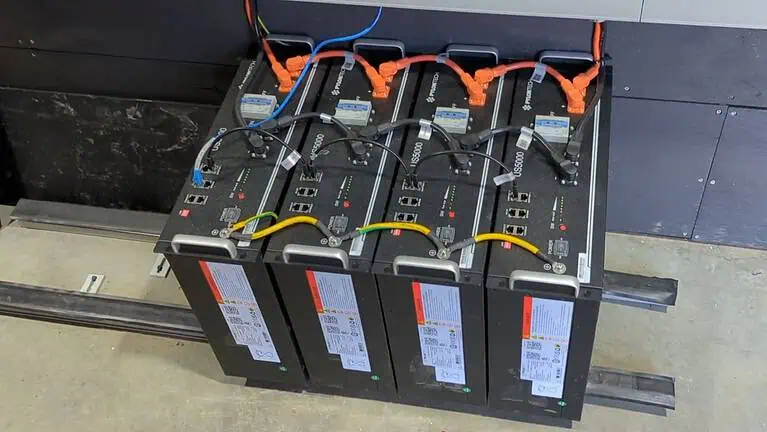
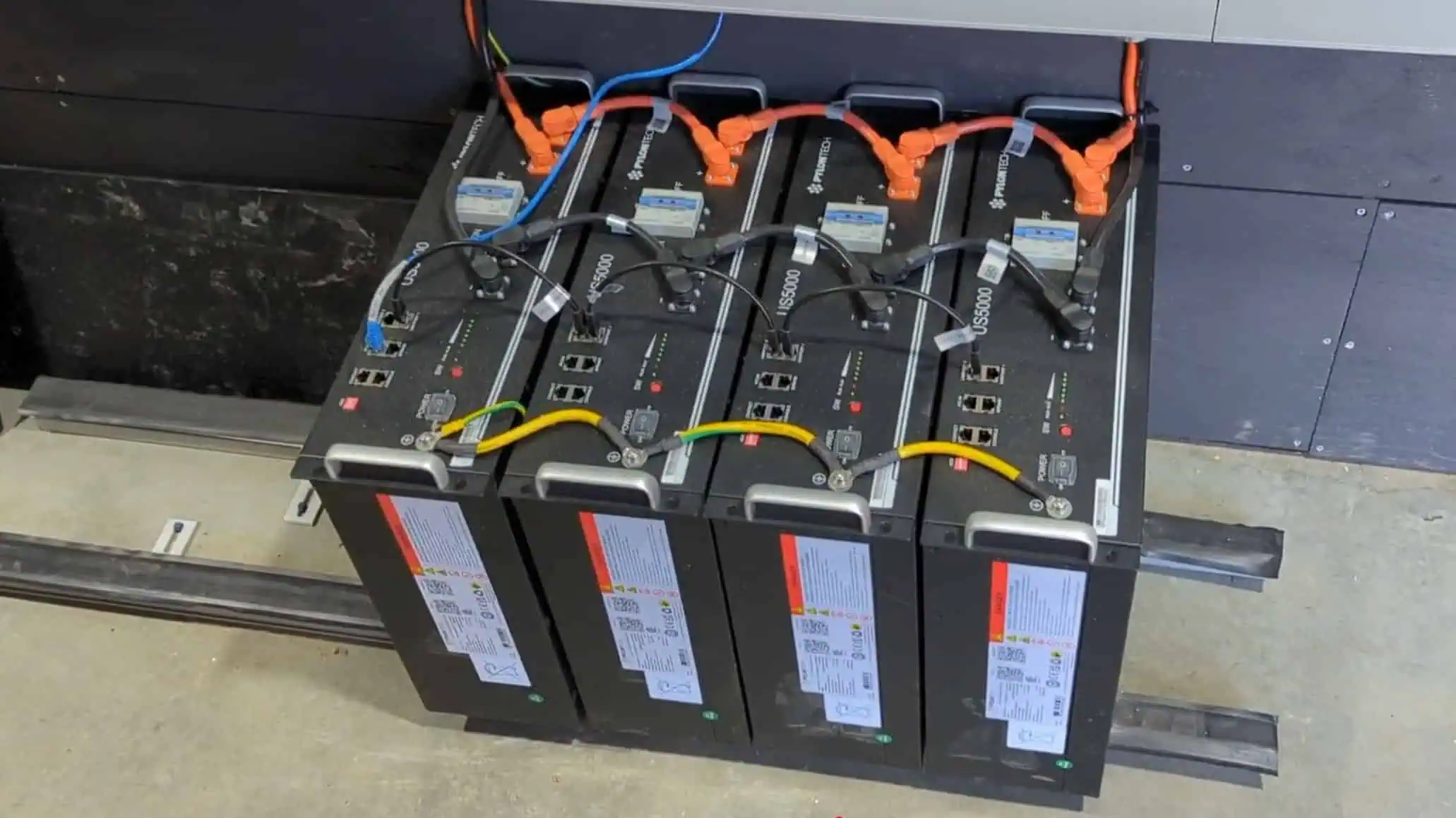
Separate inverter/chargers and battery banks continue to have a place. Victron’s documented compatibility with Pylontech batteries is one example of this established approach, which can offer flexibility when sizing, upgrading or replacing individual components.
So far, the market is moving towards greater integration without eliminating separate inverters. Both approaches remain relevant to off-grid system design
Battery Manufacturers and System Integrators Have Different Roles
The original article highlighted rebranding and predicted that manufacturers producing their own battery cells would outlast smaller businesses assembling systems from purchased components.
It named Pylontech, AlphaESS, BYD and Tesla as potential long-term leaders, based on an expectation of greater vertical integration.
2026 update: manufacturers are taking different paths to complete battery systems.
Pylontech develops and manufactures its own cells, modules, battery management systems and energy management systems. This gives it control across several stages of battery production.
Other manufacturers combine externally sourced cells with their own system engineering. Sigenergy’s 2026 technical brochure, for example, attributes cell cycle-life figures to its cell manufacturer. Battery protection, thermal design, power electronics, software and compatibility testing all contribute to the finished system.
So far, both approaches remain relevant as the market moves towards more coordinated storage platforms. Producing cells in-house can provide greater manufacturing control, while specialist system manufacturers can add value through integration and support.
For off-grid owners, the practical assessment extends beyond who makes the cells. The complete system’s performance, repair options and local technical support remain central to choosing equipment for long-term use.
Manufacturer Restructuring Can Affect Long-Term Support
The original article expected pressure on battery-system suppliers and specifically suggested that sonnen could fade from the market.
For an off-grid owner, the concern behind that prediction is practical: the equipment may remain in service long after a manufacturer changes ownership or restructures.
2026 update: sonnen’s difficulties support the concern, with some limits.
On 22 October 2026, Handelsblatt reported that sonnen GmbH had filed for insolvency, with confirmation from the company. Its report said existing business and customer service were intended to continue during the process.
This supports the original concern about sonnen’s business outlook. It does not establish that every sonnen operation has closed, that installed batteries have stopped working, or that outsourced cells caused the insolvency.
The off-grid implication is to examine support arrangements before buying. Who supplies replacement equipment? Who can diagnose a fault locally? What functions remain available if an online service changes?
A familiar brand name is useful context. It cannot replace checking the support pathway for the actual system being installed.
LG and Samsung Have Not Followed One Clear Exit Path
The original article suggested that large battery businesses such as LG and Samsung might retreat from household storage and concentrate on industrial markets.
That prediction treated two different manufacturers as though they were likely to follow the same strategy.
2026 update: industrial storage is expanding, while residential batteries still remain part of the market..
LG Energy Solution continues to present residential storage products, including its enblock range, on its European battery website. That contradicts a blanket claim that LG has withdrawn to industrial storage only. It does not confirm availability or suitability for an Australian off-grid installation. lgessbattery.com
Samsung SDI has announced a substantial agreement to supply LFP batteries for North American energy storage systems from 2027. This supports its continued investment in stationary storage, but does not prove that it has abandoned all residential applications.
The more useful distinction for buyers is between a company’s global manufacturing strategy and the equipment it supports locally. A manufacturer can expand industrial production without offering a suitable battery platform for a particular off-grid home.
Inverter Brands Are Expanding Their Battery Platforms
The original article identified Sungrow, Huawei, Sigenergy, Deye and potentially Solis as businesses likely to expand further into batteries.
The expectation was that inverter suppliers would increasingly offer a broader energy-storage platform.
2026 update: inverter brands are expanding into more complete battery and storage platforms.
Sungrow publishes Australian documentation for its SBR and SBH batteries, while Huawei maintains documentation for its LUNA2000 storage platforms. Deye markets residential batteries and announced an all-in-one home storage system in September 2026.
Solis now describes a complete SolisStorage offering. Its July 2026 support guidance also explicitly retains compatibility with third-party battery manufacturers. This shows that branded storage platforms and open component selection can develop alongside each other.
The original direction was sound: more inverter brands are offering batteries and coordinated storage systems. The wording needs to distinguish that development from manufacturing the cells inside those batteries.
For off-grid use, each model and configuration still needs its own assessment. A battery range, hybrid inverter or backup function is not sufficient evidence of suitability for permanent operation without the grid.
What These Battery Market Trends Mean for Off-Grid Buyers
So far, the market is moving towards more closely integrated energy systems, as the original forecast anticipated. Separate inverters, specialist system manufacturers and established residential battery brands continue to have a place as that transition develops.
For an off-grid property, the buying criteria remain practical:
- Supported permanent off-grid operation in the proposed configuration.
- Enough usable battery energy for the planned autonomy.
- Inverter output and surge capability matched to the property’s loads.
- Charging and recovery arrangements for extended low-solar periods.
- Documented expansion options and accessible technical support.
In Ballarat and regional Victoria, the system still has to meet the property’s demand through winter. An integrated enclosure or well-known brand does not remove that design requirement.
If you are comparing off-grid systems, ask for the equipment selection to be explained against your household loads, winter production and planned generator use. That gives you a stronger basis for choosing than a prediction about which brand will dominate.