




100Up Off Grid Solar Logo Orange Wordmark
Designing Solar for 100% Offgrid

100upOff Grid SystemDesign Method. Reliable Year-Round Power

We design your solar, battery and inverter capacity around realistic energy demand, worst-case winter production and the autonomy needed to reduce generator dependence.

What Size Off-Grid Solar System Do You Actually Need?

Our goal is to design an off-grid system that doesn't rely on a generator for normal day-to-day operation. We start with realistic household demand, then work backwards through winter solar production, battery autonomy and inverter capacity to design the complete system. There isn't one system size that suits every off-grid property.
Realistic Energy Demand
Winter Solar Performance
Battery Autonomy
System Redundancy
A generator can still provide useful backup for unusual conditions, maintenance or equipment failure. It just shouldn't be doing the work of an undersized solar and battery system.

Not Sure What Size System You Need?

You don't need to work out the number of panels, battery capacity or inverter size before you call us. Tell us about the property, where you're building and how you expect to use power. We'll work through the numbers from there.
Design Principles

Four Design Decisions Behind a Generator-Less Off-Grid System

Solar panels and batteries are only part of the equation. The system needs enough generation for difficult winter days, enough storage to carry the household when production drops, and enough capacity for the people the property may need to support over its lifetime.
These are the four principles we use as the starting point for off-grid system design.

Designed for Full Occupancy

We size for the home and its realistic future occupancy, and how you plan to use power today & in the future.

Built to Work through Worse Case Winters

Solar is sized around poor winter production, when an off-grid system has to work hardest.

Battery to Get Through Low Solar Days

48-Hour Battery Autonomy. Battery storage is designed to carry the household through consecutive low-production days.

Redundancy Where It Matters

Where practical, dual inverters and distributed battery storage reduce single points of failure.
Design Principle 1

Realistic Energy Demand

How Much Power Does the Property Need to Support?

As a baseline for off-grid solar system sizing, we start with 5 kWh per day for an empty house, plus 5 kWh per day for each person living in the home. That doesn't mean every person uses exactly 5 kWh every day. They don't. It gives us a consistent starting point for designing around realistic household demand rather than a short period of unusually low electricity use.
For example, a two-bedroom home would typically be designed around two occupants plus one additional person. Larger homes are modelled with increasing potential occupancy in mind.

Why We Allow for Full Occupancy

A system designed around two people living in a four-bedroom house today may no longer be adequate when circumstances change.
Families grow. People work from home. Properties change hands. New appliances and loads get added.
The energy system needs to make sense for the home it powers, including a realistic level of future occupancy. That reduces the chance of an undersized system becoming dependent on a generator or needing significant expansion later.

Occupancy & bedroom count gives us a capcity & sizing reference point

We use common household scenarios to establish a starting point for likely occupancy and energy demand. These are not fixed solar packages. Bedroom count is one reference point. Your final solar, battery and inverter capacity depends on the property, location, loads, expected occupancy and how the home will actually be used.
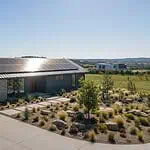
2-bedroom Victorian residential home during the day running on a full-time off-grid solar system

2-Bedroom Home

Typically modelled around two occupants plus capacity for an additional person.
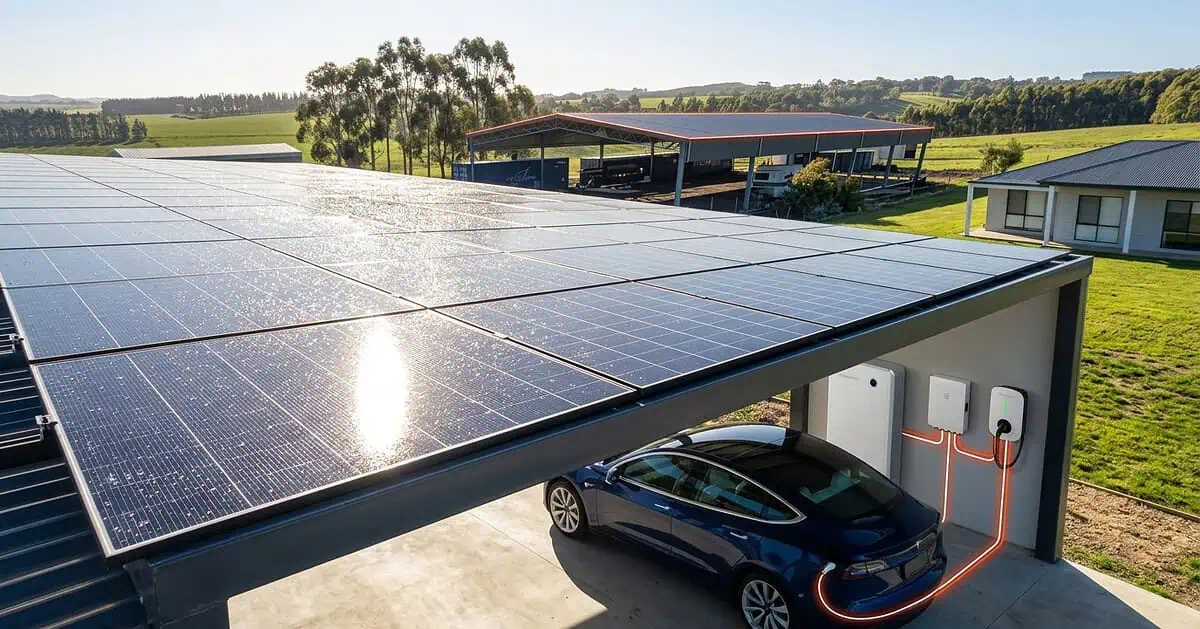
Modern off-grid home with rooftop solar array, battery storage and EV charger

3-Bedroom Home

Designed with the increased occupancy and energy demand expected from a larger household.
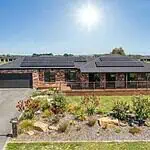
4-bedroom Victorian residential home during the day with an 18.9 kW off-grid solar array installed

4-Bedroom Home

Allows for the property to operate as a realistically occupied four-bedroom home, even if fewer people live there today.
5-bedroom Victorian residential home during the day running on an off-grid solar kit

5-Bedroom Home

Higher potential occupancy and household demand are factored into the system design from the beginning.

Enginnering Off the Grid, Renewabale Energy Systems as core home infratrucutre.

For an off-grid home, reliable electricity is core infrastructure. If the property is eventually sold, a future owner needs confidence that the energy system can support the household, perform through winter and operate without excessive generator dependence.
Designing around realistic occupancy helps protect against a system that only works for today's circumstances.

What we account for

Bedroom Count
Realistic Occupancy
Daily Energy Use
Major Loads
Future Occupants
Future Energy Needs
Design Principle 2

System Redundancy & Reliability

Where practical, we design with dual inverters and distributed battery banks so one component isn't necessarily responsible for keeping the entire property powered.When there is no grid connection to fall back on, a single equipment failure can become a much bigger problem.

What Happens If an Inverter or Battery Fails?

If equipment does fail, replacement inverters or batteries aren't always immediately available. Parts may need to be sourced and delivered before repairs can be completed. Redundancy reduces that single point of failure and can allow the system to continue operating while the problem is resolved.

Reliability Includes What Happens When Something Fails

Good off-grid design isn't only about how the system performs when every component is working perfectly. We also consider what happens when equipment needs servicing or replacement.
Where the system and budget allow it, redundancy gives you another layer of resilience.

What we account for

Dual Inverters
Distributed Batteries
Critical Loads
Equipment Failure
Replacement Lead Times
System Continuity
Design Principle 3

Winter Solar Performance Modeled for a Worse Case Winter.

For design purposes, we work on the assumption that 1 kW of solar may produce around 0.5 kWh per day in winter, and that these low-production conditions can occur for two consecutive days.That assumption influences how much solar capacity the property needs and how much energy needs to be stored.
Designing around difficult winter production gives the system room to keep operating when solar conditions are poor, rather than relying on annual averages or best-case weather. Summer production isn't the difficult part of off-grid solar design. Winter is.

Do Solar Panels Work in Winter?

Yes. The issue isn't whether they work; it's how much energy they produce when conditions are poor.
An off-grid property still needs power through short days, cloud and periods of low solar production. That's why winter performance is built into the system sizing rather than treated as an exception.

What we account for

Winter Energy Production
Consecutive Solar Poor Days
Solar Array Size
Property Location
Daily Demand
Battery Recharge
Design Principle 4

Battery Autonomy & Storage Design

For design purposes, we work on the assumption that 1 kW of solar may produce around 0.5 kWh per day in winter, and that these low-production conditions can occur for two consecutive days.That assumption influences how much solar capacity the property needs and how much energy needs to be stored.

Enough Battery to Get Through Low-Solar Days

Designing around difficult winter production gives the system room to keep operating when solar conditions are poor, rather than relying on annual averages or best-case weather. Summer production isn't the difficult part of off-grid solar design. Winter is.

Why Around 48 Hours?

Allowing for approximately two days of battery autonomy gives the system room to ride through consecutive low-production days without routine reliance on a generator.
One poor solar day shouldn't immediately put an off-grid household in trouble.

What we account for

Usable Battery Capacity
Overnight Demand
48-Hour Autonomy
Winter Conditions
Household Loads
Solar Recharge

Four Decisions Working as One System

Full-occupancy demand
System redundancy
Conservative winter modelling
48-hour battery autonomy
Your solar array, battery storage and inverter capacity need to be designed together around the property they're going to power.
More battery doesn't compensate indefinitely for too little solar. More panels don't solve an inverter that can't support the loads. And a system sized around today's unusually low consumption may struggle when the property is fully occupied. None of these decisions works in isolation.

Recent Off-Grid Systems We've Designed

These recent projects show how those design decisions translate into real off-grid systems across regional Victoria. Every 100up solar project starts with the home's energy requirements, site conditions and owners priorities.

100up Solar Design Principles in the field.

The design comes from what the property needs to support rather than selecting a standard system package. A two-bedroom home, working farm and larger family property won't necessarily need the same solar, battery or inverter capacity.
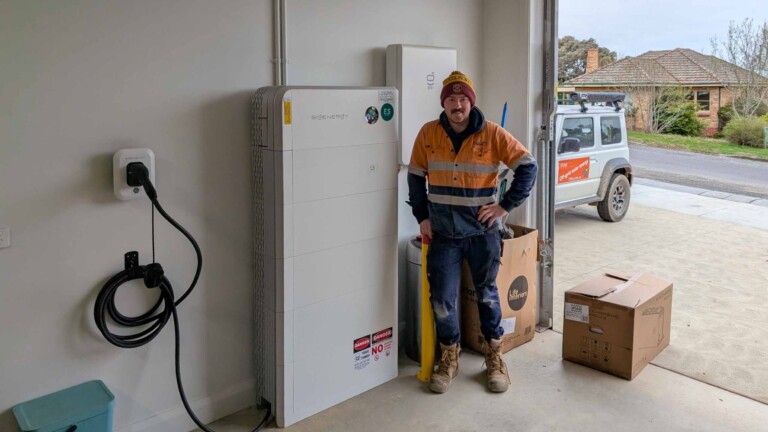
Sigenergy three-phase solar and battery system installation at a property in Ballarat Victoria
Ballarat, Victoria

Built for serious backup and EV charging. Ready for heavy loads, backup power, and smart energy setup that looks good too.

30kW of solar, a 25kW 3-phase Sigenergy inverter, four batteries, and a 25kW DC car charger — all fitted neatly into a Ballarat garage. A high-capacity off-grid build for a household serious about energy independence and EV charging at scale.
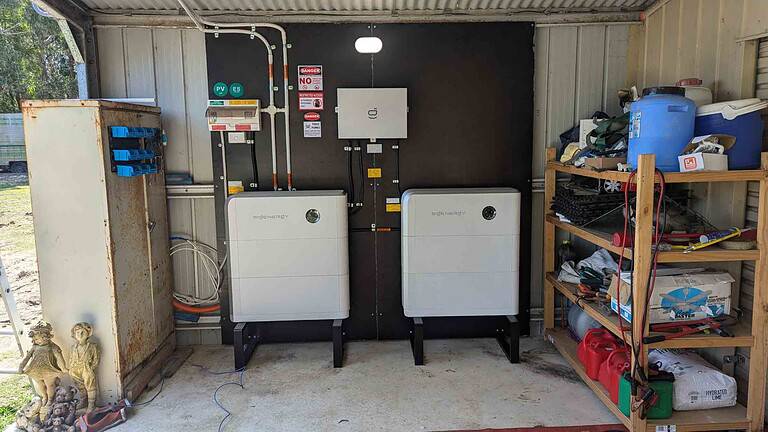
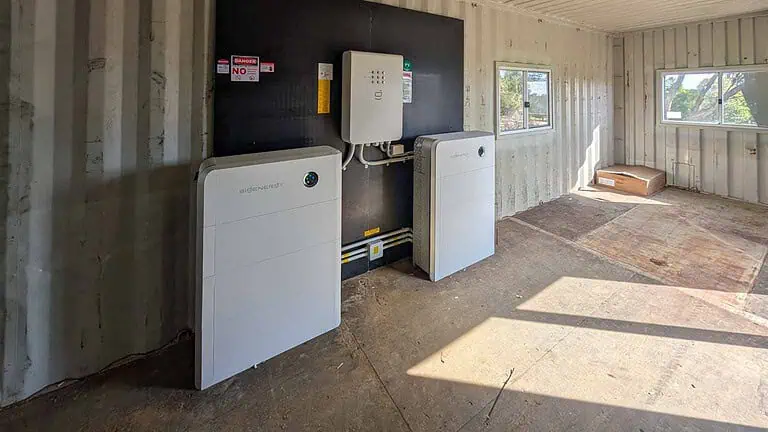
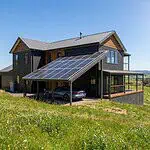
Sigenergy inverter and lithium battery storage installed for an off-grid solar system near Ballarat VIC
Dereel, Victoria

Maximum Solar Array Exposure with custom shed roof mount | 12kW Dual Gard Sigengery

A Dereel property near Ballarat now runs year-round on a 12kW dual Sigenergy off-grid system designed for harsh winters. The setup features two independent inverters and battery banks totaling 26kWh of storage, an oversized 11kW Jinko solar array on custom tilt-frames, and redundancy to prevent blackouts during extended grey weather periods.

Allendale Vic

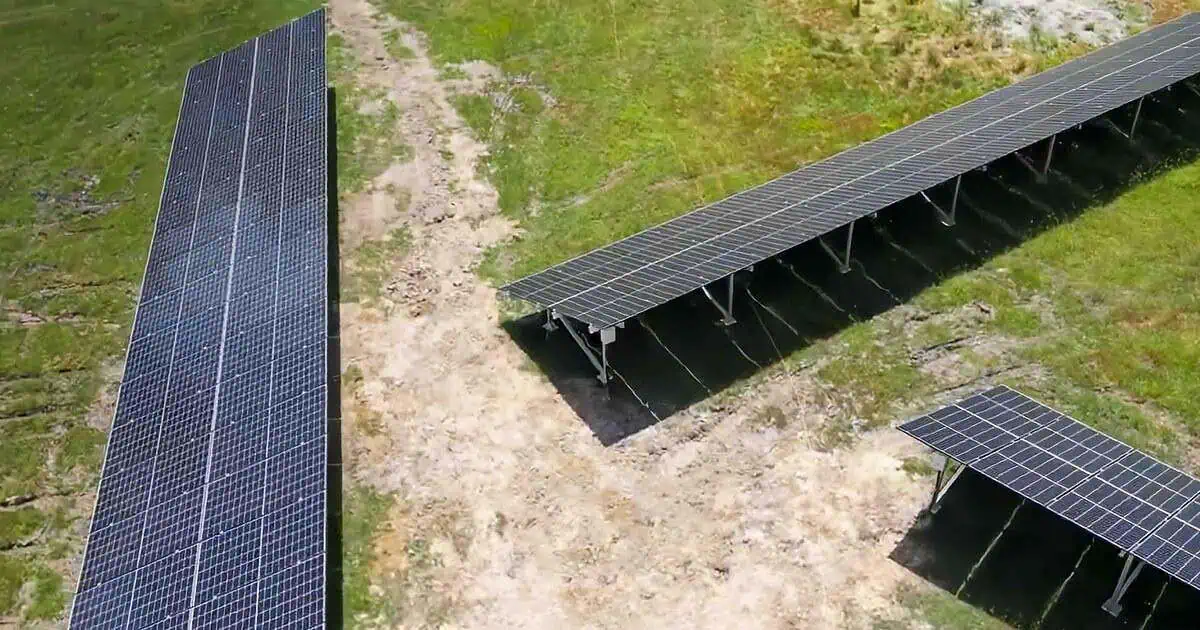
80kW Ground-Mounted System with Room to Double Battery Capacity

An 80kW ground-mounted off-grid system designed to power a future family home with enough capacity for high electrical loads, EV charging and planned battery expansion.

Off-Grid Equipment We Design With

Equipment is selected for the system we're designing — based on reliability, compatibility and long-term off-grid performance.
Solar Generation
Battery Storage
Inverters
System Redundancy
Backup Power
Remote Monitoring
Future Expansion
Diagnostic & Fault Suport
How it works

How We Design Your Off-Grid System

Start with a Conversation about your Off Grid Solar needs. You receive a system design matched to your usage and site.

Tell Us About the Property

We start with where you're building, the house, expected occupancy, major electrical loads and how you intend to use the property.
1

Establish Realistic Energy Demand

We work through current requirements and realistic future occupancy to establish how much energy the property needs to support.
2

Model the Complete System

Solar production, winter conditions, battery autonomy, inverter capacity and redundancy are considered together to determine the system configuration.
3

System Design & Proposal

We bring the equipment, capacities and installation requirements together into a system recommendation and proposal for your property.
4
REgional Victoria OFF-GRID INSTALLATION

Off-Grid System Design Across Ballarat & Regional Victoria

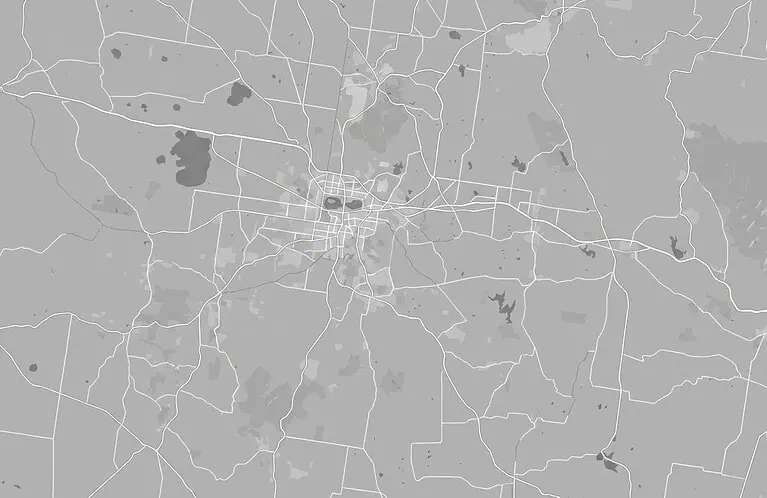
100UP is based in Ballarat and designs off-grid solar and battery systems for homes, farms and properties across regional Victoria.
Ballarat
Bendigo
Geelong
Grampians
Castlemaine
Illustrative map of Ballarat and surrounding regional road network showing general service coverage area rather than precise geographic boundaries
OFF-GRID SOLAR CUSTOMER REVIEWS

10+ Years of Off-Grid Experience Behind Every Design

Off-grid has been our focus since 2015. That experience goes into the assumptions behind the system. 
We have a Rating of
5.0 From 20 Reviews
See our Live Google Maps Reviews
Google

Ferdi Nuredinovski

Verify review
Google

Fred installed our solar. Very honest very reliable. He goes above and beyond. Tries his best to help. Does a great job. I recommend.

Dino Papa

Verify review
Google

Quotation & installation process. They have been unfailingly helpful and never failed to communicate pro-actively & effectively.

Andrew Webb

Verify review
Google

Fred did a great job was extremely patient with the slow build Clean and tidy Explained what he was doing along the process

Darcy Joynson

Verify review
Google

Fred installed our system 2 years ago and it has been fantastic. Fred was great and efficient, great communication. Highly recommended

Hayley Richards

Verify review
Google

Updated our off grid solar. Cannot recommend this company enough. Fred is very Knowledgeable, honest and very reliable. Great Job.

Lesley

Verify review
Google

Fred was so helpful. I'll know who to call. THANK YOU

Paul Purcell

Verify review
Google

Very responsive and professional

Hugh Wareham

Verify review
Questions FROM Off Grid Property OWNERS

Off-Grid Solar System Design FAQs

There isn't one panel count that suits every off-grid property. We first establish realistic daily energy demand and then size the solar array against expected production, including poor winter conditions. The wattage of the selected panels then helps determine the final number required.

Bedroom count gives us a useful starting point for likely occupancy, but it doesn't determine system size by itself. We also consider daily energy demand, location, winter solar production, battery autonomy and major electrical loads before determining solar, battery and inverter capacity.

Yes — that's the Yes, but winter production can be substantially lower. For conservative off-grid design, we allow for conditions where 1 kW of solar may produce around 0.5 kWh per day, including low-production conditions occurring on consecutive days. assessment. Array, charge controller, batteries, inverter, wiring, configuration. You get a written report on all of it, not just the part that threw the code.

Because living arrangements can change over the life of the system. Families grow, additional occupants move in and properties are sold. Designing around realistic occupancy reduces the risk of the energy system becoming undersized for the home later.

It depends on the property's daily energy demand and the solar available to recharge the batteries. Our design approach allows for approximately 48 hours of battery autonomy as a reference point for riding through consecutive low-production days.

Potentially, but how easily a system can be expanded depends on how it was originally designed and the equipment installed. If you expect additional occupants, buildings, appliances or other significant loads later, tell us during the design stage so future requirements can be considered.
10+ Years Dedicated to 100% Off Grid Design

Get YourOff-GridSystem Sized Properly

We'll work through the realistic demand, winter production, battery storage and inverter requirements to determine what the system needs to support.
Tell us about the property, where you're building and how you expect to use power. Call us direct on 1300 489 152 or send a text to 0400 092 621
Equipment
Quality Rebate Ready Off Grid Solar Systems
Installation
Qualified Accredited Solar Electricians
Located in Ballarat
Google
We respect your privacy - View our Privacy Policy.
100Up Off Grid Solar Logo Orange Wordmark
Off-grid solar systems designed for reliable, long-term energy independence.
Off-Grid Solar Installation, Design & Support. Located in Ballarat
Supporting Ballarat and regional Victoria with reliable off-grid systems.
Proudly Built by Brighter Websites
© 2026 100UP Off-grid solar systems. ABN 39 685 826 617. All rights reserved.

Enquire about - Off Grid System Design

We respect your privacy - View our Privacy Policy.