2-Bedroom Off-Grid Solar Power System
This is the system built to go off-grid full time, reliably through every season. A stand-alone solar system setup for up to 3 people.
See the 2 Bedroom System


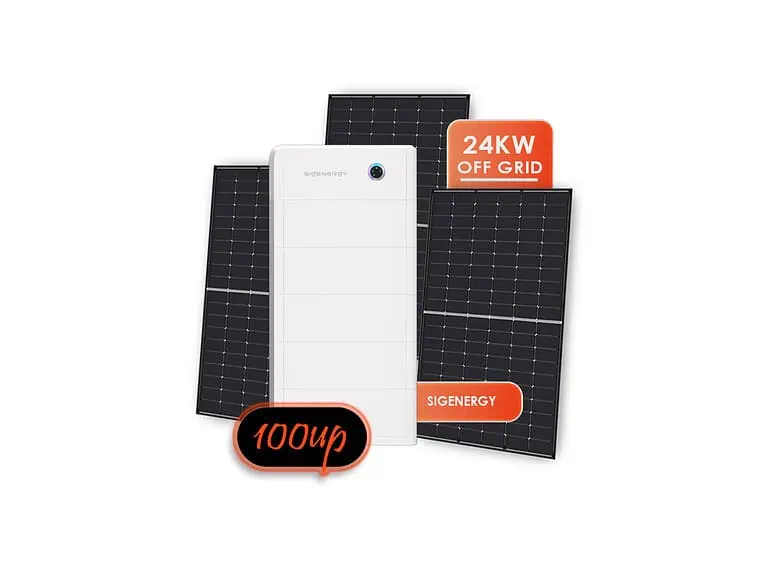
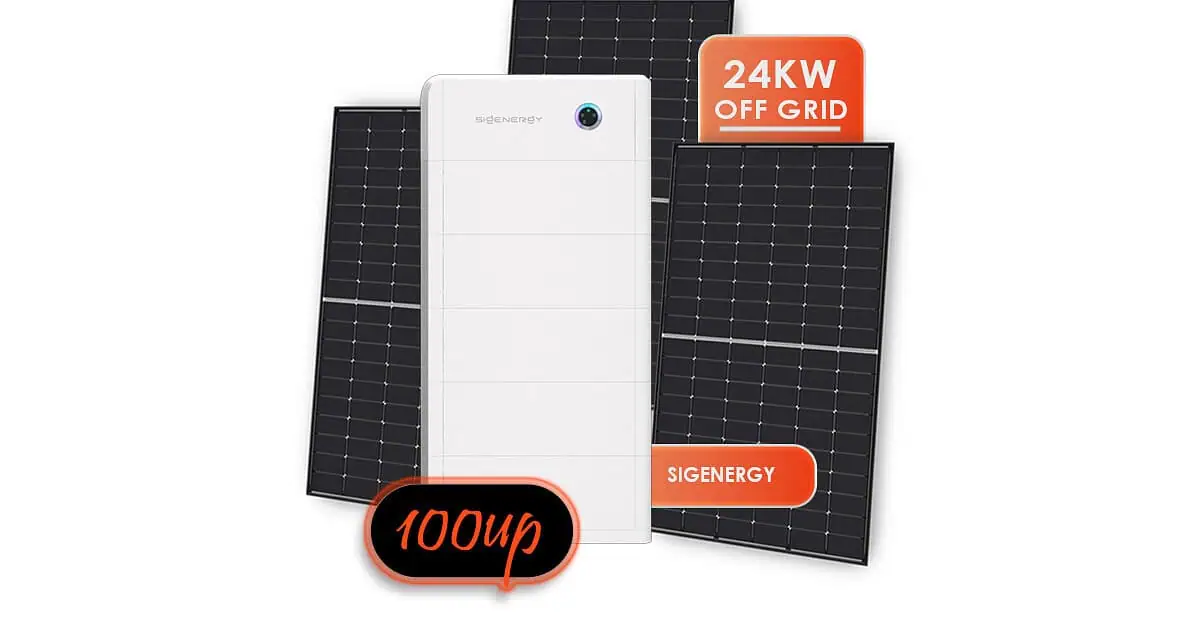
This Sigenergy off-grid system is engineered for a 2-bedroom home with up to 3 occupants consuming 20kWh daily. It features a 23.8kW solar array, 45kWh usable battery storage, and a 12kW inverter, designed to handle Ballarat’s challenging winter conditions without requiring a generator backup.
24kW Sigenergy off-grid system for all-electric homes housing 4-5 people. 12kW dual-inverter capacity (exceeds grid-typical 10kW), 32kWh battery rechargeable in under 2 hours of sun, 24-hour autonomy. Dual-system runs continuously if one side fails.
This Sigenergy off-grid system is designed for a 2-bedroom home with up to 3 occupants using around 20kWh of electricity per day.
For three people, our design allowance is: 5kWh for the house + 3 × 5kWh per person = 20kWh per day.
From there, the solar, battery and inverter are sized to keep the home running through the difficult part of the year. For this system, that means 23.8kW of solar, 45kWh of usable battery storage and a 12kW Sigenergy inverter.
Because it’s off-grid. The solar array isn’t only there to replace the energy you used yesterday. It also needs to run the house and give the batteries a chance to recover when winter solar production is limited.
This system uses 50 × 475W solar panels, giving an actual array size of 23.75kW. 23.8kW on the specification, or 24kW when rounded.
That oversized array is deliberate. On a good summer day, generating enough energy is easy. The important question is what happens during a grey Victorian winter.
Five SigenStor BAT 10.0 battery modules provide 45kWh of usable battery storage. For a household designed around 20kWh of daily use, that gives the system substantial stored energy to work with overnight and through periods of reduced solar production.
Battery capacity is only one side of the equation, though. A large battery without enough winter solar to recharge it simply takes longer to go flat. That’s why we look at the battery and solar array together rather than treating them as separate specifications.
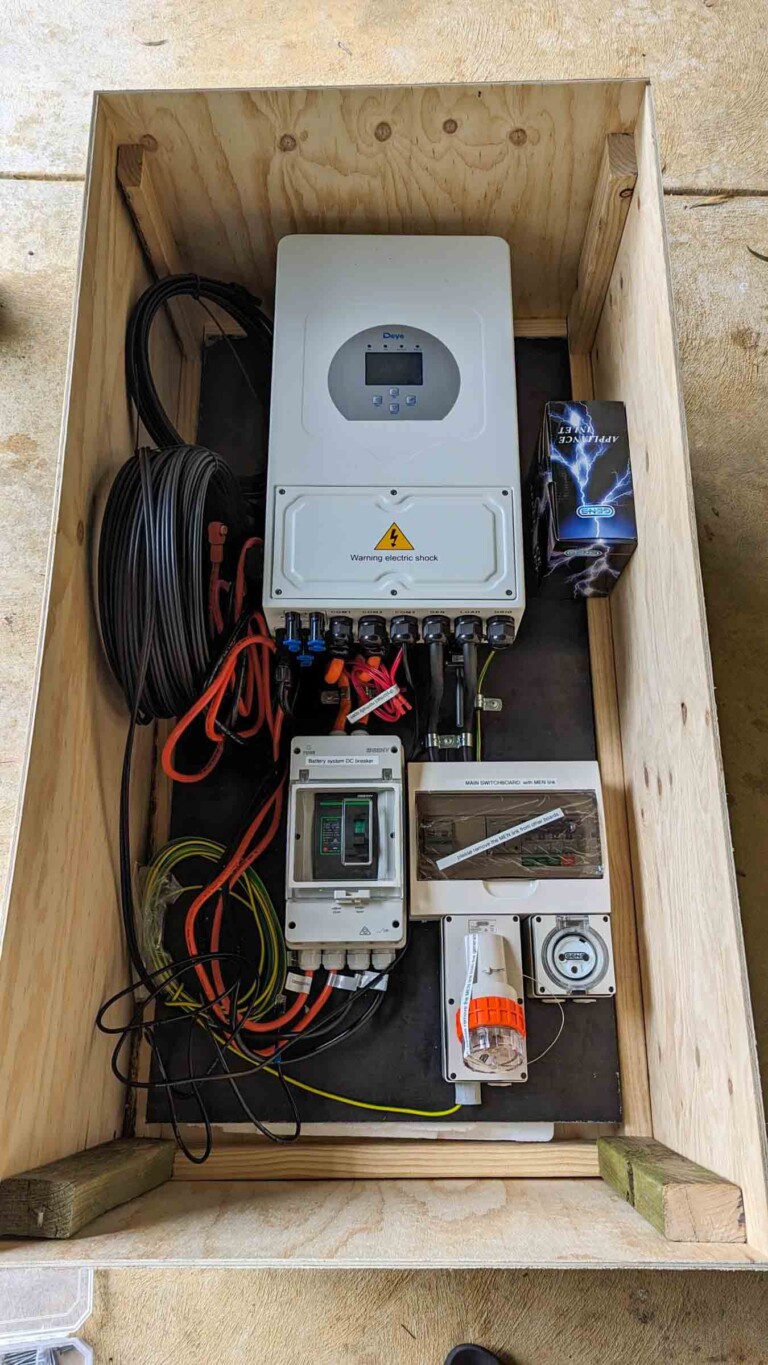
Power is supplied through a SigenStor EC 12.0 SP 12kW inverter and Sigen Gateway HomePro SP-F AU.The 12kW inverter provides plenty of capacity for a typical all-electric 2-bedroom home, including the normal combination of cooking, heating, cooling, hot water and everyday appliances.
This is a single-inverter configuration. If inverter redundancy is important for your property, we also design dual-inverter systems. The right choice depends on the household loads, property and level of redundancy you want built into the system.
We model this system against July conditions in Ballarat, rather than relying on an annual solar average.
July is the toughest solar production period we design around locally, so it gives us a much more useful benchmark for an off-grid home than looking at what the panels can produce across an entire year.
The hourly model also includes the system’s own standby draw: 150W continuous · approximately 3.6kWh per day.
At a household load of 20kWh per day, this configuration passes the July hourly simulation without requiring a generator. That’s the result we’re interested in. A system that performs through the difficult part of winter has been designed very differently from one sized around average or summer production.
Installation, commissioning and certification are included. Prices, rebates and system sizing are indicative only and may vary with site conditions and rebate eligibility.
This is our 2-bedroom starting configuration for a household using around 20kWh per day. But bedrooms are only the starting point. Large water pumps, electric heating, workshops, machinery, EV charging and other high-demand loads can change the system you need. Tell us about the property and how you intend to use power. We’ll size the system around the home first, then work out the equipment.
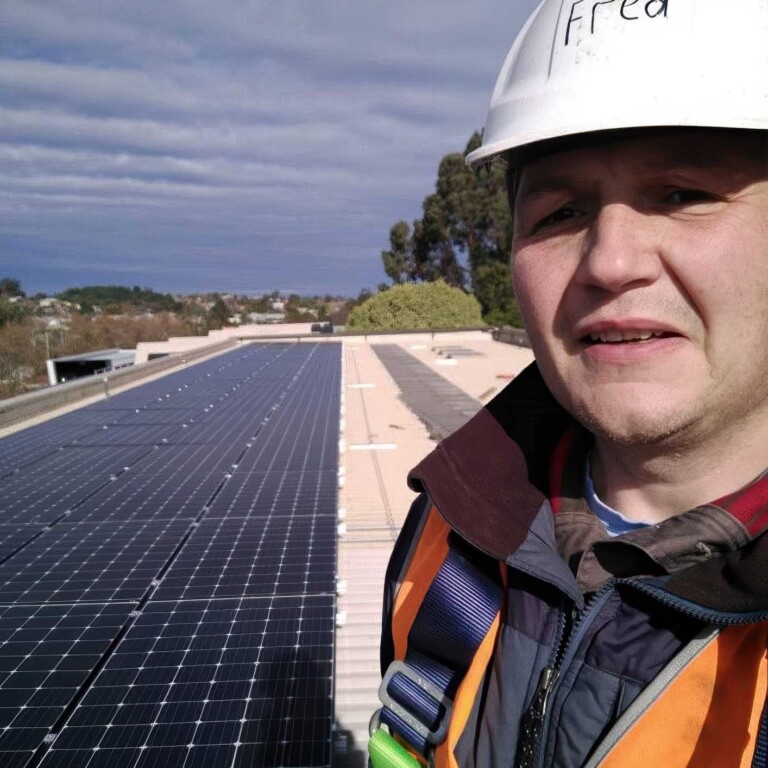
Fred installed our solar. Very honest very reliable. He goes above and beyond. Tries his best to help. Does a great job. I recommend.
Dino Papa
Verify reviewQuotation & installation process. They have been unfailingly helpful and never failed to communicate pro-actively & effectively.
Andrew Webb
Verify reviewFred did a great job was extremely patient with the slow build Clean and tidy Explained what he was doing along the process
Darcy Joynson
Verify review