Off-grid solar supplies your home with electricity without a connection to the main power grid. No poles. No lines. No electricity bills.
It’s not a new idea . Though recently the systems have changed a lot. Older setups needed separate battery chargers, regulators, and a tangle of components to make it work. Modern systems are much simpler. Most run on three or four core components, and they’re more reliable than anything available a decade ago.
What’s Actually in an Off-Grid System
Four main components do the work:
- Solar panels — capture sunlight and generate DC electricity
- Batteries — store that electricity for use at night or on cloudy days
- Inverter — converts stored DC power to the AC power your appliances run on
- Generator — optional backup for extended low-production periods
The complexity isn’t in the component count. It’s in getting the sizing right for your property and your location.
Off-Grid Solar System Sizes and Prices in Australia: A Guide for Homeowners
More than grid-tied solar. That’s the honest answer.
You’re not just buying panels. You’re buying energy independence. Batteries, inverters, and installation all add to the cost. And the system needs to be sized properly, or it won’t perform when you need it most.
Here’s a rough guide to installed system costs in Australia:
| Household Size | Typical System | Installed Cost (approx.) |
|---|---|---|
| 1–2 people | 5–8 kW | $18,000 – $22,000 |
| 3 people | 10 kW | $28,000 – $30,000 |
| 4 people | 15 kW | $34,000 – $38,000 |
| 5+ people | 20 kW | $46,000 – $50,000 |
Prices are approximate and after rebates. System cost varies by location, equipment quality, and battery storage required.
Worth keeping in mind: connecting a rural property to the grid typically starts at $25,000. Figures of $60,000 to $100,000 are common. Against that, an off-grid system starts to look like the rational choice.
How Do You Know What Solar Power System Size You Need?
A general guideline: start with 10 kWh per day for one person, then add 5 kWh per day for each additional person. A household of three typically needs around 20 kWh per day, which points to a 10 kW system.
That gives you a starting point. But a starting point isn’t a design.
Where the general guide falls short: it’s based on average consumption and average solar production. Most off-grid systems that fail or end up generator-dependent, were sized against averages. They work great in summer. Then July arrives.
The 100UP approach to designing Off Grid solar adds one more layer. We use a baseline of 5 kWh for the property itself, plus 5 kWh per occupant. We size that against worst-case winter production. In Ballarat, a clear June day gives you around 2.5 to 3 peak solar hours. Overcast stretches can cut that further. A system sized for that is one that runs without generator dependency when it matters most.
→ Use the off-grid sizing calculator to model your property
Bigger Solar Systems, & Real Ballarat Installs
What 20 kW Actually Looks Like
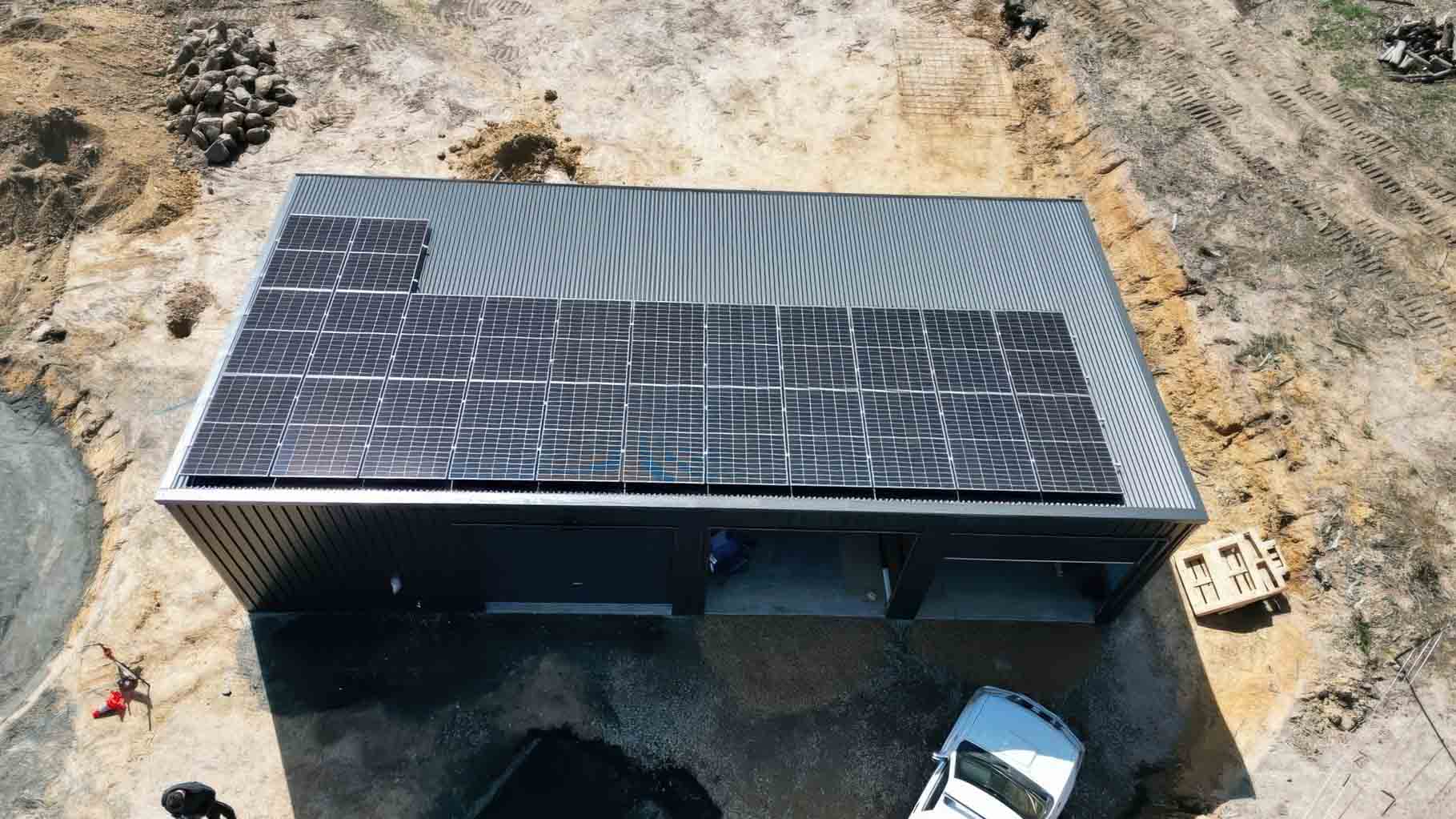
For larger properties, higher occupancy, or agricultural use, 20 kW systems are common. They handle more load, more battery storage, and more complex energy needs , but the sizing and design principles are the same.
→ See the 20 kW system guide or keep reading for to learn about our recent projects specs, installs and pricing
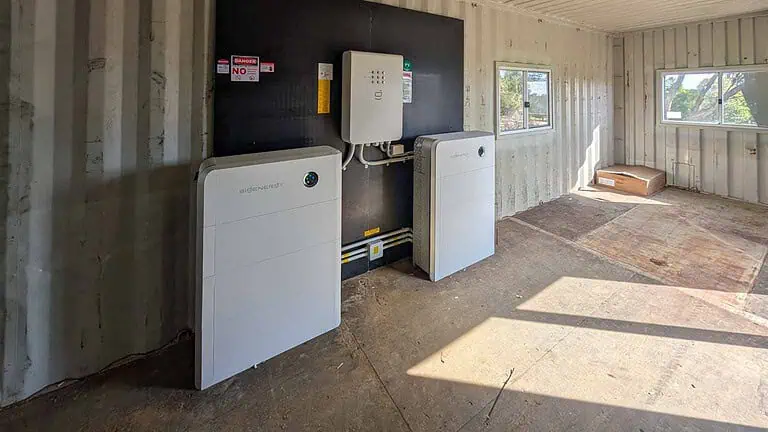
Sigenergy 3 Phase OffGrid Solar Allendale Vic

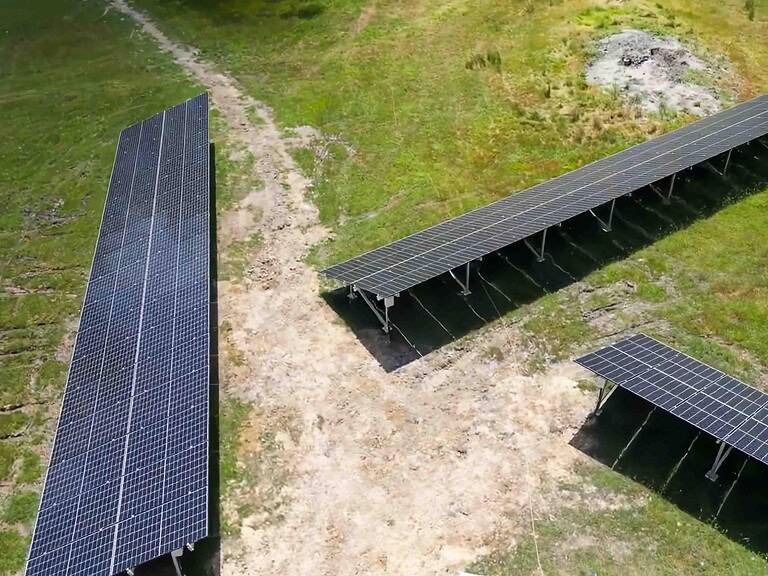
An 80kW ground-mounted off-grid system designed to power a future family home with enough capacity for high electrical loads, EV charging and planned battery expansion.
Ballarat 50kW Ground Mount Off-Grid System

A comprehensive 50kW off-grid solar installation featuring three ground-mounted Jinko 470W panel arrays connected to multiple MPPT charge controllers. Power flows underground to a shed housing two Victron inverters and a Pylontech battery system, eliminating grid dependence and monthly power bills entirely.
Is Off-Grid Power Right for Your Property?
Off-grid makes sense when grid connection is expensive, unavailable, or simply not worth it. The numbers usually favour off-grid:
- If you’ve received a grid connection quote above $25,000, or
- If your property is genuinely remote
The upfront cost is real, but so is the alternative. It’s not right for everyone. If grid power is available and affordable, a hybrid solar-plus-battery system is often the better fit. We’ll tell you that upfront.
If you’re not sure, the off-grid system sizing pricing guide covers the full cost picture, what’s included, what varies, and how to compare quotes properly. Or get in touch a quick conversation usually makes it clear.