
Maximum Solar Array Exposure with custom shed roof mount | 12kW Dual Gard Sigengery
Summary
Off-grid install near Ballarat sized for winter, not annual averages: 11kW solar, 12kW Sigenergy inverter, 26kWh lithium storage. Solar intentionally oversized vs inverter for faster battery recovery in short solar windows. Runs full rural loads without daily generator dependency.
12kW of Off-Grid Power Installed near Ballarat – Reliable Energy Every Winter
Dereel sits just outside Ballarat. In winter, that means shorter days and consistent cloud cover to consider. Stretches of grey weather expose every weakness in an undersized system. When this property owner came to us they need to run through a real Dereel July without the generator becoming a fixture.
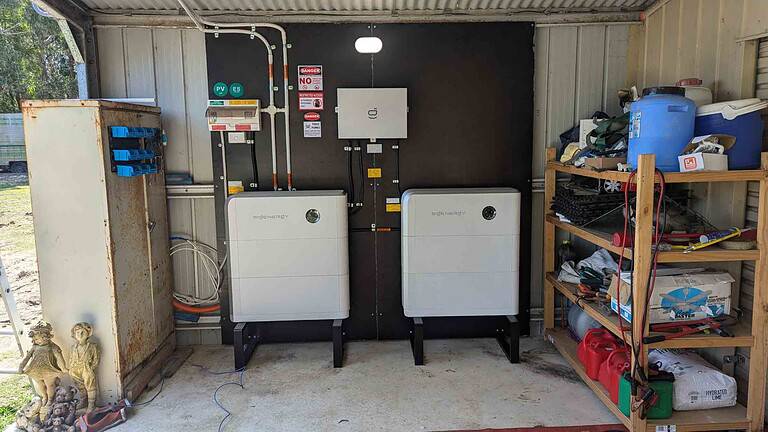
The answer was a dual Sigenergy configuration. Two independent inverter and battery systems running in parallel.
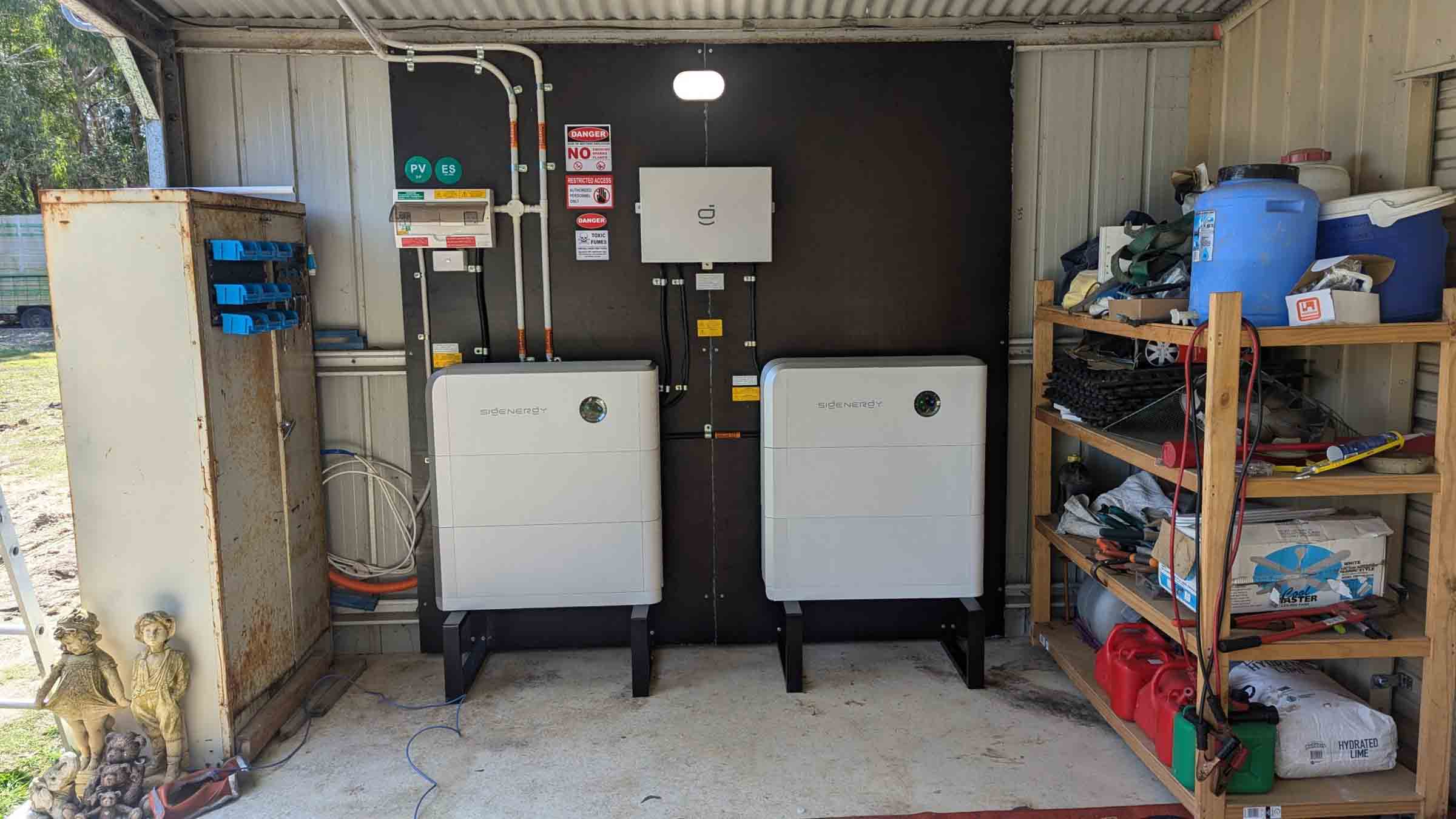
Configured with 100up’s Dual Guard – Two Systems Running in Parallel.
There’s only so much capacity you can get from one unit, and a single system means a single point of failure.
This install uses two Sigenergy inverters desined to run in parallel. They behave as one unified 12kW system. Each unit has its own battery bank. One 8kWh and 5kWh are stacked to give 26kWh of total lithium storage. Both systems feed and draw from the same loads simultaneously.
If one inverter runs into a problem, the other keeps running. The property doesn’t go dark.
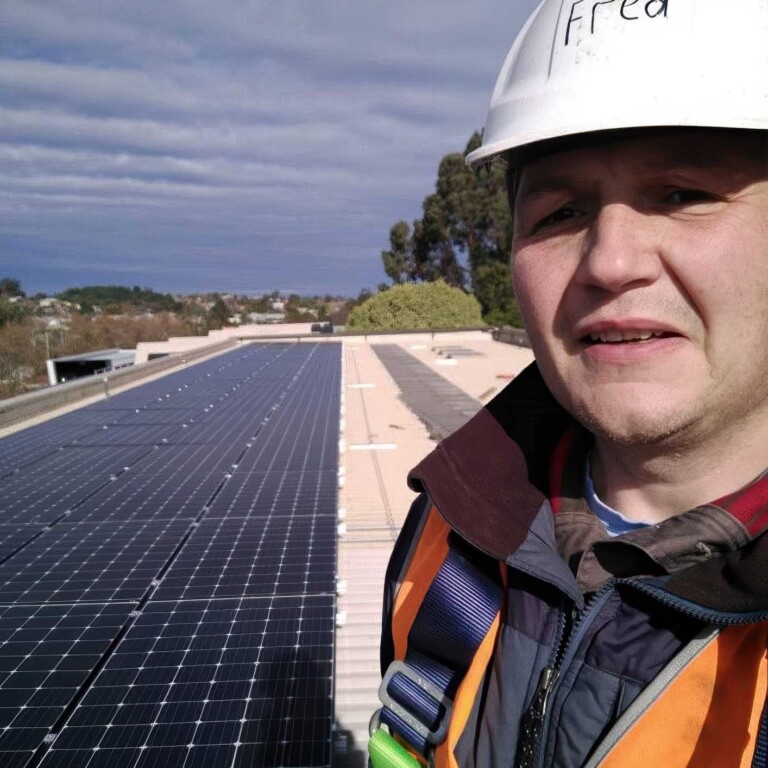
Oversized 11kW Jinko Array on a Custom-built tilt-frame
In winter, the production window is short. On an overcast day, you’re working with limited hours to recover battery state of charge. The 11kW of Jinko panels are oversized relative to the inverter. It helps push harder during those narrow daylight windows. It recovers faster. It produces more on poor-weather days. And it reduces how often you’d need to run a generator through a multi-day grey winter stretch.
Where the roof geometry didn’t give us the right angle, we engineered one. The panels are split across two mount sections. Thee regular section on the north facing aspect and a custom-built tilt-frame on the opposing side to extend production. The panels are set on a Canted steel frame, at the calculated angle for maximum winter sun exposure.
Off-Grid System Designed to run a full-time residential property with real loads
Sigenergy was selected specifically for stable power delivery and surge handling. Off-grid means no grid fallback. Every design decision from cable sizing, inverter charge limits, battery communication, surge capacity has to be right the first time.
- Refrigeration.
- Water pumps.
- Kitchen appliances.
- Lighting.
- Communications and internet.
- And a workshop with compressors and power tools.
The ability to wake up after several poor-weather days, make breakfast, run the property normally, and know the system was sized to run all the family’s energy needs all year long.