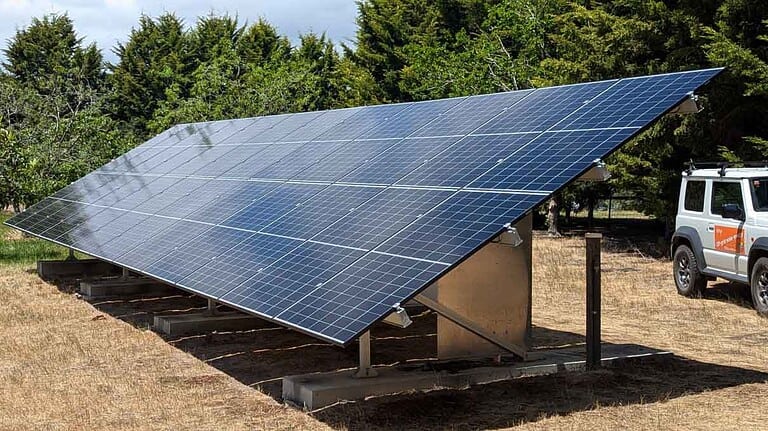
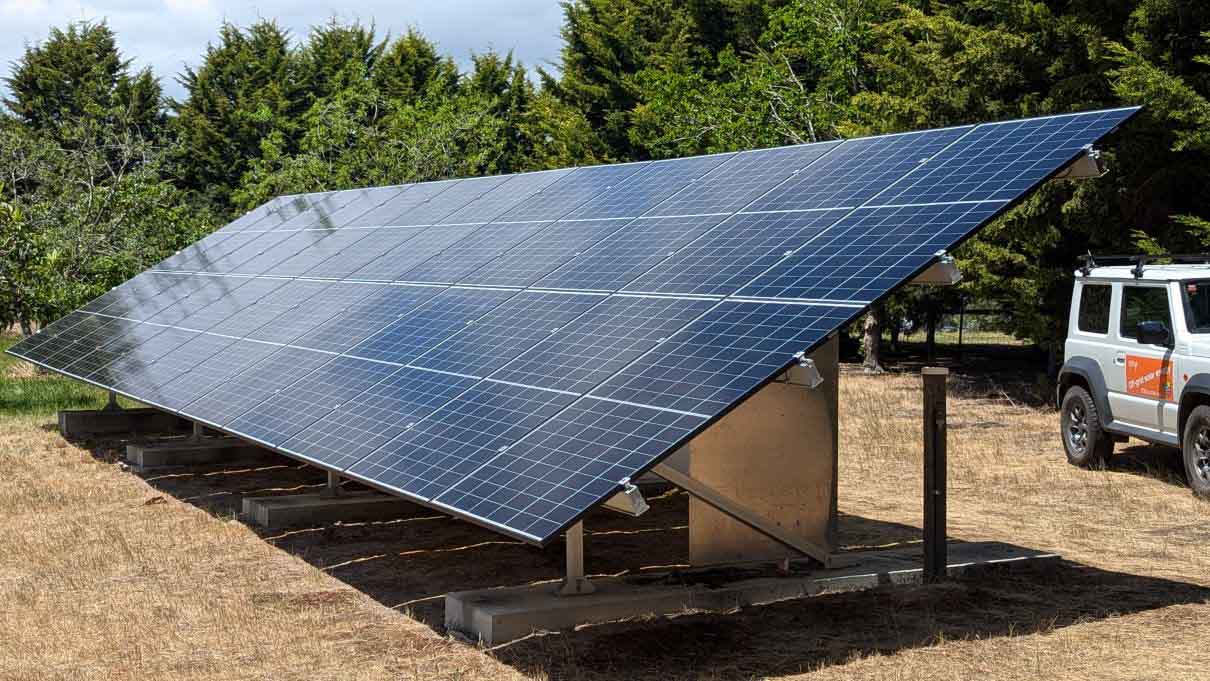
Firstly, let’s delve into solar panels, one of the essential components. Solar energy is booming, and with so many choices on the market, it’s essential to know what’s available. Here’s a breakdown of some leading solar panel brands, their latest models, features, performance details, and warranty information.
When choosing solar panels, consider factors such as efficiency, durability, warranty, and budget. This review is designed to give a clear and concise comparison of these solar panel brands, aiding users in making informed decisions based on their specific requirements and preferences.
Jinko Solar
Established in 2006, Jinko is a top global solar panel producer. Its panels are known for affordability and efficiency, with the Tiger Pro series boasting up to 21.65% efficiency.
- Overview: Jinko is a global leader in the solar industry, known for its high-quality and cost-effective solar panels.
- Features: Jinko panels are recognized for their high efficiency, durability, and excellent performance under various environmental conditions.
- Performance: With a strong track record in reliability and efficiency, Jinko panels are favored in both residential and commercial installations.
- Pros: Cost-effective, high efficiency, robust construction.
- Cons: Aesthetic options are limited compared to some premium brands.
Tiger Neo N-type Series (425-445W)
High-efficiency N-type TOPCon technology, excellent temperature performance.
- Efficiency: Module efficiency up to 22.27% with SMBB (Smart Multi Busbar) technology improving light absorption and current collection.
- Durability: Certified to withstand high wind (2400 Pascal) and snow load (5400 Pascal), enhanced with Anti-PID technology for reliability.
- Warranty: 25-year product warranty and 30-year linear power warranty with an annual degradation of only 0.40%.
- Technology: Featuring Hot 2.0 technology for better performance under lower light-induced degradation and higher operational reliability.
LONGi Solar
Founded in 2000, LONGi specializes in monocrystalline silicon technology. Its Hi-MO X6 series stands out with an efficiency of 23.60%.
LR5-54HTB Series (440-450W)
- Efficiency: Peak module efficiency reaching 23.0%, ensuring best energy generation performance.
- Aesthetic: Sleek pure black design for extreme elegance.
- Durability: Mechanical loading capacity of up to 5400 Pa on the front side and 2400 Pa on the back side.
- Warranty: 25-year warranty for materials, processing, and extra linear power output.
- Environmental Resistance: High resistance to salt mist and ammonia, suitable for harsh environmental conditions.
LONGi Solar – LR5-54HTB Series (440-450W)
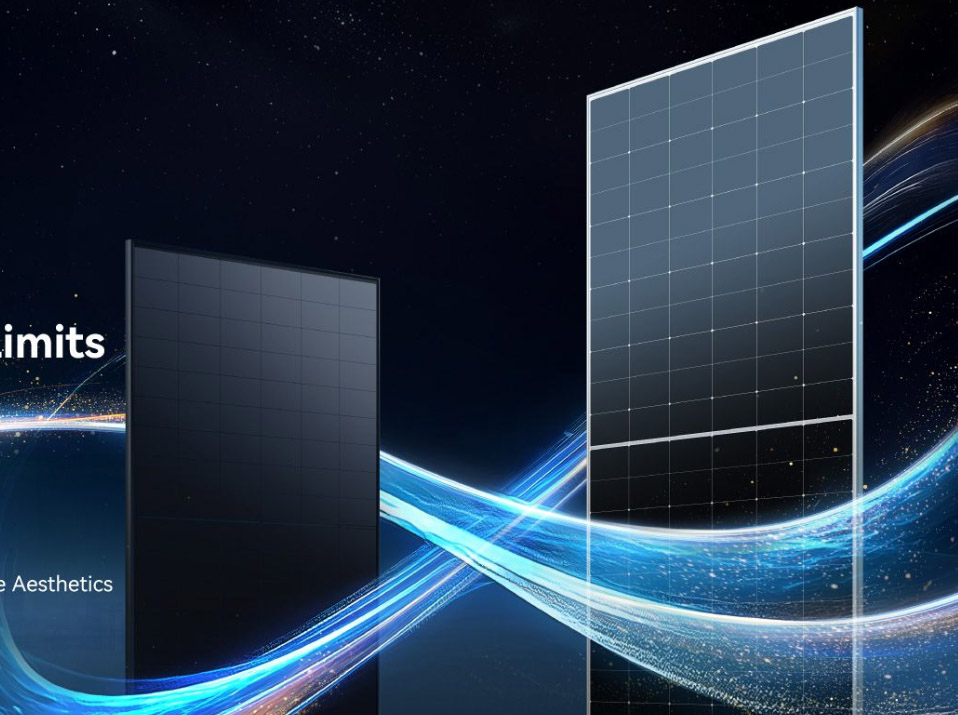
Hi-MO X10 Guardian Light Design
LONGi’s Hi-MO X10 Guardian Light Design uses HPBC 2.0 back-contact cells to deliver up to 560W at 24.8% efficiency. It weighs 16.3kg, around 30% less than conventional modules, according to LONGi. The lighter format targets commercial rooftops where structural load limits restrict panel selection. wf-eu.longi.com
For older sheds and other weight-sensitive buildings, lower panel weight may reduce reinforcement requirements. Roof condition, mounting and wind loads still need assessment. It is an option to consider where weight matters, rather than a way to avoid structural checks.
Other Panel Models:
- Hi-MO 5 Series: Monofacial, bifacial, and Ice-Shield versions, built for durability and extreme weather conditions.
Aiko
- Panel Models:
- NEOSTAR 3N+78 Dual-Glass: 675W-700W, 22.9% efficiency, ultra-high power for large installations.
- COMET 2U72 Mono-Glass: 640W-670W, high-power PERC technology.
- STELLAR Polaris 1N+72 Dual-Glass: 635W-660W, bifacial, TOPCon N-type.
AIKO Neostar 3 Series | Neostar 3P54 and 3S54 models | premium AIKO Z Series
Industry-Leading Efficiency (24.5% – 25.0%) The Neostar 3P54 is notable for being one of the first residential-sized modules (under 2m²) to achieve a massive 500W output at 25.0% efficiency in mass production. AIKO hits these numbers using their signature N-Type ABC (All Back Contact) architecture, which moves all busbars and electrical contacts to the rear of the cell so the front face can absorb 100% of incoming sunlight
Solar panel technologies keep progressing and becoming more impressive. The 2025 exhibition in China showed most solar panel manufacturers reaching 24.5% to 25% module efficiency. Aiko, one of the leaders, also showed strong results. Panels are becoming more shade-resistant, with companies demonstrating how effective their panels are under partial shade. High efficiency and shade resistance are especially important for off-grid systems, where many are located in the bush and every watt counts. Some companies also showcased clear window solar panels and very flexible solutions for curved surfaces.
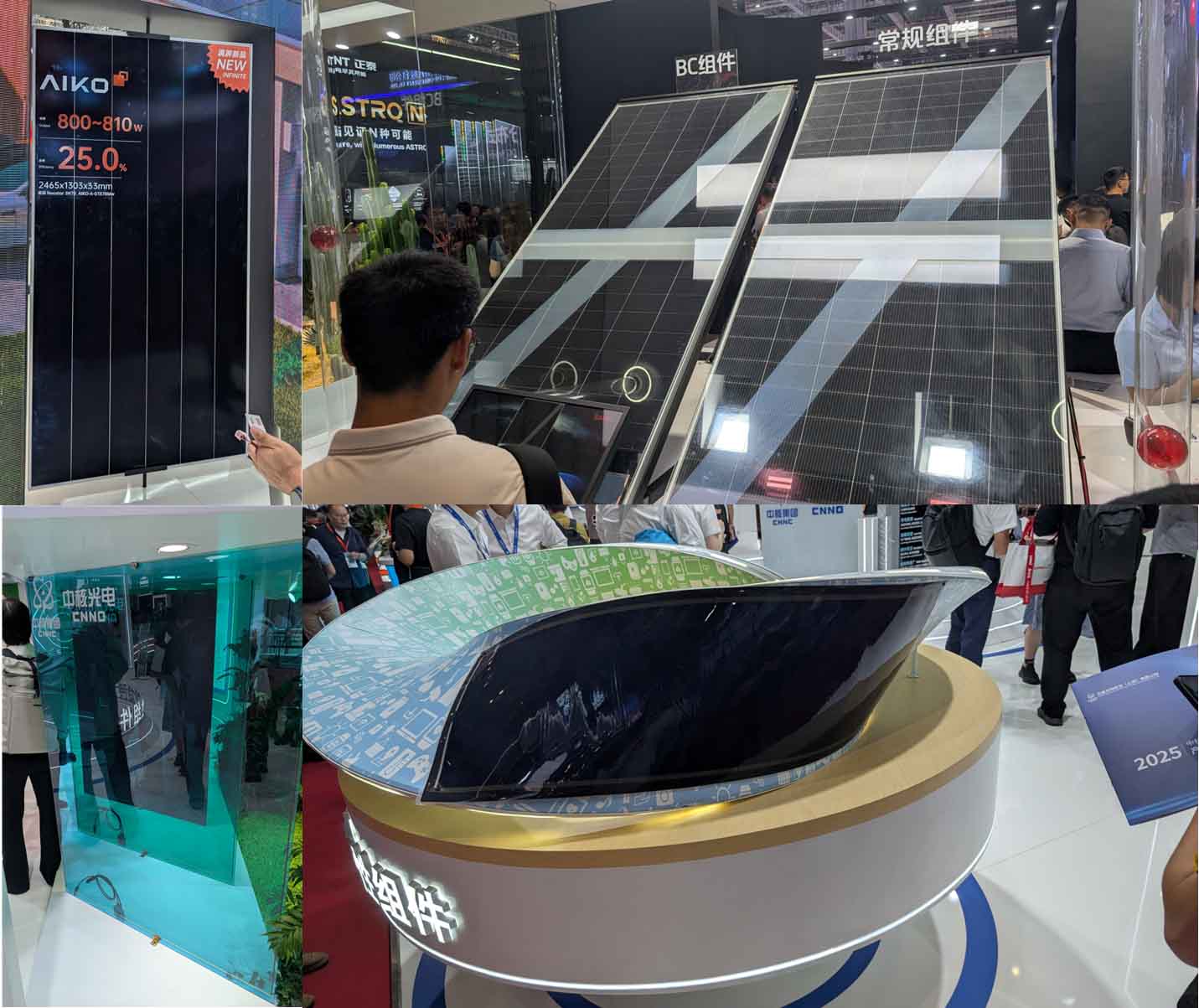
Advanced Partial Shading Optimisation: The shade-resistance technology you mentioned aligns perfectly with AIKO’s proprietary cell-level partial shading optimisation. Traditional panels use bypass diodes that shut down an entire third of a panel if even a single cell is obstructed (like by a stray leaf or tree branch). AIKO’s ABC technology allows current to bypass individual shaded cells without knocking out the rest of the string. This keeps the panel producing power under patchy shade—a massive advantage for off-grid bush setups where trees are a constant factor.
Next-Gen Concept: The clear window and flexible solar panels align with AIKO’s latest generation announcements, such as their INFINITE ULTRA utility line and new architectural concepts designed to push the physical boundaries of back-contact (BC) technology
‘Air Series’ 450W Ultra-Lightweight Solar Panel
In a move to lighten the load for solar installations, Aiko, a solar manufacturer from China, has rolled out a new module in the Australian market that tips the scales at a mere 8.8kg. Dubbed the ‘Air Series,’ this 450W marvel swaps traditional solar glass for a high chemical plastic, shedding weight without compromising too much on power. While the switch does result in a slight dip in output—about 10V less than its glassy counterpart—the module still packs a punch with a peak power output of 450W.
Measuring 1758mm by 1137mm and framed with a 25mm border, the module stands out in the lightweight category. Unlike competitors such as Sunman, whose lightweight modules for roofs with low load-bearing capacities go frameless, Aiko’s inclusion of a frame bolsters reliability. The frame’s presence helps mitigate weathering risks associated with an exposed junction box.
However, it’s worth noting that while the module shines in performance, its product warranty is a modest 12 years, though it aligns with industry standards at 25 years for performance warranty.
Trina Solar
- Overview: Trina Solar is one of the most popular solar panel manufacturers, renowned for their innovation and quality.
- Features: These panels are known for their high power output and excellent performance in low-light conditions.
- Performance: Trina panels maintain a balance between quality and affordability, making them a preferred choice for a wide range of solar projects.
- Pros: Great value for money, strong low-light performance, reliable power output.
- Cons: The warranty and service support might vary depending on the region.
Dual Glass Monocrystalline Module (420-440W)
- Efficiency: Up to 22.0%, making use of high-density interconnect and multi-busbar technology.
- Build: Dual-glass design for higher durability and resistance to environmental factors.
- Temperature Performance: Enhanced performance with low temperature coefficient and operational range of -40 to +85°C.
- Warranty: 25 years for product workmanship and 30 years for power output.
- Sustainability: Dual glass structure is less prone to micro-cracks; packaging is fully recyclable.
Trina Solar – Dual Glass Monocrystalline Module (420-440W)
- Panel Models:
- Vertex S+ 445W NE09RH: 445 Wp, 22.3% efficiency, hail-resistant, dual-glass design.
- Vertex S 400W DE09C.05: Compact and powerful, ideal for smaller rooftops.
- Residential 365W DE06X.05(II): Optimized for long-term home energy solutions.
Canadian Solar
- Website: https://www.csisolar.com/module/
- Panel Models:
- TOPBiHiKu7: 690W-725W, up to 23.3% efficiency, bifacial technology.
- HiKu7: 640W-670W, 21.6% efficiency, dual-cell PERC module.
- TOPHiKu6: Up to 625W, 23.2% efficiency, N-Type TOPCon.
- HiKu6: 530W-555W, 21.6% efficiency, monofacial PERC.
REC Solar
REC Alpha® Pure-R Series (430Wp)
- Efficiency: Module efficiency peaks at 22.3% with enhanced low light performance.
- Build: Compact panel size with 80 half-cut bifacial REC heterojunction cells featuring lead-free, gapless technology.
- Durability: High resistance to environmental stresses with IP68 rated components.
- Warranty: Up to 25 years of product warranty and power warranty under specific installation conditions.
- Sustainability: RoHS compliant, reflecting high environmental and safety standards.
REC Solar – REC Alpha® Pure-R Series (430Wp)
- Panel Models:
- REC Alpha Pure-RX: 450-470 Wp, 22.6% efficiency, HJT technology, 92% minimum power retention over 25 years.
- REC Alpha Pure-R: 400-430 Wp, 22.3% efficiency, RoHS compliant (lead-free design).
- REC TwinPeak 5: 395-415 Wp, cost-efficient and performance-oriented.
Seraphim Solar System Co., Ltd.
N-TOPCON Series (425-440W)
- Efficiency: High module conversion with enhanced light trapping.
- Bifaciality: 80%±5%, offering substantial rear side power gain.
- Durability: Low degradation with superior mechanical strength (up to 5400 Pa front load capacity).
- Warranty: 30 years for product material and performance.
- Technology: Multi-main gate and bifacial technology ensure low heat spot effects and excellent low-light performance.
Seraphim Solar System Co., Ltd. – N-TOPCON Series (425-440W)
Sunman
eArc flexible solar panels
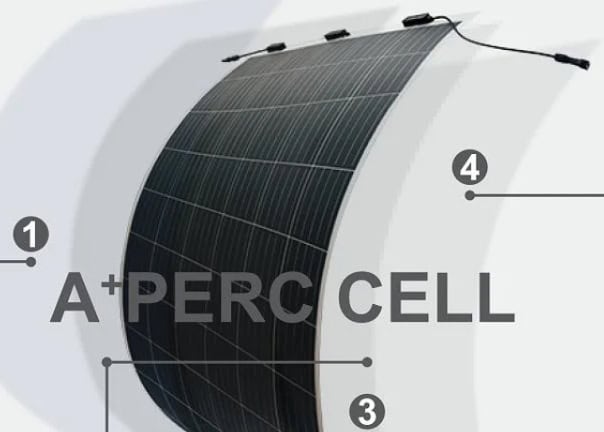
Sunman’s eArc flexible solar panels offer the same durability as traditional glass modules, making them a revolutionary choice in the solar energy market. They have successfully passed rigorous durability and safety tests, including IEC 61215:2016, IEC 61730:2016, and UL1703 (USA), confirming their resilience to prolonged exposure to open-air climates. Furthermore, eArc has undergone additional quality assessments, including 3000 hours of damp heat, UV exposure equivalent to 25 years, potential-induced degradation (PID), salt mist, and ammonia corrosion tests.
As the modern economy increasingly embraces electric and zero-emission transportation modes like trains, yachts, mopeds, and logistic vehicles, eArc can play a crucial role in electrifying the transportation sector. It enhances cruising distances and powers essential functions such as lighting, air conditioning, and tail lifts.
For low load-bearing roofs, eArc presents an ideal solution. Approximately 40% of commercial and industrial roofs do not meet the minimum load capacity required for conventional glass modules. Glass modules typically need a minimum load capacity of 15 kg/m² for installation. In cases where buildings fall below this threshold, costly and disruptive structural reinforcements are necessary to accommodate solar installations. eArc eliminates this need, providing a lightweight and efficient alternative for solar energy generation.
Tindo Solar
Tindo Karra 330P (330W)
- Efficiency: 19.8% module efficiency with Full Square Mono PERC Cells.
- Aesthetic: Aesthetically pleasing with black square cells and frames.
- Durability: Features PID resistance and robust Tedlar® based backsheet for UV, thermal, and moisture protection.
- Warranty: Extended 12-year product warranty and 25-year performance warranty.
- Environmental Adaptation: Engineered for Australian conditions with superior low-light and temperature performance.
SunPower
- Overview: SunPower stands out for its premium solar panels with some of the highest efficiency rates in the market.
- Features: Known for their innovative design, SunPower panels have a unique cell structure that enhances their efficiency and longevity.
- Performance: These panels are highly efficient, making them ideal for areas with limited space but a high demand for energy.
- Pros: Exceptional efficiency, sleek design, robust warranty.
- Cons: Higher price point, making them a premium option.
Choosing the best solar panel option for your property
Each brand caters to different needs and preferences, ensuring there’s a suitable option for every solar energy project. Jinko offers cost-effective and reliable options, Trina provides a balance of performance and value, while SunPower stands as a premium choice with top-tier efficiency.
To provide a clear comparison of the notable differences among these solar panel brands, let’s focus on several key aspects: efficiency, warranty, special features, and environmental durability.
Lets compare
1. Efficiency
- Seraphim Solar (N-TOPCON Series): Offers enhanced light trapping but doesn’t specify exact efficiency, suggesting it’s competitive but not leading.
- Trina Solar (Dual Glass Monocrystalline): Up to 22.0% efficiency.
- Jinko Solar (Tiger Neo N-type): Up to 22.27% efficiency, among the highest.
- LONGi Solar (LR5-54HTB Series): Peaks at 23.0%, currently the highest.
- REC Solar (REC Alpha® Pure-R): Peaks at 22.3%, very close to the highest.
- Tindo Solar (Tindo Karra 330P): 19.8%, the lowest among the listed models but focuses on aesthetic integration.
2. Warranty
- Seraphim Solar: 30-year product and performance warranty.
- Trina Solar: 25-year product workmanship and 30-year power output warranty.
- Jinko Solar: 25-year product and 30-year linear power warranty.
- LONGi Solar: 25-year warranty for materials, processing, and power output.
- REC Solar: Up to 25 years depending on installation conditions.
- Tindo Solar: Recently extended from 10 to 12 years for the product, with a 25-year performance warranty.
3. Special Features and Technologies
- Seraphim Solar: Multi-main gate and bifacial technology.
- Trina Solar: High-density interconnect and multi-busbar technology.
- Jinko Solar: SMBB technology and Hot 2.0 technology for low light-induced degradation.
- LONGi Solar: Designed for aesthetic appeal with pure black design.
- REC Solar: Lead-free, gapless technology, and compatible with maximum light penetration systems (MLPE).
- Tindo Solar: Full Square Mono PERC Cells, designed for visual appeal and robust environmental protection.
4. Environmental Durability and Adaptation
- Seraphim, Trina, Jinko, and LONGi Solar: High durability and designed to withstand harsh environmental conditions including high wind and snow load.
- REC Solar: High resistance to environmental stresses, suitable for a wide range of climates.
- Tindo Solar: Specifically engineered for Australian conditions, highlights low-light performance, which is crucial for variable weather.
Choosing between Jinko and LONGi
Consider your budget, efficiency needs, and local climate. While Jinko is a great option for affordability, LONGi might be worth the investment for higher efficiency and performance.
Key Considerations:
- Efficiency: Jinko offers good efficiency at a lower cost, while LONGi’s panels are slightly more efficient.
- Warranty: Both brands provide extended warranties, but LONGi’s terms are slightly more favorable.
- Price: Jinko panels are generally more budget-friendly.
- Technology: Jinko focuses on PERC technology, while LONGi leads in half-cut cell technology, which may perform better in hot climates.
Other Brands Compared
- Highest Efficiency: LONGi Solar leads with a peak efficiency of 23.0%.
- Best Warranty: Seraphim Solar offers a 30-year warranty, which is the longest among the listed options.
- Environmental Durability: All panels are designed to be highly durable, though Tindo Solar specifically tailors its products to Australian climates.
- Special Features: Jinko Solar’s Hot 2.0 technology and REC’s gapless, lead-free cells highlight the advancements in technology aimed at maximizing performance and sustainability.