
With battery rebates and storage options improving, many off-grid homeowners in Australia are looking to add batteries to their solar systems. But one big question comes up often:
If I retrofit a battery into my existing off-grid solar system, do I need to upgrade all the solar wiring to today’s standards?
The answer depends on how the battery is integrated—specifically whether it’s AC-coupled or DC-coupled.
AC-Coupled Battery Retrofits — The Simplest Option
An AC-coupled retrofit means your battery system has its own inverter/charger (e.g. Victron, Selectronic, Deye) and connects to the AC side of your system. This approach is ideal when you’re adding storage without changing your solar inverter or panel wiring.
You don’t need to upgrade existing solar wiring if:
- Your original inverter stays in place
- You’re not changing the solar array
- The system is safe and functional (even under older standards)
- The battery inverter is added as a separate device
This makes AC coupling the cleanest, most cost-effective battery retrofit for off-grid systems. You’re not interfering with the existing wiring, so the older rules that applied when it was installed remain valid.
You may need upgrades if:
- The system is very old (pre-2012) and contains unsafe switchgear
- You’re installing new AC cabling to battery enclosures or subboards
- A Certificate of Electrical Safety (e.g. in Victoria) triggers a full inspection
DC-Coupled Battery Retrofits — More Integration, More Compliance
A DC-coupled retrofit connects the battery on the DC side of the system—alongside your solar panels—usually by replacing the original inverter with a hybrid inverter.
This method offers tighter integration and sometimes slightly higher efficiency, but also comes with stricter compliance:
You will likely need to:
- Replace your old inverter with a hybrid inverter
- Upgrade all PV cabling, isolators and labelling to current AS/NZS 5033
- Bring wiring into line with AS/NZS 3000 (Wiring Rules)
DC retrofits are often treated as a new installation by inspectors and network authorities. So if you go this route, expect more rewiring and a bigger install scope.
Battery Safety Compliance (AS/NZS 5139) Applies to All
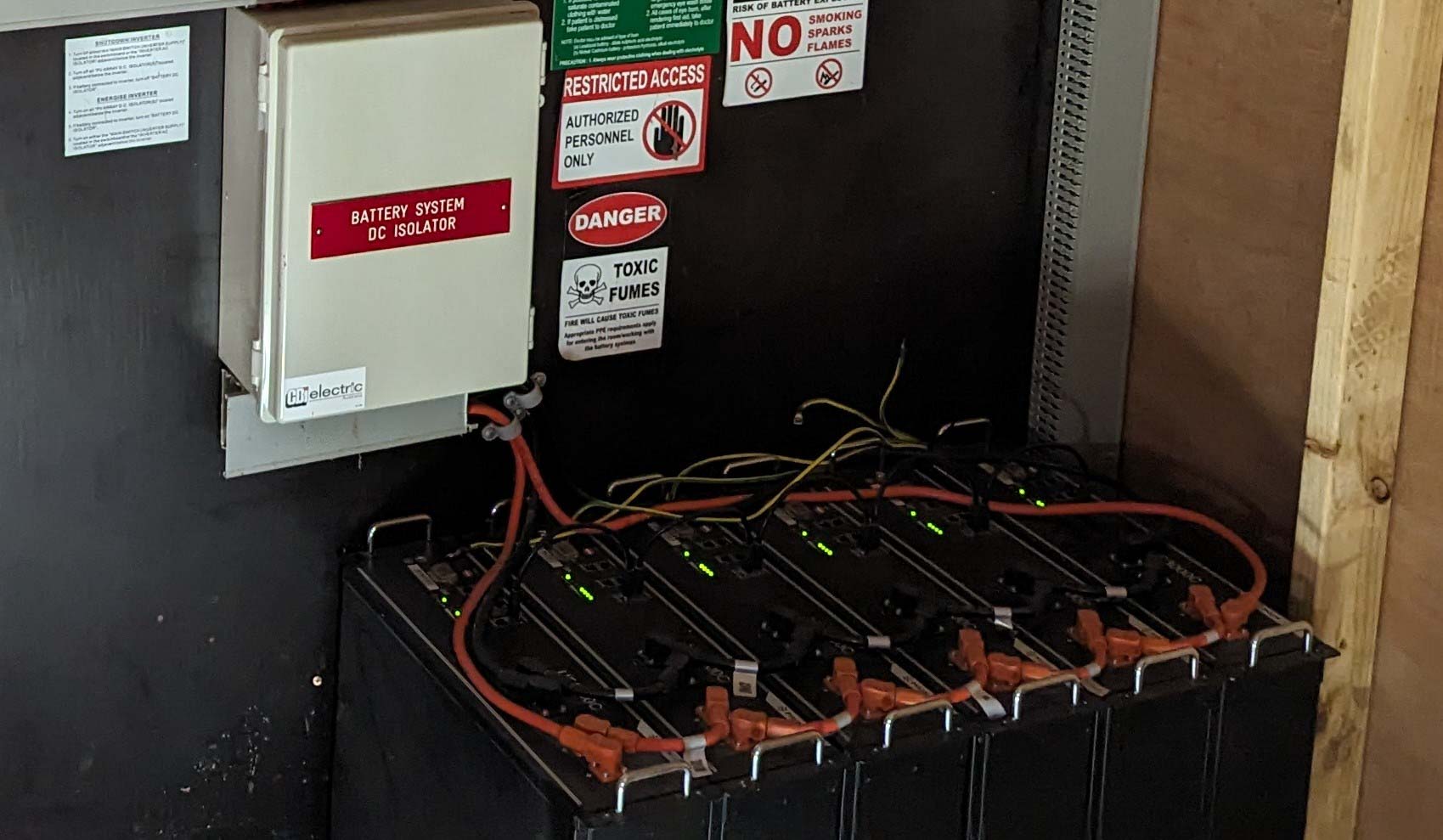
Whether you choose AC or DC coupling, your new battery setup must follow AS/NZS 5139:2019, which covers:
- Battery enclosure placement and fire separation
- Isolation, fusing and shutdown procedures
- Arc fault protection and signage
- Ventilation and battery cabinet rating
Even if your solar system stays untouched, the battery side must meet today’s safety rules.
AC vs DC Coupling: Quick Comparison for Off-Grid Solar Upgrades
| Feature | AC-Coupled Battery Retrofit | DC-Coupled Battery Retrofit |
|---|---|---|
| Changes existing solar inverter? | No | Yes |
| Requires rewiring solar panels? | No | Yes |
| New inverter required? | Separate inverter for battery only | Hybrid inverter replaces original |
| Solar wiring upgrade needed? | Rarely | Almost always |
| Easier to retrofit off-grid? | Yes | No (more complex and costly) |
Final Advice from 100UP
If you’re looking for the easiest and most flexible way to upgrade your off-grid solar system with batteries, AC coupling is usually the way to go. It keeps your existing setup intact, avoids unnecessary rewiring, and gets you battery storage faster and more affordably.
But if you’re doing a full system overhaul or chasing tight solar-battery integration, DC coupling can still be a great solution—just budget for the extra compliance work.
At 100UP, we specialise in off-grid battery systems across Australia. Whether it’s a new install or an upgrade, we make sure your setup is safe, reliable, and future-proof.
Need help planning your battery upgrade?
Chat with us today to find the best path forward—without unnecessary rewiring.